

Commentary
James Schwemlein
{
  "authors": [
    "James Schwemlein"
  ],
  "type": "other",
  "centerAffiliationAll": "dc",
  "centers": [
    "Carnegie Endowment for International Peace"
  ],
  "collections": [],
  "englishNewsletterAll": "ctw",
  "nonEnglishNewsletterAll": "",
  "primaryCenter": "Carnegie Endowment for International Peace",
  "programAffiliation": "SAP",
  "programs": [
    "South Asia"
  ],
  "projects": [],
  "regions": [
    "South Asia",
    "Pakistan"
  ],
  "topics": [
    "Foreign Policy"
  ]
}
Source: Getty
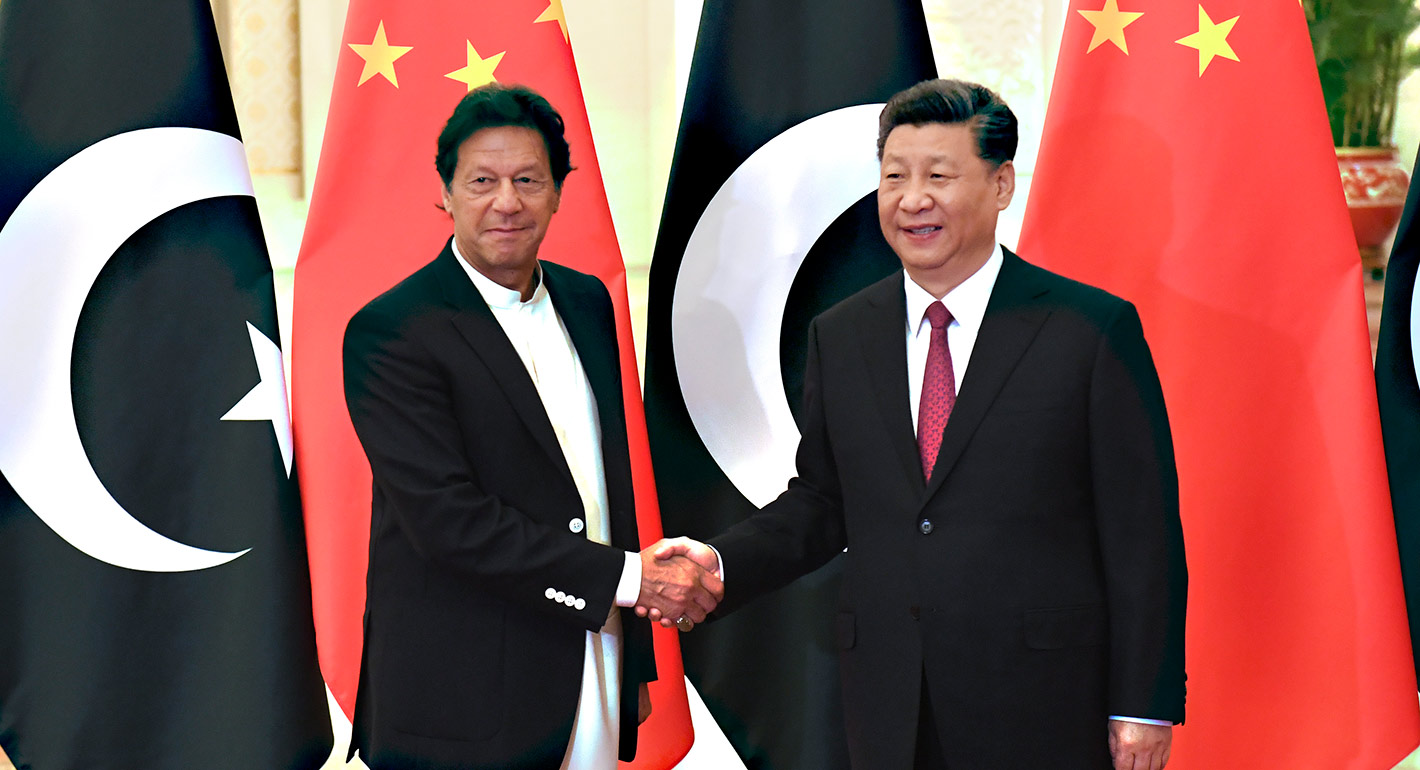
The China-Pakistan Economic Corridor (CPEC) has strategic implications for China-Pakistan, China-India, India-U.S., and U.S.-China relations. U.S. targeted support to Pakistan could prevent Pakistan’s dependence on China, mitigating some of the most negative effects.
Source: United States Institute of Peace
Great power politics is resurgent in South Asia today. China’s growing military ambition in the region is matched in financial terms by its Belt and Road Initiative, the largest and most advanced component of which is the China-Pakistan Economic Corridor. What remains unclear is how the United States should navigate the new dynamic. This report, which is based on research and consultations with experts worldwide, addresses the question of how the India-Pakistan rivalry will play into the emerging great power competition.
.This report examines how China’s financial underwriting of infrastructure projects along the China-Pakistan Economic Corridor is altering the political landscape for the United States, India, China, and Pakistan. Supported by the Asia Center at the U.S. Institute of Peace, this study is based on research and discussions worldwide, and specifically by Asia Center–led consultations with Chinese experts in December 2017 and with Pakistani experts in May 2019.
This report was originally published by the United States Institute of Peace.

Former Nonresident Scholar, South Asia Program
James Schwemlein was a nonresident scholar in the South Asia Program at the Carnegie Endowment for International Peace.
Recent Work
James Schwemlein
James Schwemlein
Carnegie does not take institutional positions on public policy issues; the views represented herein are those of the author(s) and do not necessarily reflect the views of Carnegie, its staff, or its trustees.

While the EU and European governments are embracing the much-lauded middle-power moment, this entails three difficult conundrums.

Richard Youngs

Much has been said of the changes Brussels is trying to make to the EU enlargement process. Here’s why gradual integration might—or might not—be the answer.

Dimitar Bechev

The European Commissioner for Trade is headed to China. But after President Xi’s bridge-building visit to Washington, can a more isolated EU overcome Beijing’s stranglehold on critical raw materials? Who will blink first?

Rym Momtaz, ed.

European NATO countries are wrestling with the possibility of U.S. disengagement from the alliance. With the continent’s security increasingly uncertain, governments must restore the credibility of their collective defense.



Hans-Dieter Lucas, Adam Thomson, Pierre Vimont

The new U.S.–Denmark–Greenland agreement will help Washington exert political, economic, and financial dominance under the guise of security. Yet, it acknowledged Copenhagen’s and Nuuk’s sovereignty on the island.

Marc Pierini