

Commentary
Excitement is in the air following Aleksandar Vučić’s defeat in Serbia. To build a truly democratic state, the movement that unseated the former president must learn from the mistakes of the past.
Ivan Vejvoda
{
  "authors": [
    "Rachel Kleinfeld",
    "Joshua Kleinfeld"
  ],
  "type": "legacyinthemedia",
  "centerAffiliationAll": "dc",
  "centers": [
    "Carnegie Endowment for International Peace"
  ],
  "collections": [
    "U.S. Democracy in Comparative Perspective"
  ],
  "englishNewsletterAll": "democracy",
  "nonEnglishNewsletterAll": "",
  "primaryCenter": "Carnegie Endowment for International Peace",
  "programAffiliation": "DCG",
  "programs": [
    "Democracy, Conflict, and Governance"
  ],
  "projects": [],
  "regions": [
    "North America",
    "United States"
  ],
  "topics": [
    "Political Reform",
    "Democracy"
  ]
}
Source: Getty
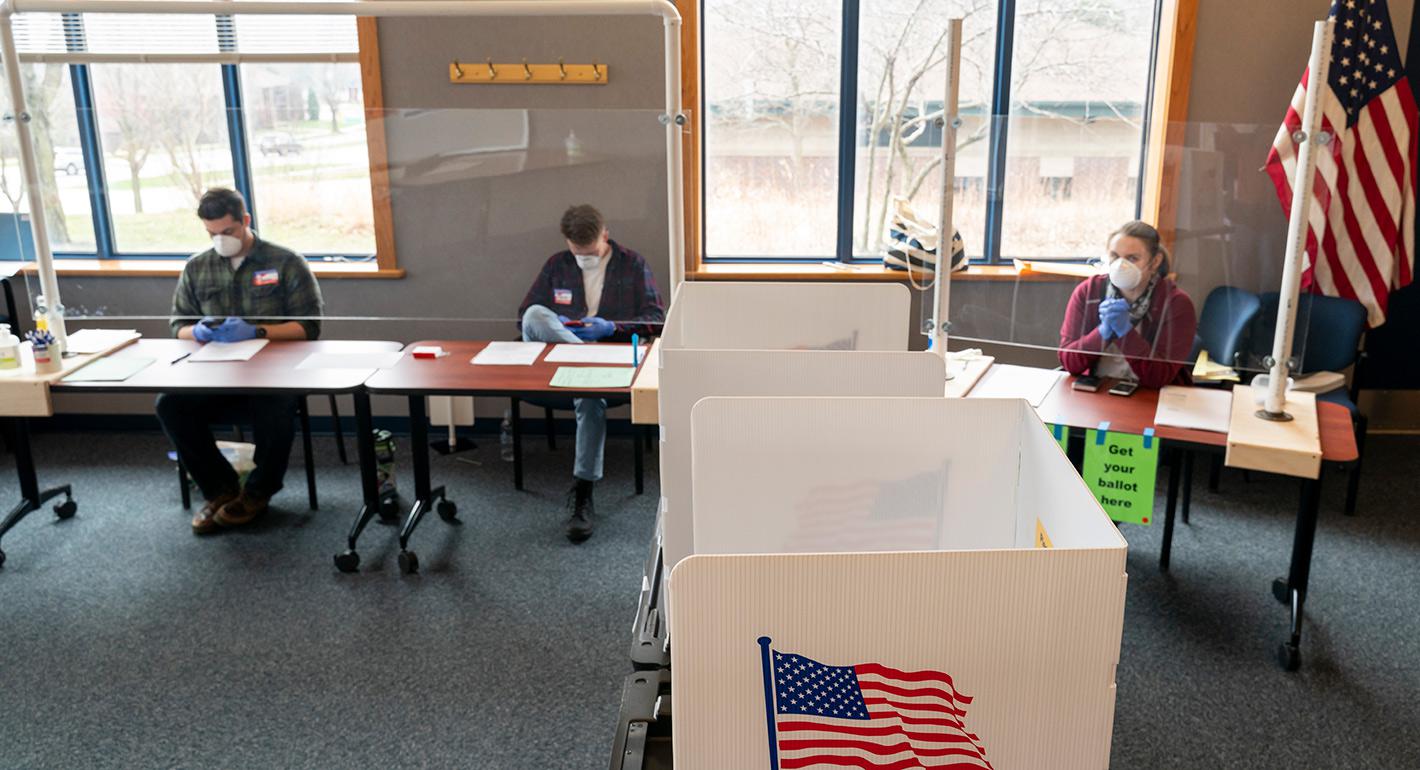
The election must be held. And people who want to vote must be able to do so without fear of infection and without worsening the pandemic.
Source: National Review
We might beat COVID-19 by fall. But if we don’t, what happens to our November election? Two principles are paramount. The election must be held. And people who want to vote must be able to do so without fear of infection and without worsening the pandemic. To uphold those principles, we must expand no-excuse absentee voting and make drive-through voting possible now.
Elections in a pandemic run two risks: spreading infection and diminishing democratic legitimacy. Iran’s COVID-19 cases surged after its February elections. Spain’s infections quintupled four days after a political rally in March; now Spain has requisitioned an ice rink to hold the dead. In Florida’s March primary, two poll workers contracted COVID-19, one of whom had handled voters’ driver’s licenses. In-person voting involves lining up and touching voting machines, which could be dangerous to voters without careful procedures. It also endangers poll workers, most of whom are over 60.
Meanwhile, if we hold the election as usual and huge numbers of citizens stay home, the outcome could be delegitimized. French president Emmanuel Macron began elections last month, then suspended them after the first round of voting. Was that because of historically low turnout and higher-than-expected virus risks — or was it because of his party’s poor showing in the first round? The United States is already at high levels of polarization and historically low levels of trust in government and fellow citizens. We cannot afford an election our people don’t believe in. That is especially true if we are dealing with a recession in November. Social trust and governmental legitimacy are strongly linked to GDP. A dubious election is bad news for our economy as well as our democracy.
A solution is available: expanding absentee voting and drive-through voting.
Neither requires unrealistic procedures. Drive-through voting, which parts of Wisconsin already use, lets citizens vote from the safety of their cars, using machines that have been disinfected. Voting by mail is already the voting system in Washington, Colorado, Oregon, Utah, and Hawaii. Expanding absentee voting in other states would require simply setting aside — for one election — requirements to request a ballot in advance or to provide specific justifications for not voting in person.
But these changes in voting procedures do require political action now. First, Congress needs to approve funding. States that already are cash-strapped from the pandemic’s economic fallout will need money to cover expenses such as printing and mailing excess ballots. The recent stimulus was a good, bipartisan start — but provided less than a quarter of what is likely needed.
States need to take political action, too. Those that require a special justification to receive an absentee ballot need to make a one-election exception. States that do not allow absentee ballots to be counted until Election Day need to modify their rules so as not to slow counts and leave the election result in doubt. Most states need to ramp up capacity, or they may be swamped with more requests than they can handle. And because not everyone can vote by mail, states need to modify their polling places for drive-through voting, expand early voting hours, and implement similar innovations. This can all be done in time — but only if action starts now.
These changes will neither clearly help one party at the other’s expense, nor increase voter fraud. The No. 1 group that votes by mail now are the elderly, who tend to vote Republican. As the elderly are also the group most affected by COVID-19, voting by mail might help them the most. On the other hand, increased turnout is typically good for Democrats, who benefit from greater youth and minority votes. Studies of vote-by-mail in Colorado and Utah have found increased turnout among a diverse assortment of groups, including young voters, voters with no party affiliation, and women over 80, benefitting no party in particular. Past experience in any case doesn’t tell us much, since those elections didn’t take place in the middle of a pandemic.
The truth is that no one knows whom expanded absentee voting and drive-through voting would favor in November 2020. That should make it easier to set aside our partisan identities and do what is right for democracy. So long as the change is a one-off, which can be written into state and federal legislation, it should overcome partisan bickering.
As for fraud, signature-matching is a proven method of deterrence and detection. Careful signature-matching procedures should accompany voting by mail and drive-through voting. But we shouldn’t exaggerate the risk: Oregon has mailed out about 100 million ballots since 2000, with only about 12 cases of proven fraud.
Right now, China is touting its authoritarian model as superior to our democratic one at addressing COVID-19. The United States is the beacon of democracy around the world. Let’s show the world that no pandemic can stop our elections.
This article was originlly published by the National Review.
Senior Fellow, Democracy, Conflict, and Governance Program
Rachel Kleinfeld is a senior fellow in Carnegie’s Democracy, Conflict, and Governance Program, where she focuses on issues of rule of law, security, and governance in democracies experiencing polarization, violence, and other governance problems.
Joshua Kleinfeld
Joshua Kleinfeld is a professor of law and (by courtesy) philosophy at Northwestern University. His work focuses on the nature and practice of democratic government, both as a matter of first principles and in diverse areas of law, including legislation, constitutional and statutory interpretation, and criminal law.
Carnegie does not take institutional positions on public policy issues; the views represented herein are those of the author(s) and do not necessarily reflect the views of Carnegie, its staff, or its trustees.
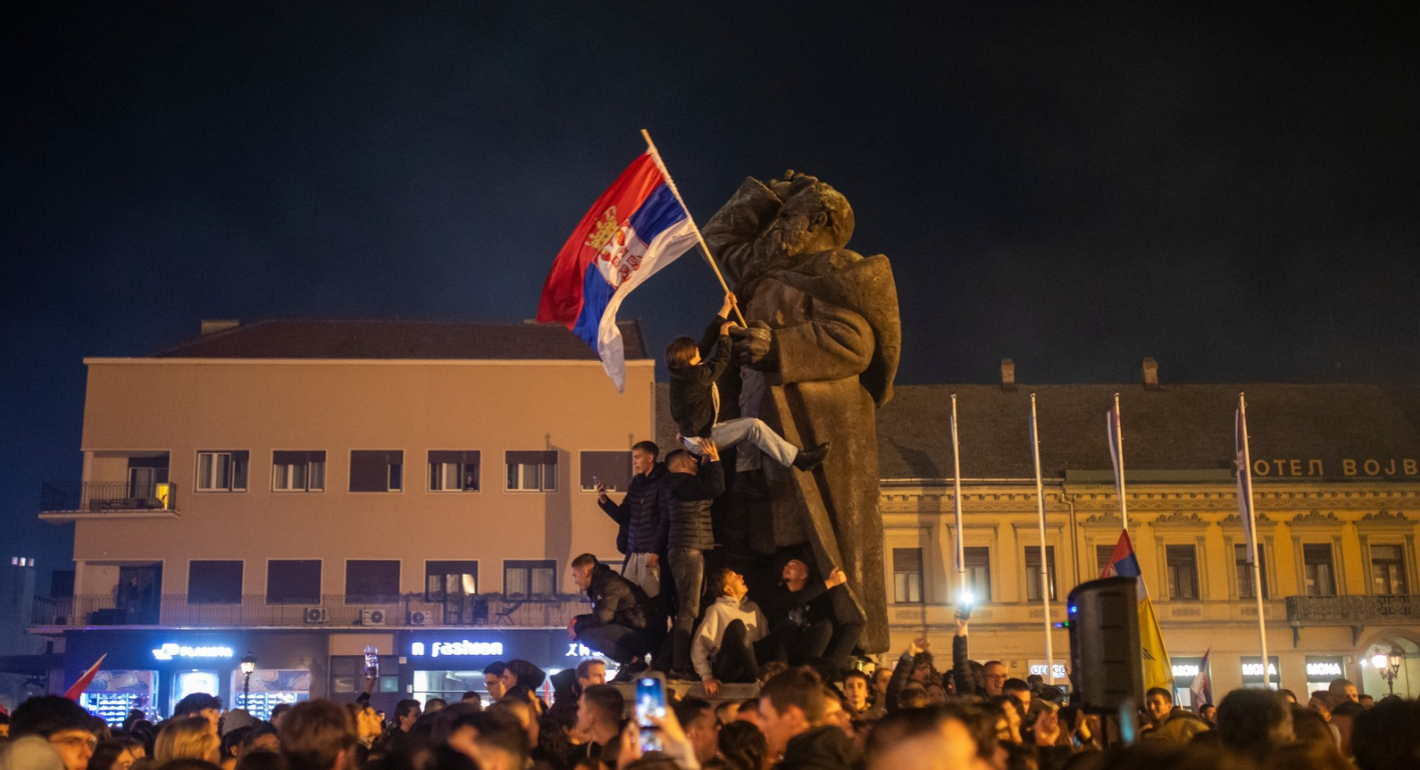
Excitement is in the air following Aleksandar Vučić’s defeat in Serbia. To build a truly democratic state, the movement that unseated the former president must learn from the mistakes of the past.

Ivan Vejvoda

The EU can impose sanctions but struggles to enforce them without the United States. With Washington increasingly disinterested in backing European interests, the bloc must now fend for itself.


Nicu Popescu, Tiago Antunes

Ahead of a tough winter for Ukraine, Donald Trump’s swing back toward Russia bodes ill. But instead of panicking, Kyiv’s European allies are focusing on action.

Rym Momtaz

While the EU and European governments are embracing the much-lauded middle-power moment, this entails three difficult conundrums.

Richard Youngs

Europe is facing rising populism internally as well as external pressures from Russia, China, Turkey, and the United States.

Dimitar Bechev