

Commentary
The new U.S.–Denmark–Greenland agreement will help Washington exert political, economic, and financial dominance under the guise of security. Yet, it acknowledged Copenhagen’s and Nuuk’s sovereignty on the island.
Marc Pierini
{
  "authors": [
    "Lu Yang"
  ],
  "type": "legacyinthemedia",
  "centerAffiliationAll": "",
  "centers": [
    "Carnegie Endowment for International Peace",
    "Carnegie China"
  ],
  "collections": [
    "China and the Developing World",
    "China’s Foreign Relations"
  ],
  "englishNewsletterAll": "",
  "nonEnglishNewsletterAll": "",
  "primaryCenter": "Carnegie China",
  "programAffiliation": "",
  "programs": [],
  "projects": [],
  "regions": [],
  "topics": [
    "Security"
  ]
}
Source: Getty
The far-reaching political and economic impacts of pandemics warrant security coordination on par with that of military threats.
In order to better prepare for and respond to pandemics, the international community must consider public health a national security issue. COVID-19, the disease caused by the new coronavirus, is threatening the interconnected global community, as international travel increases the risk and speed of transmission and measures such as border closings and quarantines impair commerce and freedom of movement.
It is difficult to predict the political and economic fallout from the coronavirus outbreak. But one result is clear: it will lead to permanent shifts in political and economic power. The pandemic may reinforce nationalism and lead some countries to focus more on their own national interests. It may also prompt a retreat from globalization as new questions are raised about the efficacy of long-distance supply chains.
Unfortunately, military concerns still dominate our understanding of national and global security. When governments design their national security strategies, they invest much more in war preparation than in preventing and fighting infectious diseases. After this crisis, the international community must improve its pandemic planning and treat public health as a central security concern.
Despite current cooperation in global health—such as international efforts to identify and detect infectious diseases and joint research programs orchestrated by the World Health Organization (WHO)—existing pandemic response mechanisms are limited. The coronavirus outbreak has revealed that governments were not ready for a global pandemic and lacked the capacity to coordinate emergency responses across countries.
The WHO plays a role in providing public health information, monitoring risks, and coordinating joint programs to prepare for and mitigate public health emergencies. When an outbreak emerges, however, it is up to individual governments to implement public health measures to mitigate the spread of infectious disease. Unilateral policies and disjointed efforts to contain pandemics poison relationships among states, create logistical difficulties, and jeopardize the timely delivery of relief supplies and goods and services to people in need. And for humanitarian reasons, poor countries with limited resources need special support from the international community.
Over the years, many countries have created strategic preparedness plans for pandemics. The EU had a pandemic preparedness plan in place, for example. However, it failed at the outset to execute a response equal to the scale of the current outbreak, indicating that regional and international cooperation still faces key challenges.
The necessity of such cooperation is clear: in the face of the coronavirus pandemic, neither rich nor poor countries can protect themselves by acting alone. Strong global leadership, as well as coordination among regional and global actors, is required.
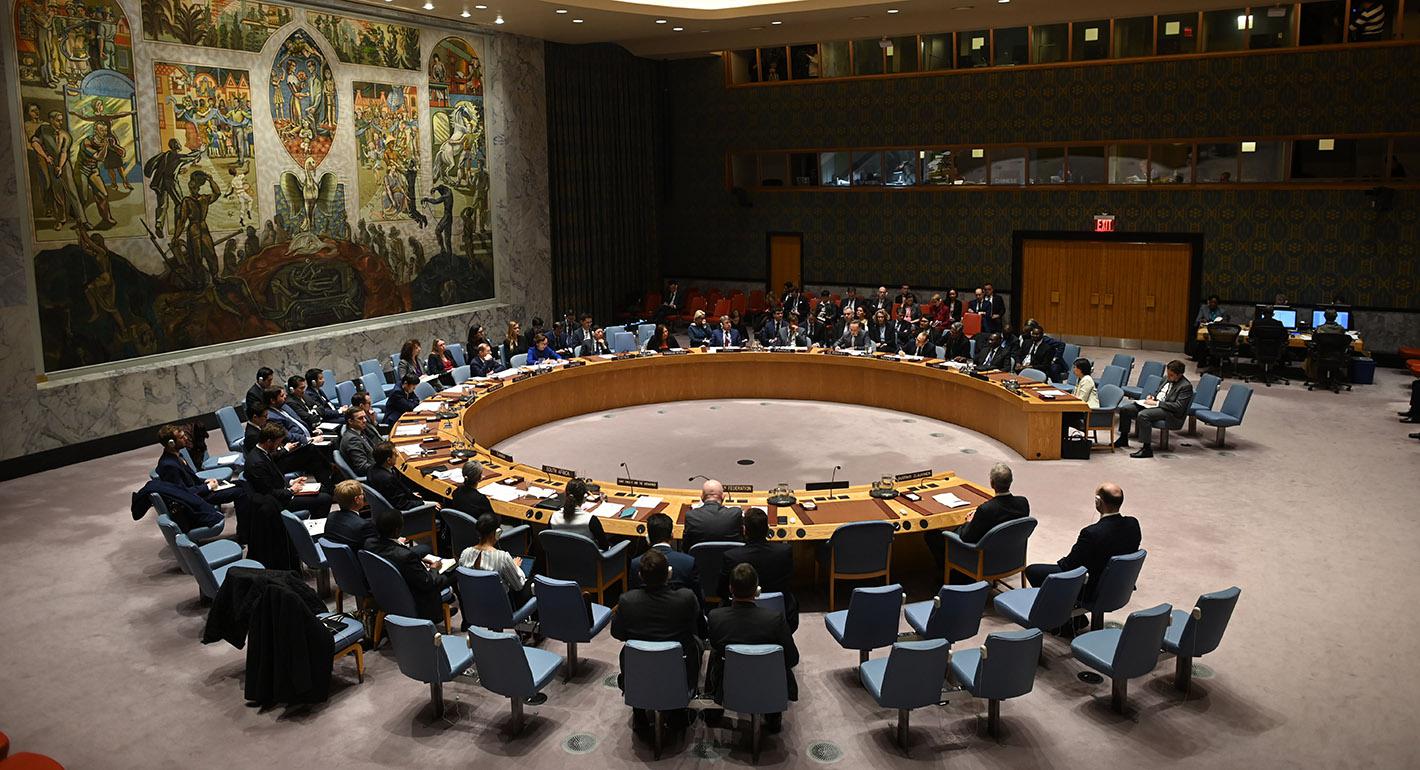
Although the UN Security Council has been criticized for its response, which has favored the interests of the five permanent members, it is still the most authoritative institution on global security issues and an important symbol in international security cooperation. Earlier this year, all five permanent members approved a motion proposed by Russian President Vladimir Putin for a summit of their own representatives. That summit, which could potentially take place in New York in September 2020, during the seventy-fifth session of the UN General Assembly, would afford an opportunity to discuss the pandemic in addition to the usual topics like arms control and peacekeeping.
There is precedent for the Security Council to play a role in coordinating responses to public health crises. In 2014, the council adopted Resolution 2177, which declared the Ebola outbreak in Africa a threat to international peace and security. The current outbreak makes an even stronger claim for such action.
In one welcome development, the outbreak has provided a new impetus for regional cooperation in South Asia. On March 15, the South Asian Association for Regional Cooperation (SAARC) convened a video conference for leaders of all eight member states to discuss the regional coronavirus response. The conference is significant, as the group had remained in limbo since the 2016 Uri attack, a deadly skirmish between Indian and Pakistani forces. In the ensuing years, India actively sought to isolate Pakistan in the region and dismiss SAARC’s viability as a cooperation mechanism. However, the recent conference reflects a shift in India’s attitude and a potential revival for the regional organization. A SAARC coronavirus fund has been proposed, and its disaster management center will coordinate the regional pandemic response. Although the efficiency of this setup and the capability of the members to execute a shared response are unproven, the move may have spillover benefits in other issue areas.
The word crisis in Chinese (Weiji, 危机)indicates a dialectical way of thinking. The character 危 means danger and the character 机 means opportunity. Together, they imply that opportunities can be born from difficulty. In an optimistic view, the coronavirus outbreak is generating new opportunities for global cooperation on public health, particularly in security forums. The world is threatened by a common, invisible enemy, and it is more important than ever to try out new approaches to security cooperation and to think in terms of shared goals and the global common good.

Lu Yang
Former Resident Scholar, Carnegie-Tsinghua Center for Global Policy
Lu Yang was a resident scholar at the Carnegie-Tsinghua Center until June 2020.
Carnegie does not take institutional positions on public policy issues; the views represented herein are those of the author(s) and do not necessarily reflect the views of Carnegie, its staff, or its trustees.

The new U.S.–Denmark–Greenland agreement will help Washington exert political, economic, and financial dominance under the guise of security. Yet, it acknowledged Copenhagen’s and Nuuk’s sovereignty on the island.

Marc Pierini

A summer of escalation in the Black Sea has hurt Ukraine economically and is exacerbating world food security. A truce is needed—as is a broader reframing of Europe’s Ukraine strategy.

Thomas de Waal

Are Germany’s economic, industrial, and political struggles becoming a liability for the EU’s ability to rise to the geopolitical moment?

Rym Momtaz, ed.

European states control several Overseas Countries and Territories around the world that carry strategic, economic, and environmental weight. As great powers challenge the rules-based order, defending them is a geopolitical imperative for Europe.
Marc Pierini

Mounting economic strain and battlefield losses will not necessarily make the Kremlin less dangerous. They could instead push Moscow toward a more aggressive hybrid campaign designed to test NATO’s Eastern flank, exploit allied hesitation, and fracture European resolve.

Maksym Beznosiuk