

Q&A
Eugene Rumer
{
  "authors": [
    "Eugene Rumer"
  ],
  "type": "commentary",
  "centerAffiliationAll": "dc",
  "centers": [
    "Carnegie Endowment for International Peace"
  ],
  "collections": [
    "Coronavirus"
  ],
  "englishNewsletterAll": "ctw",
  "nonEnglishNewsletterAll": "",
  "primaryCenter": "Carnegie Endowment for International Peace",
  "programAffiliation": "russia",
  "programs": [
    "Russia and Eurasia"
  ],
  "projects": [],
  "regions": [
    "Russia"
  ],
  "topics": [
    "Political Reform",
    "Economy"
  ]
}
Source: Getty
Even as the economic impact of the pandemic deepens, Putin is unlikely to walk back his signature interventions abroad.
It is tempting to think that the global coronavirus pandemic will have a moderating effect on tensions between Russia and the West. The logic makes plenty of sense: The price of oil has plunged to levels not seen in decades, sapping the lifeblood of the Russian economy practically overnight. Demand for the other commodities that dominate Russian exports will decline too, as the world heads into a deep recession. Surely, President Vladimir Putin will now abandon his ill-advised military adventures in Ukraine and Syria and instead tend to Russia’s economy and the welfare of its people, right? Unfortunately, such thinking is based on a profound misreading of what drives Russian foreign policy.
The Kremlin’s war against Ukraine, which began with the 2014 annexation of Crimea, was a pivotal moment in Russia’s post–Cold War relationship with the West. It was the last straw that brought clarity and finality to long-running disagreements over NATO expansion, the 2008 war with Georgia, the civil war in Syria, and Putin’s domestic crackdown. But the break with the West and the war against Ukraine are not, as they have been portrayed by foreign observers (including this writer), reckless adventures.
From Moscow’s perspective, the war with Ukraine—or for Ukraine—is a war of necessity, not choice. The worldview of Putin and his security establishment was shaped by the Cold War and Russia’s post–Cold War “time of troubles.” As they see it, the West took advantage of Russia’s weakness and embarked on a relentless expansion of its sphere of influence right up to Russia’s border. Ukraine, which for centuries had been an inalienable part of the Russian imperial and Soviet heartland, could not be allowed to leave Russia’s orbit and join the West.
It is thus wishful thinking to imagine that, even with the Russian economy heading precipitously into a recession, Putin would end the war in Ukraine in exchange for relief from Western sanctions. Such a deal would mean a humiliating defeat. Putin would in effect have to accept Ukraine’s exit from his self-proclaimed sphere of influence, free to follow its own path of integration into the EU and NATO. Accepting such a deal in exchange for an economic handout from the West would mean another humiliation—acknowledging the failure of a strategy of economic self-reliance that dates to his earliest years in power. For the man who prides himself on lifting Russia from its knees after the 1990s, it is not an option.
The misguided notion that Putin will retreat under economic pressure from the West is rooted in the experience of the 1990s, when Russia withdrew from the world stage to deal with its domestic political and economic turmoil. Since then, Putin and his national security establishment have resolved that nothing comparable will ever happen on their watch. They did not pull back from their assault on Ukraine under pressure from the West even though the ruble collapsed in late 2014, when oil prices fell dramatically and the economy slipped into a recession. In fact, since then they have doubled down on their confrontational foreign policy, sending troops to Syria, bailing out President Nicolás Maduro’s government in Venezuela, and interfering in the domestic politics of the United States and Europe.
Putin’s foreign policy is daring, but hardly reckless. It involves calculated risks. In the case of Ukraine, the United States and its allies made clear they would not enter the fray directly. Russia’s deployment in Syria to save the regime of President Bashar al-Assad was a bold move with a worthwhile payoff. The principal risk—a military confrontation with the United States—was minimal, since Washington had made it abundantly clear that it would not intervene militarily in the civil war to topple Assad. Putin’s decision restored Russia’s place at the crossroads of Middle Eastern politics after some three decades during which the United States had grown accustomed to its absence. His deal with Maduro reportedly made money for Russia’s national oil company, Rosneft. Other Russian moves—such as forays in the Central African Republic and Libya and meddling in U.S. and European politics—carried little risk and expended few resources, but created a new image of Russia as a major power with global reach.
It would take a radical reversal of domestic economic and political fortunes for the Kremlin to contemplate a retreat from its present course in Ukraine, Syria, or anywhere else. In the near term, the Kremlin may decide to limit its military operations in Syria to reduce the risk of its troops’ exposure to the virus and use private contractors instead. (Evidently, the Russian military considers the personnel of private security companies expendable, and higher unemployment in Russia may expand the ranks of volunteers for dangerous service abroad.) But elsewhere, expect the Kremlin’s army of foreign policy entrepreneurs to double down on spreading disinformation about the pandemic, intervening in conflict zones like Libya, and meddling in elections.
In a televised meeting on April 8, Putin essentially made a “We Shall Overcome” promise to the nation, comparing the coronavirus to the marauding invaders who assaulted Russia in medieval times. He does not sound like a leader likely to retreat from his flagship foreign policy accomplishments. With Putin’s forever presidency now secured, he can safely revert to the role the constitution assigns to him—that of the nation’s supreme leader, reassuring his people, berating regional governors, and calling other world leaders. Putin stands above it all, responsible for none of it.
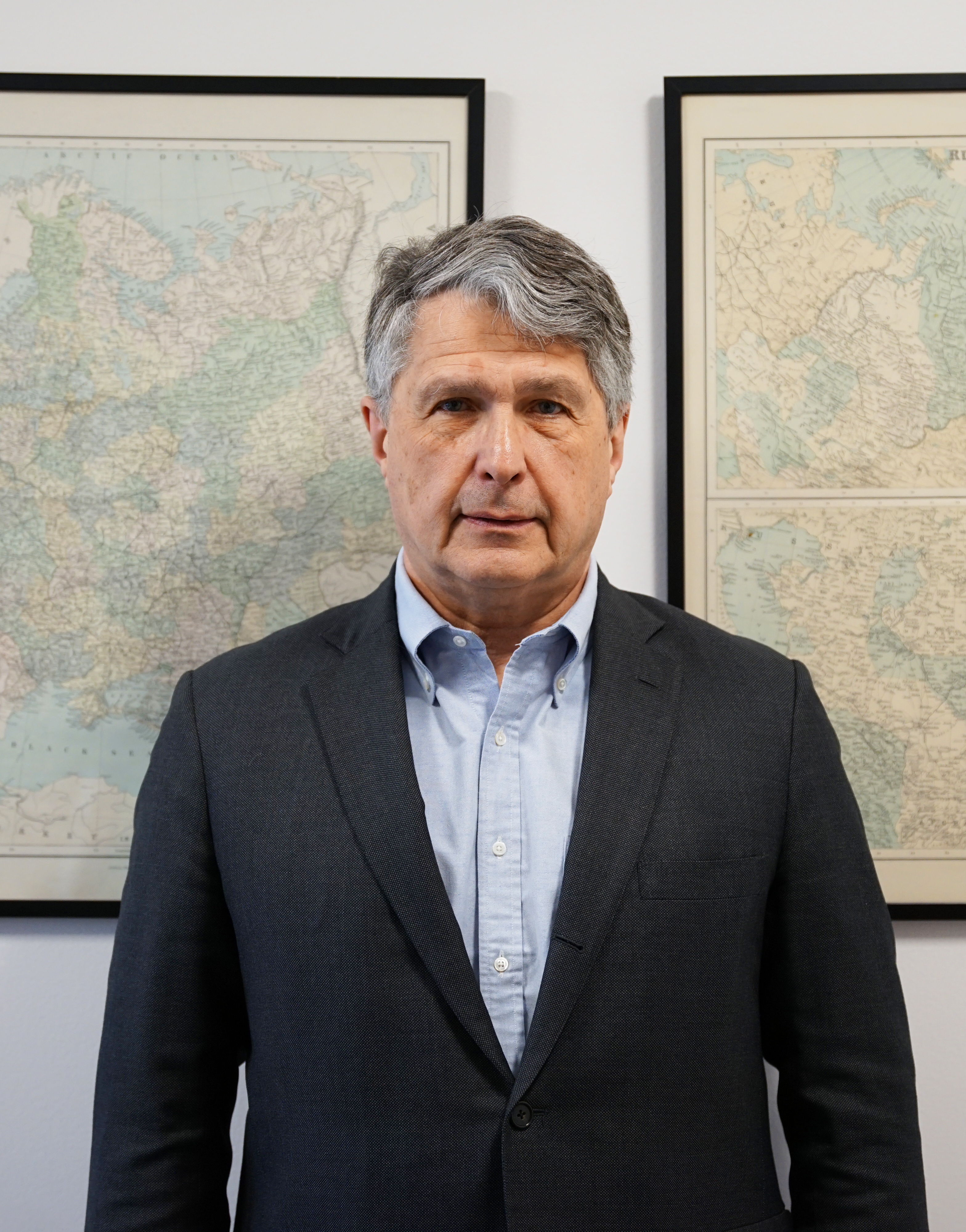
Director and Senior Fellow, Russia and Eurasia Program
Rumer, a former national intelligence officer for Russia and Eurasia at the U.S. National Intelligence Council, is a senior fellow and the director of Carnegie’s Russia and Eurasia Program.
Recent Work
Eugene Rumer
Eugene Rumer
Carnegie does not take institutional positions on public policy issues; the views represented herein are those of the author(s) and do not necessarily reflect the views of Carnegie, its staff, or its trustees.

Europe is facing rising populism internally as well as external pressures from Russia, China, Turkey, and the United States.

Dimitar Bechev

A notable degree of participative democracy has firmly arrived in Europe. But to have more far-reaching impact, democratic deliberation needs to move into a radically new phase.

Richard Youngs

The European Commissioner for Trade is headed to China. But after President Xi’s bridge-building visit to Washington, can a more isolated EU overcome Beijing’s stranglehold on critical raw materials? Who will blink first?

Rym Momtaz, ed.

The domestic impacts of how long it is taking to end the war in Ukraine have pushed the French electorate to the political extremes and compromised the country’s diplomatic capacity.
Rym Momtaz

Before the next wave of EU enlargement takes place, the union needs to grapple with thorny questions of how power is distributed among its members.


Emil Sondaj Hansen, Ditte Brasso Sørensen