

Paper
Raluca Csernatoni, Alicia Wanless
{
  "authors": [
    "Alicia Wanless"
  ],
  "type": "commentary",
  "centerAffiliationAll": "dc",
  "centers": [
    "Carnegie Endowment for International Peace"
  ],
  "collections": [],
  "englishNewsletterAll": "ctw",
  "nonEnglishNewsletterAll": "",
  "primaryCenter": "Carnegie Endowment for International Peace",
  "programAffiliation": "TIA",
  "programs": [
    "Technology and International Affairs"
  ],
  "projects": [
    "Partnership for Countering Influence Operations"
  ],
  "regions": [
    "Southeast Asia",
    "Iran"
  ],
  "topics": [
    "Democracy",
    "Technology"
  ]
}
Source: Getty
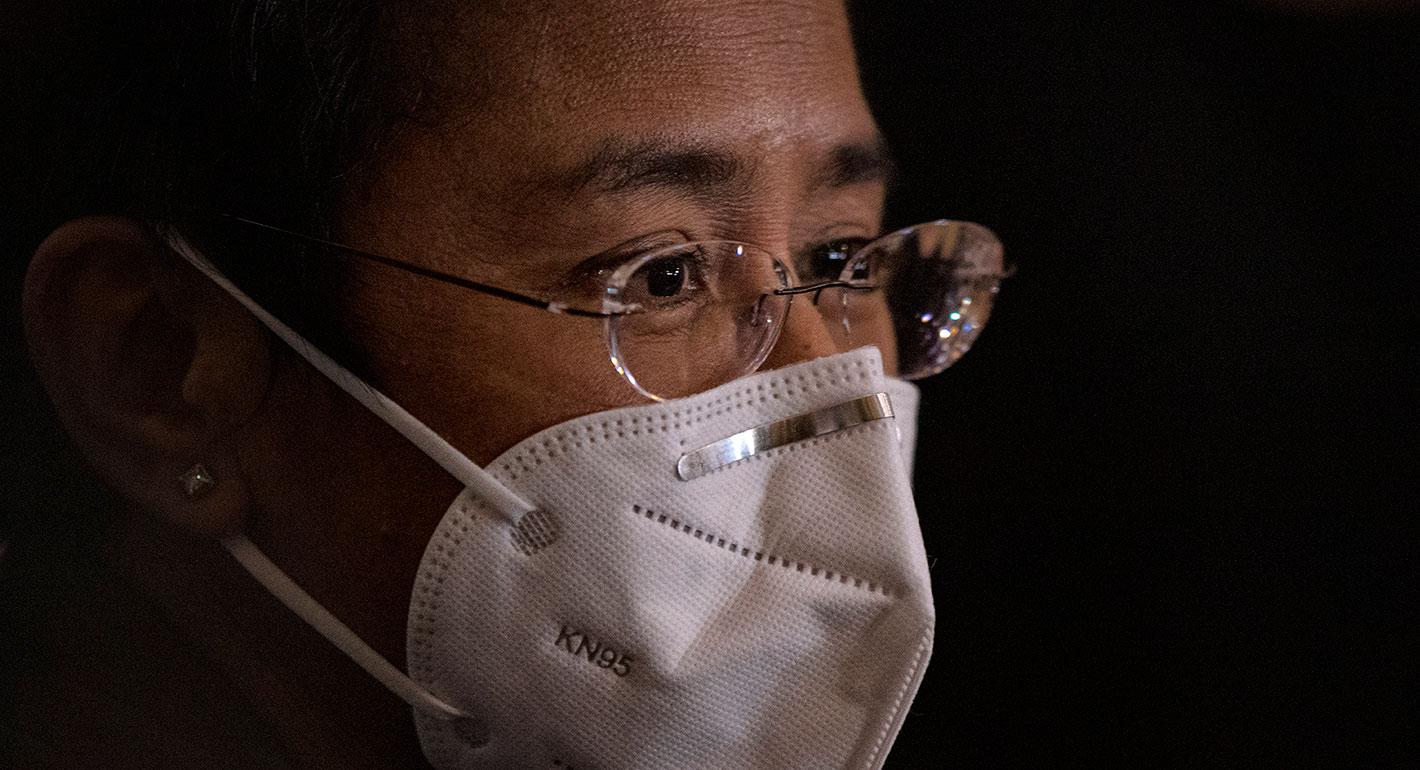
A Philippine American journalist has been convicted of “cyber libel.” The troubling case should ring alarm bells in the West too.
The conviction of award-winning journalist Maria Ressa on “cyber-libel” charges in the Philippines might seem like an obscure problem in a distant land, but it is a symptom of a disease that puts every democracy at risk. That disease is the unchecked use of influence operations—organized activities aimed at affecting an outcome or audience. Maria has been an advisor to Carnegie’s Partnership for Countering Influence Operations since its official launch in 2020. As she once told me, the Philippines is democracy’s dystopian future.
Democracies derive their legitimacy from their citizens’ ability to exercise free will through voting, informed by authentic debate. Unchecked influence raises questions about the authenticity of debate and the freedom of voters to make choices, particularly in a hyperconnected world where people are constantly exposed to and targeted by messaging. Influence operations can be used for good and bad, but few democracies have clear lines to distinguish what makes some activities acceptable and others unacceptable.
The use of influence operations to manipulate the information space in the Philippines is something Maria and her team continue to investigate. They have found ample evidence of these activities supporting President Rodrigo Duterte, including the use of trolls to harass the opposition, the spread of fake news to support his war on drugs, and the amplification of supportive hashtags using networks of fake social media accounts.
In her field, Maria has won dozens of international awards, including Time magazine’s international Person of the Year for her work exposing unacceptable influence operations in 2018. Yet, reportedly, at least eleven complaints and charges have been thrown at Maria and her media outlet Rappler as of July 2019. Reading the list, it is hard not to see this harassment of Maria and Rappler as anything but a witch hunt. The charges include "cyber libel," the "alleged violation of the Anti-Dummy Law and the Securities Code," tax evasion, and the violation of foreign ownership laws. Clearly, investigating domestic influence operations is a dangerous pursuit.
Maria’s work reporting on influence operations in the Philippines is vital fuel to keep the flames of democracy burning in that country. Domestic origin influence operations include the most dangerous and pernicious forms of propaganda precisely because they are so effective. When the source of a campaign is within a culture, they have the advantage of a nuanced understanding of which messages are most likely to hit their target. They highlight the uncomfortable relationship that citizens in democracies have with influence and persuasion. They threaten the legitimacy of our political system, and addressing them or even understanding them is hard. This difficulty encourages us to ignore the problem.
But the grim reality is that influence operations are happening in almost every country. Yes, the Philippines ranked 136 out of 180 countries for press freedom in the Reporters Without Borders’ 2020 World Press Freedom Index. Yet the United States sits at 45, having slipped from 32 in 2013. Just this month, the politically appointed CEO of the U.S. Agency for Global Media—which aims to counter disinformation and oversees public broadcasters including Voice of America—purged the top brass of sister news agencies. Those heads remaining must worry about the agency’s independence.
Ignoring domestic influence operations will not make the problem go away. If anything, neglect allows disinformation to fester and spread to such a degree that it becomes too insidious and too late to address. Unfortunately, as many politicians benefit from the use of covert online campaigns to win and hold power, finding the political will to curtail such unacceptable activities is a challenge.
So long as citizens have a voice in democracies, they must use it. While countering influence operations online is unpleasant, particularly for an average person, it’s important that we do so in order to prevent Maria’s prediction—of democracy’s dystopian future—from coming true. If nothing else, all of us with an online presence can support the work of people like Maria by sharing and contributing to their efforts.

Senior Fellow, Technology and International Affairs, Director, Information Environment Project
Alicia is the director of the Information Environment Project and the author of The Information Animal: Humans, Technology and the Competition for Reality. Alicia was a technical advisor to the Aspen Institute’s Commission on Information Disorder and is a founding member of its Global Cybersecurity Group.
Recent Work

Raluca Csernatoni, Alicia Wanless



Sophia Besch, Steve Feldstein, Stewart Patrick, …
Carnegie does not take institutional positions on public policy issues; the views represented herein are those of the author(s) and do not necessarily reflect the views of Carnegie, its staff, or its trustees.

A notable degree of participative democracy has firmly arrived in Europe. But to have more far-reaching impact, democratic deliberation needs to move into a radically new phase.

Richard Youngs

The domestic impacts of how long it is taking to end the war in Ukraine have pushed the French electorate to the political extremes and compromised the country’s diplomatic capacity.

Rym Momtaz

Before the next wave of EU enlargement takes place, the union needs to grapple with thorny questions of how power is distributed among its members.


Emil Sondaj Hansen, Ditte Brasso Sørensen

Radical-right parties are expected to do well in upcoming elections in four of the EU's biggest member states. If successful, they could prevent the union from addressing key challenges ahead.

Stefan Lehne

An overwhelming victory by a far-right-wing party in a small state in eastern Germany will have major repercussions for Chancellor Friedrich Merz’s coalition.

Judy Dempsey