

Commentary
The EU can impose sanctions but struggles to enforce them without the United States. With Washington increasingly disinterested in backing European interests, the bloc must now fend for itself.
Nicu Popescu, Tiago Antunes
{
  "authors": [
    "Thomas Carothers",
    "Andrew O’Donohue"
  ],
  "type": "legacyinthemedia",
  "centerAffiliationAll": "dc",
  "centers": [
    "Carnegie Endowment for International Peace"
  ],
  "collections": [],
  "englishNewsletterAll": "democracy",
  "nonEnglishNewsletterAll": "",
  "primaryCenter": "Carnegie Endowment for International Peace",
  "programAffiliation": "DCG",
  "programs": [
    "Democracy, Conflict, and Governance",
    "South Asia"
  ],
  "projects": [],
  "regions": [
    "South Asia",
    "Southeast Asia"
  ],
  "topics": [
    "Political Reform",
    "Foreign Policy",
    "Global Governance"
  ]
}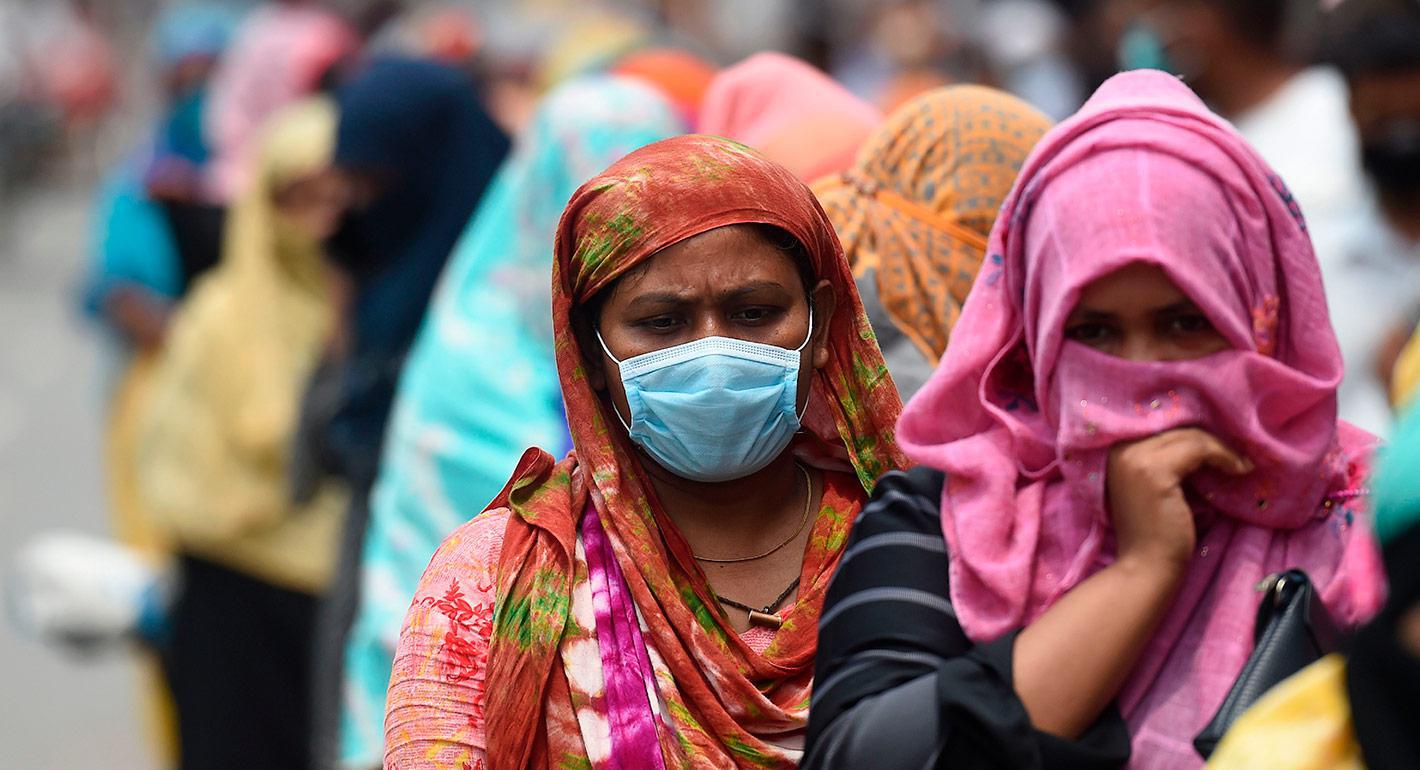
Source: Getty
The roots of polarisation in these countries run deep, usually dating back to at least the first half of the 20th century and the formation of modern nation-states
Source: East Asia Forum
COVID-19 has unleashed a new wave of democratic erosion across South and Southeast Asia. In India, the government arrested activists who protested against a discriminatory citizenship law and in August 2020, Prime Minister Narendra Modi furthered his Hindu nationalist vision by laying the cornerstone for a Hindu temple on the site of a destroyed mosque in Ayodhya. In neighbouring Sri Lanka, President Gotabaya Rajapaksa is on the cusp of passing a constitutional amendment to expand his executive powers after his party clinched a two-thirds supermajority in parliament. The Indonesian, Malaysian and Thai governments have all clamped down hard on critics during the pandemic.
An influential narrative diagnoses the coronavirus as the impetus for these illiberal actions, battering democracies that were already vulnerable. Yet commentators rarely diagnose exactly what the underlying vulnerability was. Our research finds that recent political developments across South and Southeast Asia should be understood as an intensification of a deeper and longer-term trend toward rising political polarisation. In many countries throughout these regions — including Bangladesh, India, Indonesia, Malaysia, Sri Lanka and Thailand — deep-seated sociopolitical divides are fuelling democratic erosion and will continue to strain democracies long after a COVID-19 vaccine is found.
The roots of polarisation in these countries run deep, usually dating back to at least the first half of the 20th century and the formation of modern nation-states. In Sri Lanka, ethnic polarisation between Sinhala Buddhists and mostly Tamil-speaking minorities gained traction in the 1930s when the island’s British colonisers installed an electoral system that fomented ethnonationalist politics. Sri Lanka’s experience further illustrates that polarisation tends to be rooted in one or more of three powerful societal fissures: ethnicity, religion or ideology. These findings underscore how fundamental political divides are and how hard they are to bridge.
Ethnic or religious majoritarianism is the most common basis for intense polarisation across South and Southeast Asia. Yet ideological divisions too can become a matter of social identity, as in Thailand. What is more, polarisation can ravage democracy even in relatively homogeneous countries, such as Bangladesh.
Long-standing divisions have burst to the forefront of political life in many parts of South and Southeast Asia over the past two decades. In India, the Hindu right’s stunning success in the 2014 and 2019 elections has heightened polarisation between Hindu nationalist and pluralist visions of the country. In Indonesia, fierce competition between Islamist and more pluralist forces since 2014 has engendered societal discord and even election violence. In Thailand, polarisation over the legitimacy of monarchical rule and existing social hierarchies erupted after 2001, leading to years of clashing street protests and two military coups.
In almost all cases, political leaders have played a critical role in aggravating polarisation. Modi in India, the Rajapaksas in Sri Lanka and Thaksin Shinawatra in Thailand have relentlessly inflamed divisions and entrenched them throughout society — often with resounding electoral success. Opposition forces have escalated polarisation by weaponising mass protests or reciprocating with divisive tactics.
Yet political leadership is just one factor amplifying divisions. Deeper structural forces are also at work. The economic liberalisation and transformation of recent decades have often stoked polarisation by creating key constituencies for anti-establishment leaders like Modi and Thaksin. Certain political institutions, such as first-past-the-post electoral rules in India and Malaysia, have channelled complex societal cleavages into harsh binary divisions.
The global war on terror has inflamed fears about Islamic radicalism and exacerbated religious polarisation. The wider geopolitical context has become more hospitable to divisive, illiberal rulers as the influence of Western powers wanes. The commercialisation of traditional media and the rise of social media have also reduced the power of moderate gatekeepers while amplifying extreme voices.
Polarisation is thus a ‘pre-existing condition’ that has rendered South and Southeast Asian democracies highly vulnerable to new pressures caused by the pandemic. In India, for example, fears surrounding the pandemic have fuelled an explosion of intolerance towards Muslims. The conspiracy theory Twitter hashtag ‘CoronaJihad’ appeared almost 300,000 times in a single week, accusing Muslims of deliberately spreading the virus.
Yet this surge of Islamophobia is not surprising given the polarised sociopolitical context in India. Just this February, sectarian violence in India’s capital left more than 50 people dead, most of them Muslims. Similarly, the Indonesian government’s recent crackdown on pandemic-related criticism is best understood as an intensification of previous illiberal efforts to restrict the speech of civil servants and criminalise opposition protest leaders.
Polarisation is a serious political disease, one that can tear democracies apart. But it can be fought. Enlightened leaders can cool political fires and bring divided citizens back together. Opposition politicians can build diverse coalitions and adopt campaign strategies aimed at unity rather than division. Civic activists can foster political and social dialogues. Media organisations can push for reforms that reduce hate speech and disinformation.
The aim of such efforts should not be to suppress political divisions entirely, but rather to manage them. Some amount of polarisation is inherent in any democracy. But the political perils brought on by the pandemic highlight that mitigating polarisation is now a critical task. If there is a silver lining to the pandemic, let it be that political and civic actors around the region can rise to the challenge of pushing back against rising polarisation before it consumes them.
This article was originally published by the East Asia Forum.

Harvey V. Fineberg Chair for Democracy Studies; Senior Fellow, Democracy, Conflict, and Governance Program
Thomas Carothers, a senior fellow in the Carnegie Endowment for International Peace’s Democracy, Conflict, and Governance Program, is a leading expert on comparative democratization and international support for democracy.

Fellow, Democracy, Conflict, and Governance Program
Andrew O’Donohue is a fellow in Carnegie’s Democracy, Conflict, and Governance Program. His research studies law and courts, democracy and authoritarianism, and Middle East politics, with a focus on Türkiye and Israel.
Carnegie does not take institutional positions on public policy issues; the views represented herein are those of the author(s) and do not necessarily reflect the views of Carnegie, its staff, or its trustees.

The EU can impose sanctions but struggles to enforce them without the United States. With Washington increasingly disinterested in backing European interests, the bloc must now fend for itself.


Nicu Popescu, Tiago Antunes

Russia is testing the waters of NATO’s mutual defense clause. What do strikes in Romanian territorial waters mean for the alliance’s posture toward Moscow?

Dimitar Bechev

With its public finances in shambles, the far right polling at 35 percent ahead of the 2027 presidential election, and a growing protest movement, is France’s crisis a threat to the EU’s geopolitical awakening?

Rym Momtaz, ed.

Ahead of a tough winter for Ukraine, Donald Trump’s swing back toward Russia bodes ill. But instead of panicking, Kyiv’s European allies are focusing on action.
Rym Momtaz

Funding Ukraine remains a priority for European leaders. As Russia’s war of aggression heads into another winter, two feasible options to mobilize support for Kyiv should be fast-tracked.


Vladyslav Rashkovan, Gregory P. Wilson