

Q&A
Darshana M. Baruah, Satyendra Prasad, Denghua Zhang
{
  "authors": [
    "Darshana M. Baruah"
  ],
  "type": "questionAnswer",
  "centerAffiliationAll": "dc",
  "centers": [
    "Carnegie Endowment for International Peace"
  ],
  "collections": [],
  "englishNewsletterAll": "ctw",
  "nonEnglishNewsletterAll": "",
  "primaryCenter": "Carnegie Endowment for International Peace",
  "programAffiliation": "SAP",
  "programs": [
    "South Asia"
  ],
  "projects": [
    "Indian Ocean Initiative"
  ],
  "regions": [
    "South Asia",
    "East Asia",
    "Southeast Asia"
  ],
  "topics": [
    "Security"
  ]
}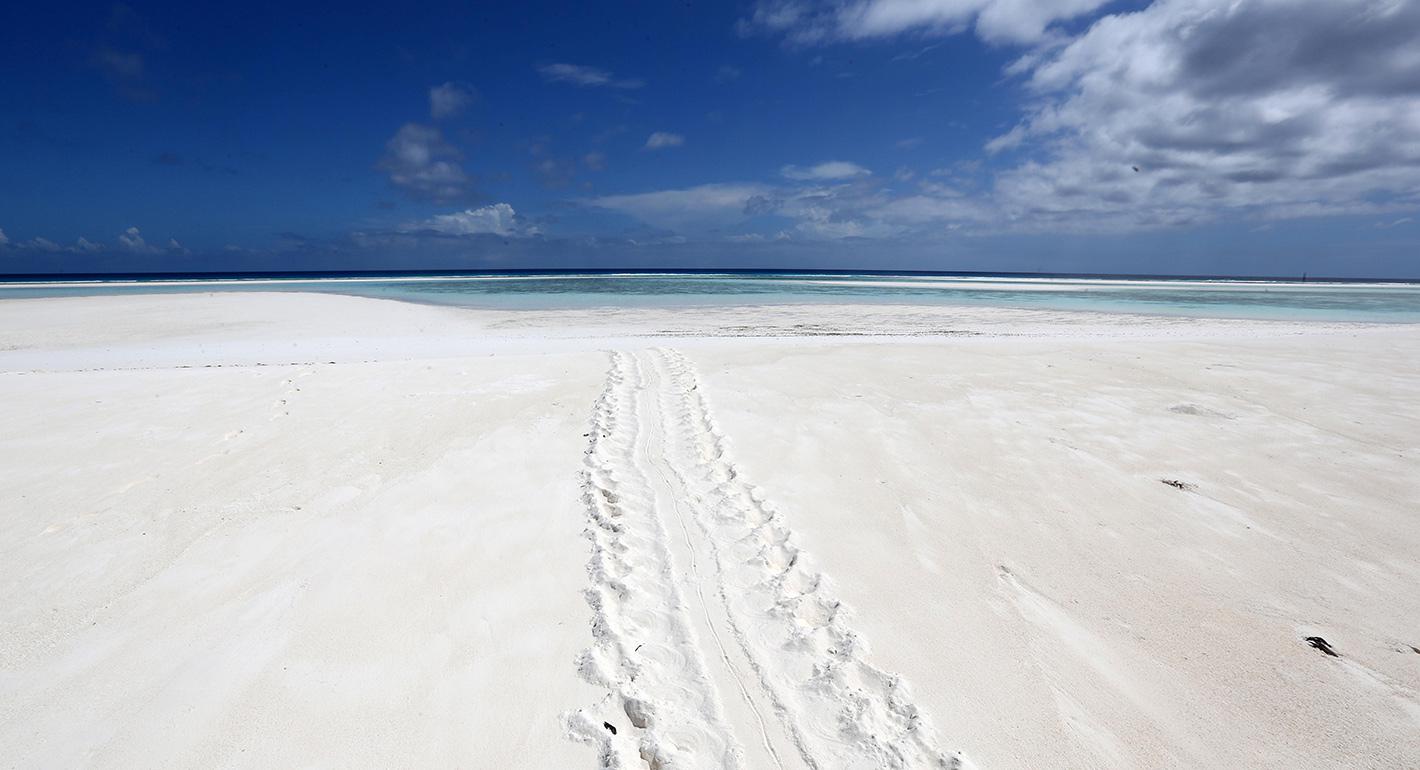
Source: Getty
Dizzyingly enormous and varied in topography and culture, the Indian Ocean is critical to global trade, security, and geopolitics. As countries jostle for influence in its crowded waterways, how will the new power dynamics play out?
The Indian Ocean is a vast theater, stretching from the Strait of Malacca and western coast of Australia in the East to the Mozambique Channel in the West. It encompasses the Persian Gulf and the Arabian Sea in the North, all the way down to the southern Indian Ocean.
Along the coasts of this huge geographic expanse are countries that are home to some 2.7 billion people. The Indian Ocean’s key subregions are South Asia, the Middle East, the eastern coast of Africa, and the islands dotting the ocean from Sri Lanka in the East to the Comoros Archipelago in the West.
The region’s size and diversity explains its geoeconomic importance. Its regional forum, the Indian Ocean Rim Association, includes countries as politically and socially different as Australia, Indonesia, Iran, and South Africa, leading to striking new power dynamics. From resource-rich Africa and the energy-dense Middle East to South Asia’s labor markets and manufacturing industries, the stability of the Indian Ocean is crucial to the global economy.
While it may be difficult today for one nation to control the entire expanse of the Indian Ocean the way the British, French, or Portuguese empires did during the colonial period, the strategic significance of the Indian Ocean remains the same. In fact, the advent of the Indo-Pacific—the new geopolitical framework that includes both the Indian and Pacific Oceans—has pushed the Indian Ocean back into the spotlight after a period with no serious great power competition in the region, following the end of the Cold War.
The importance of trade and the sheer scope of its many subregions make the Indian Ocean critical in terms of military and strategic engagement. It is a vital trading hub, connecting the Middle East to Southeast and East Asia, as well as Europe and the Americas. Any disruption along its trading routes will impact the entire globe’s energy security, let alone that of significant economies like China, Japan, and South Korea, which depend on energy imported primarily via the Malacca strait.
At the heart of the geopolitical struggle in the Indian Ocean is the ability to sustain a military presence near the key choke points connecting its trade routes. Such a presence gives countries the power to protect and disrupt these valuable maritime channels—known as Sea Lines of Communications (SLOC) protection and SLOC interdiction in naval terms—during times of peace and war.

Of the world’s seven key choke points for oil transportation, three are in the Indian Ocean. These are bottlenecks that connect two important waterways, creating a shipping traffic jam. If these narrow stretches of water are blocked or unavailable, the alternative route is usually expensive, long, or in some cases, impossible for large ships and oil tankers to navigate.
The first choke point is the Malacca strait between Malaysia, Singapore and the Indonesian island of Sumatra, which connects Southeast Asia and the western Pacific to the Indian Ocean. The second is the Strait of Hormuz, which is the only sea passage connecting the Persian Gulf to the wider Indian Ocean. The third is the Bab-el-Mandeb strait, which flows between Eritrea and Djibouti in the Horn of Africa and Yemen on the Arabian Peninsula, connecting the Red Sea to the Indian Ocean. Finally, there is also the Mozambique Channel between Madagascar and Mozambique, which is a key trading route for goods transiting the Cape of Good Hope to the Middle East and Asia.
If a navy has access to and influence over these choke points, it can oversee all entry and exit points into the region. Moreover, presence near key choke points helps a nation’s antisubmarine warfare and surveillance missions, which create maritime domain awareness. Surveillance and reconnaissance missions around choke points are particularly important for awareness of an adversary’s submarine movements, because detecting subsurface vessels in the wider open sea is much more difficult and expensive. A nation that boasts a strong security profile in the Indian Ocean will be an instrumental partner for the many littoral countries along its coastline, spanning Africa, the Middle East, and South Asia.
After the Second World War, as newly independent countries across the region withdrew to focus on immediate economic and security issues within their borders, the ocean was split into the continental subregions of Africa, the Middle East, and South Asia. The island nations also grouped themselves into these subregions, dividing the Indian Ocean primarily into the eastern Indian Ocean and the western Indian Ocean.
The United States was a key player in the region through the Cold War with the Soviet Union. But later, Washington reduced its engagements. By the early twenty-first century, the U.S. presence in the Indian Ocean was mostly limited to supporting its missions in Afghanistan and the Middle East.
Partnerships in the Indian Ocean are also complex in the new security environment. For example, the United States continues to maintain a military base on the island of Diego Garcia in the Chagos Archipelago. But the sovereignty of the island—an overseas territory of the UK that London leased from Port Louis during its independence—is disputed by Mauritius, with the UN General Assembly adopting a resolution in favor of Mauritius in 2019. Although India is a key U.S. partner in the Indian Ocean today, New Delhi politically throws its support behind Mauritius on principles of decolonization and nonalignment. Larger countries’ bilateral dynamics with the littorals and islands of the region carry implications for the wider ocean.
With the United States preoccupied with its commitments in the Pacific, Afghanistan and the Middle East, France, and India took on the role of key security providers in the region. Paris is a major player in the western Indian Ocean, while New Delhi has the primary role in the eastern Indian Ocean. Through its overseas region of Reunion, France is a member of the Indian Ocean Commission, the only forum that brings together the French-speaking islands of the region. However, the Indian Navy claims the entire Indian Ocean as its area of responsibility and prides itself on being the first to respond to natural and humanitarian disasters there.
While France and India are the key regional players on security, the UK also plays an important role. Other countries are involved in specific issues, especially maritime piracy: China, India, Japan, and the United States and its NATO allies, as well as the UN, all have ongoing missions to combat piracy off the coast of Somalia. Their presence addresses a shared international maritime concern and is usually restricted to the affected region off the Horn of Africa. But over the years, this engagement has provided new players such as China with the opportunity to interact with the Indian Ocean’s littoral countries and islands.
Building on its antipiracy missions, China has emerged as a strong partner for the islands and littoral countries of the Indian Ocean. The Maritime Silk Road, under Beijing’s Belt and Road Initiative, has provided an added platform to collaborate on economic and military issues. In 2017, Beijing set up its first overseas military facility in Djibouti on the Indian Ocean coast. While France, Japan, and the United States already have facilities in Djibouti, the Chinese base cements its position as a new player in the region.
Combined with Beijing’s larger maritime ambitions, China’s presence in the region has become a source of shared anxiety for France, India, the United States, and others.
For example, if India is the primary partner for smaller nations such as Sri Lanka and the Maldives and to an extent Mauritius and Seychelles, then France is the key partner for French-speaking Madagascar and Comoros. But Beijing stands to compete with India and France simultaneously across the six islands in the region. Of all the key powers in the Indian Ocean, China is the only one with a diplomatic mission across all six island nations—not France, India, the UK, or the United States.
The vacuum left by limited U.S. engagement over the last three to four decades combined with strategic inertia from New Delhi and Paris has been filled by new competition between India and China. But it is not just China that is challenging traditional players in the region. In 2020, Russia announced the establishment of a new naval base in Sudan for a period of twenty-five years. This provides Moscow with strategic access to the Red Sea and by extension to Bab-el-Mandeb, one of the key choke points in the Indian Ocean. Saudi Arabia and Turkey are also strengthening their economic and diplomatic ties with the islands of the Indian Ocean, which could lead to new power dynamics.
The United States must pay more attention to the Indian Ocean’s place within its own Indo-Pacific strategy. In doing so, Washington should discard the remnant thinking of the Cold War period, when there were essentially only two big players, Russia and the United States, and examine the region’s fluid new dynamics to better understand the power play in action today.
To begin with, Washington should use its military presence more nimbly, increasing its interaction with small nations and littoral countries. Most importantly, all powers, including the United States, should look at the Indian Ocean as one continuous theater and avoid seeing the region only through subdivisional silos. Otherwise, they may fail to notice developments happening across the region. Paying attention to just one part of the ocean is not enough when there are so many players and shifting alliances and partnerships. For example, the mercurial dynamic between China and Russia means that it would be a mistake to assume Russia’s absence from the eastern Indian Ocean discounts its influence.
Finally, the United States and its partners should make better use of the key island territories they already hold in the Indian Ocean, which provide strategic access and reach over important areas of the ocean. These islands—Cocos Keeling (Australia), Reunion (France), Andaman and Nicobar (India), and Diego Garcia (United States/UK/Mauritius)—are strategically located. They could provide fresh opportunities for countries to work together to address the emerging threats and challenges in the Indian Ocean.
Nontraditional security issues such as climate change, illegal fishing, drug smuggling, and human trafficking will come to play a bigger role in the geopolitics of the Indian Ocean.
If the competition is over sustaining presence and missions in strategically important parts of the ocean—such as the choke points mentioned earlier—the island nations and African littorals will come to assume a central role. And these smaller nations’ primary security challenges will be the nontraditional issues described above.
As such, the region’s traditional players like France, India, and the United States along with its partners like Australia, Japan, and the UK, will have to think through their smaller partners’ nontraditional security challenges if they want to address their own national security interests in the region.
In essence, if the big powers vying for influence in the Indian Ocean want the small island nations as allies, they must pay attention to these nations’ security concerns. While these issues may be considered soft or secondary, they are deeply relevant to the island nations. These issues also carry strategic implications, such as for fishing vessels and scientific missions used for surveillance and reconnaissance purposes. Hence, they will significantly impact the region’s ongoing geopolitical competition.

Former Nonresident Scholar, South Asia Program
Darshana M. Baruah was a nonresident scholar with the South Asia Program at the Carnegie Endowment for International Peace where she directs the Indian Ocean Initiative.
Recent Work

Darshana M. Baruah, Satyendra Prasad, Denghua Zhang
Darshana M. Baruah
Carnegie does not take institutional positions on public policy issues; the views represented herein are those of the author(s) and do not necessarily reflect the views of Carnegie, its staff, or its trustees.

Russia is testing the waters of NATO’s mutual defense clause. What do strikes in Romanian territorial waters mean for the alliance’s posture toward Moscow?

Dimitar Bechev

With its public finances in shambles, the far right polling at 35 percent ahead of the 2027 presidential election, and a growing protest movement, is France’s crisis a threat to the EU’s geopolitical awakening?

Rym Momtaz, ed.

Europe is facing rising populism internally as well as external pressures from Russia, China, Turkey, and the United States.
Dimitar Bechev

The new U.S.–Denmark–Greenland agreement will help Washington exert political, economic, and financial dominance under the guise of security. Yet, it acknowledged Copenhagen’s and Nuuk’s sovereignty on the island.

Marc Pierini

A summer of escalation in the Black Sea has hurt Ukraine economically and is exacerbating world food security. A truce is needed—as is a broader reframing of Europe’s Ukraine strategy.

Thomas de Waal