

Research
Steve Feldstein, Shreya Joshi
{
  "authors": [
    "Steve Feldstein"
  ],
  "type": "commentary",
  "centerAffiliationAll": "dc",
  "centers": [
    "Carnegie Endowment for International Peace"
  ],
  "collections": [
    "U.S. Democracy in Comparative Perspective"
  ],
  "englishNewsletterAll": "democracy",
  "nonEnglishNewsletterAll": "",
  "primaryCenter": "Carnegie Endowment for International Peace",
  "programAffiliation": "DCG",
  "programs": [
    "Democracy, Conflict, and Governance"
  ],
  "projects": [],
  "regions": [
    "North America",
    "United States"
  ],
  "topics": [
    "Political Reform",
    "Technology",
    "Disinformation"
  ]
}
Source: Getty
Facebook’s Oversight Board has upheld the social media giant’s suspension of former president Donald Trump—for now. But stopping the spread of dangerous disinformation is a much more formidable challenge.
On May 5, 2021, Facebook’s Oversight Board upheld the company’s decision to suspend former president Donald Trump from the platform. But the board also admonished Facebook for imposing an “indeterminate and standardless penalty of indefinite suspension” and directed the platform to review its decision and come up with a proportionate response within six months. The good news is that Trump remains deplatformed from Facebook, an outcome that seemed doubtful given the board’s inclination to uphold free speech rights at the expense of other interests such as public safety or blocking offensive speech against minorities. Instead, the board emphasized contextual factors in rendering its decision—a position I argued for back in February 2021. The bad news is that the process is not finished. The board merely kicked the can down the road for another six months; it is possible that Trump may yet return to Facebook.
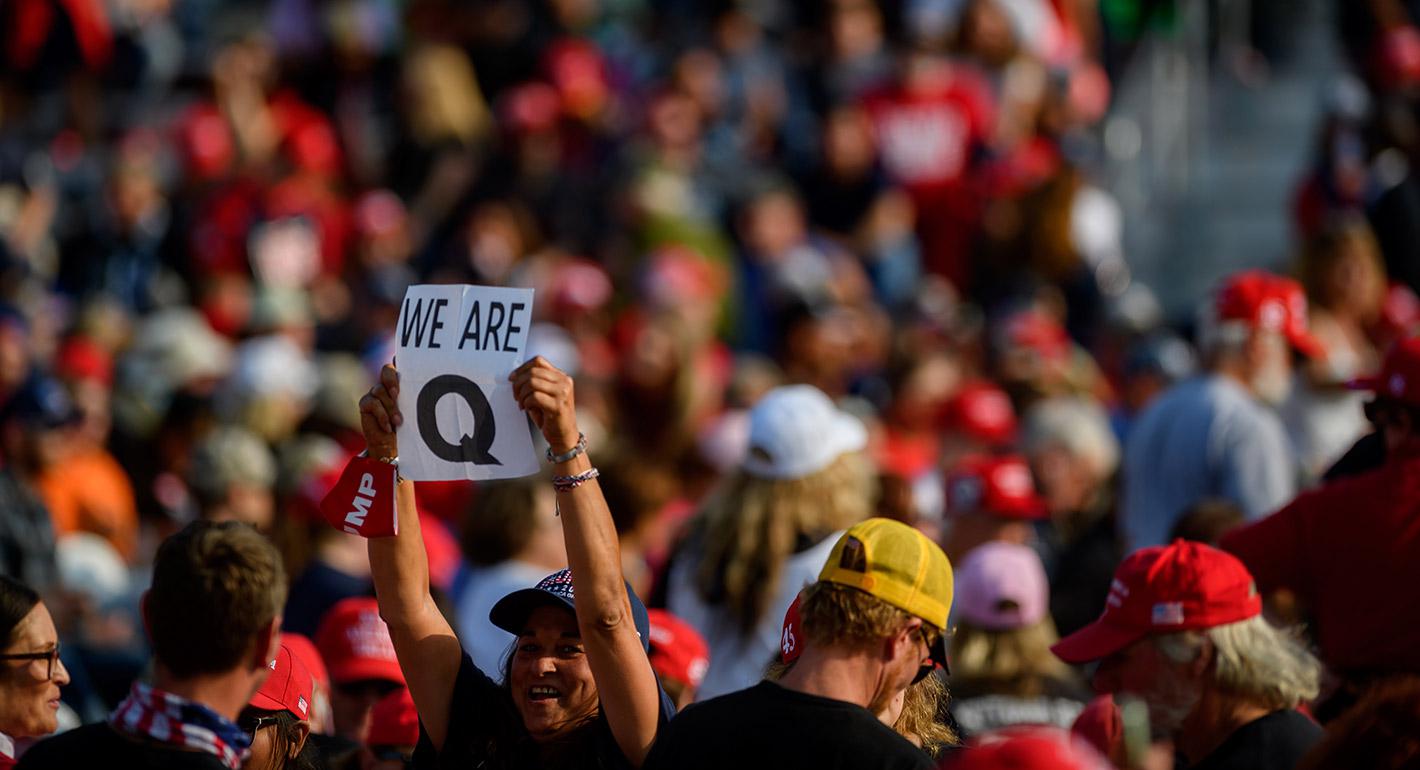
But even if Facebook’s ban on Trump holds, it would be a mistake to assume this will have a lasting impact on reducing conservative disinformation in the United States. If anything, violent and conspiratorial conservative voices have proven to be deeply rooted and highly resilient online. While Trump’s deplatforming has helped tamp down some of the rhetoric responsible for fueling the January 6 Capitol Hill insurrection, divisive conservative voices continue to dominate Facebook. On the same day that the board upheld Trump’s ban, nine of the top ten shared posts came from polarizing right-wing commentators and outlets such as Dan Bongino, Ben Shapiro, Sean Hannity, ForAmerica, and Fox News. It’s fair to ask, if banning Trump won’t stop the spread of falsehoods, conspiracy theories, and violent speech emanating from conservative sources, what actions will? It’s useful to think through a few components of this problem.
First, one of the clearest patterns that has emerged is the extent to which disinformation is a distinctly conservative problem. Empirical research shows a marked proliferation of conspiracy theories and false political claims centered in conservative online communities. As scholar Yochai Benkler writes, the American political media system is “fundamentally asymmetric” in that an insular, right-wing community generates a “propaganda feedback loop” that rewards the “unconstrained propagation of identity-consistent falsehoods.” No such counterpart community exists on the left. Instead, Benkler notes that liberal media outlets are “always constrained both by the fact that audiences pay attention to a broad range of media and by a mainstream professional media delighted to catch each other out in error.” Modern American conservatism is beset by a massive epistemic crisis that makes its members prone to embrace radicalized discourse. While Trump and his allies have deftly exploited this condition, they’re not responsible for creating it. The problem extends far beyond Trump, and the Facebook ban won’t solve it.
Second, right-wing disinformation is more than just a social media problem. While conventional explanations identify internet platforms like Facebook as the main drivers of right-wing filter bubbles and extreme rhetoric, they miss a crucial point: much of the disinformation awash in conservative circles, such as false claims about the 2020 election, originated from mass media and elite sources, such as Fox News, alt-right news websites, and conservative talk radio shows. For example, in a 2020 study by Harvard’s Berkman Klein Center, researchers found that voter mail fraud allegations tied to the elections were principally carried out by media and political elites “with social media playing a secondary role.” They concluded that the right-wing media ecosystem has “long been subject to a propaganda feedback loop” and bore primary responsibility for disseminating false election conspiracies.
A closer look reveals that the elite conservative actors sowing disinformation narratives have a wide mix of backgrounds and interests. While some figures are exclusively social media influencers, many others are politicians or news media broadcasters with considerable online followings. But they all display characteristics of “repeat spreaders”—users who play a prominent role in disseminating multiple false or deceptive narratives. Central figures include members of the Trump family; far-right websites like the Gateway Pundit, Infowars, and Project Veritas; mass news outlets such as Breitbart and Newsmax; and conservative pundits and conspiracy theorists such as Shiva Ayyadurai, Ben Shapiro, Charlie Kirk, Dan Bongino, and Andy Ngô. Focusing exclusively on platform algorithms or Trump’s Facebook page as drivers of disinformation misses the bigger picture of how inflammatory conservative narratives are produced, disseminated, and consumed.
A better way to confront conservative online disinformation is to more directly consider how mass media and political elites frame disinformation narratives in synergy with a wide range of social media platforms. Even if social media isn’t fully responsible for producing inflammatory right-wing content, its capacity to disseminate disinformation on an industrial scale is relevant. Moreover, different online platforms play distinctive roles when it comes to spreading false content and conspiratorial narratives. Most social media users are not confined to a single platform like Facebook, but rather they use different platforms for different reasons. Understanding cross-platform interactions is critical. Political operators who aim to shape public opinion, for instance, “employ multiplatform strategies, leveraging different platforms for different parts of their information strategies, and often intentionally moving content from one platform to another.”
Thus, conservative influencers seeking to promote a stolen election narrative have peddled the hashtag #stopthesteal on multiple platforms. They have posted inflammatory content on Reddit (which has much looser guidelines about the content users post), posted links on Twitter or Facebook to the Reddit threads, and then promoted #stopthesteal in a WhatsApp group or on a Fox News or Newsmax segment to amplify user engagement. This example illustrates not only the cross-platform nature of information sharing but also the fluidity between sharing fraudulent information through mass media outlets and social media accounts. Notwithstanding Trump’s Facebook ban, conspiracy theorists will continue to exploit loopholes in the content moderation policies of social media platforms to amplify the same disinformation and violent speech for which Trump was penalized.
The Oversight Board’s decision on Trump’s ban brings a temporary sigh of relief. The prospect of allowing Trump’s virulent and hateful rhetoric back onto Facebook is alarming. But no one should hold any illusions that Trump’s continued ban from the platform will fundamentally alter the conservative disinformation ecosystem.

Director and Senior Fellow, Democracy, Conflict, and Governance Program
Steve Feldstein is a senior fellow and director of the Democracy, Conflict, and Governance Program at the Carnegie Endowment for International Peace. His research focuses on technology, national security, the global context for democracy, and U.S. foreign policy.
Recent Work
Steve Feldstein, Shreya Joshi
Steve Feldstein
Carnegie does not take institutional positions on public policy issues; the views represented herein are those of the author(s) and do not necessarily reflect the views of Carnegie, its staff, or its trustees.

Ahead of a tough winter for Ukraine, Donald Trump’s swing back toward Russia bodes ill. But instead of panicking, Kyiv’s European allies are focusing on action.

Rym Momtaz

While the EU and European governments are embracing the much-lauded middle-power moment, this entails three difficult conundrums.

Richard Youngs

Europe is facing rising populism internally as well as external pressures from Russia, China, Turkey, and the United States.

Dimitar Bechev

A notable degree of participative democracy has firmly arrived in Europe. But to have more far-reaching impact, democratic deliberation needs to move into a radically new phase.
Richard Youngs

European NATO countries are wrestling with the possibility of U.S. disengagement from the alliance. With the continent’s security increasingly uncertain, governments must restore the credibility of their collective defense.



Hans-Dieter Lucas, Adam Thomson, Pierre Vimont