

Commentary
- +11
Cornelius Adebahr, Dan Baer, Rosa Balfour, …
{
  "authors": [
    "Erik Brattberg"
  ],
  "type": "commentary",
  "centerAffiliationAll": "dc",
  "centers": [
    "Carnegie Endowment for International Peace"
  ],
  "collections": [],
  "englishNewsletterAll": "ctw",
  "nonEnglishNewsletterAll": "",
  "primaryCenter": "Carnegie Endowment for International Peace",
  "programAffiliation": "EP",
  "programs": [
    "Europe"
  ],
  "projects": [],
  "regions": [
    "North America",
    "United States",
    "Western Europe",
    "Iran"
  ],
  "topics": [
    "Foreign Policy"
  ]
}
Source: Getty
Bruised by its interactions with the previous U.S. administration, the EU is leery of fully hitching its wagon to Biden’s geopolitical agenda. But Europe should focus on the bigger picture.
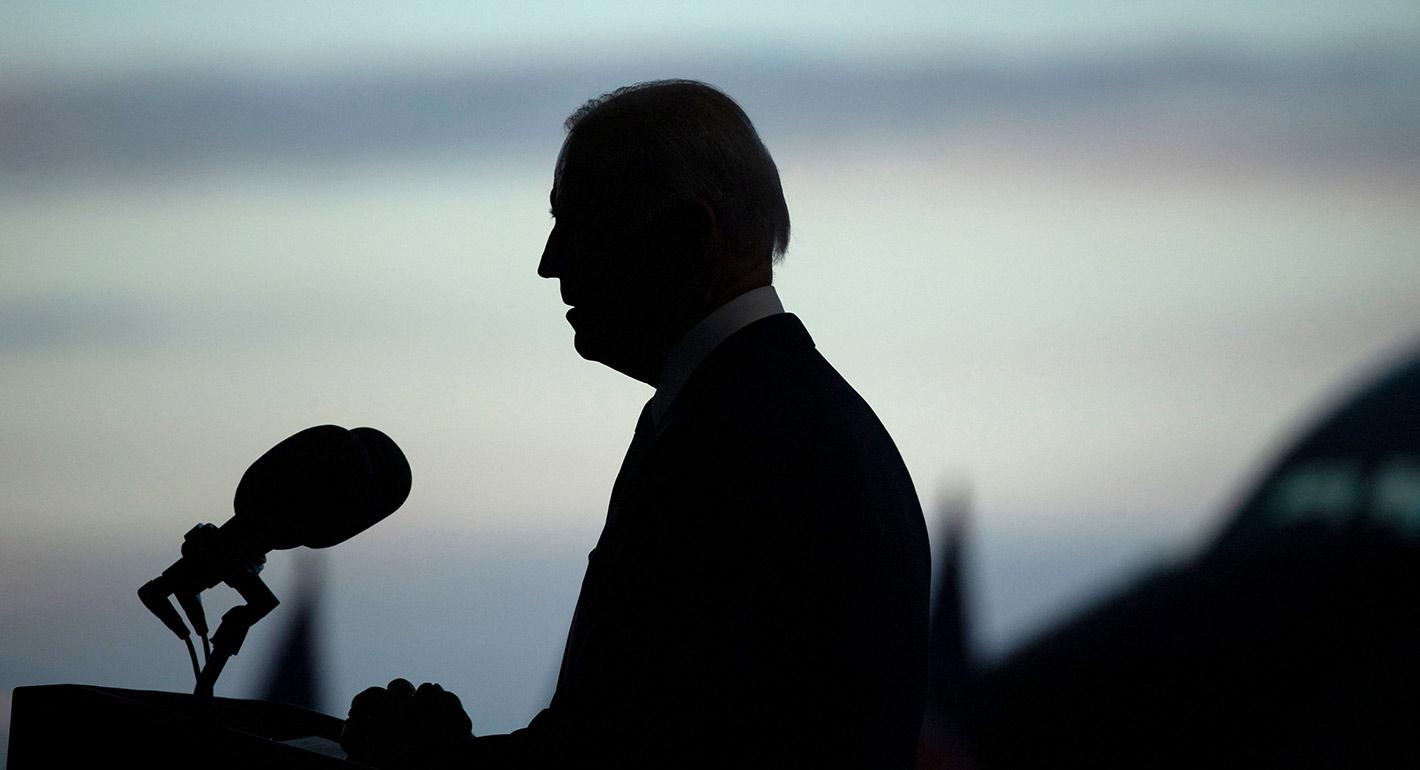
U.S. President Joe Biden’s trip to Europe this week for meetings with the G7, NATO, and EU leaders marks the first real test for his “free world” agenda of rallying U.S. allies and partners against the resurgent authoritarianism of China and Russia. At the core of Biden’s outlook is the belief that the world is increasingly divided into two competing governance systems—democratic and authoritarian—and that the United States and its allies and partners must unite around a common agenda to compete more vigorously.
So far, the European response has been lukewarm. Biden and his team have been stunned by Europe’s reluctance to embrace his agenda. Berlin, in particular, has pushed hard for the EU investment treaty with China and for the Nord Stream 2 pipeline with Russia—both seen in Washington as malign projects. Both German Chancellor Angela Merkel and French President Emmanuel Macron have cautioned against forming a bloc or “ganging up” against China.
Underpinning this reluctance is Europe’s understandable desire to maintain pragmatic cooperation with Beijing on trade and avoid picking sides in the escalating U.S.-China rivalry. But this reluctance also reflects enduring European doubts about Biden following his narrow election victory over former president Donald Trump last year and anxiety about the return of an “America First” president in 2024.
Yet ignoring Biden’s overtures would be unwise. The most pro-European U.S. president in decades, Biden represents the single best opportunity not only for reinventing the moribund transatlantic alliance for a new era but also for advancing a new version of multilateralism. In this vision, smaller groups of like-minded democracies in North America, Europe, and Asia could press forward with their own new initiatives to shape the international environment in which China and Russia operate.
This task could not be any more pertinent. In recent months, increasingly belligerent behavior has emanated from both Moscow and Beijing. Russia has arrested its main opposition politician Alexei Navalny, amassed massive contingents of troops along parts of the border with Ukraine, launched damaging cyberattacks against U.S. critical infrastructure, labeled the Czech Republic an “unfriendly” country, and propped up the authoritarian regime of Alexander Lukashenko in Belarus. Meanwhile, China has sanctioned members of the European Parliament and independent European academics, waged “wolf warrior diplomacy” across Europe, and has continued its crackdown on democracy in Hong Kong and pressure campaign against Taiwan.
Against this backdrop, the notion that Europe can tread lightly with Russia and compartmentalize issues with China, while keeping the United States at arm’s length, is no longer plausible. In fact, there are signs that Europe is gradually warming to Biden’s agenda after all. In March, the EU joined the United States, Canada, and the UK in imposing sanctions against Chinese human rights violators in Xinjiang. The controversial EU-China investment agreement is currently stuck in the freezer. Meanwhile, countries in Southern and Central Europe that previously signed up willingly for China’s Belt and Road Initiative have become skeptical of Beijing’s ability to deliver. The EU has also abandoned any lingering hopes of resetting relations with Russia and is currently reviewing its Russia strategy. Meanwhile, the European response to Belarus’s recent hijacking of an inter-European flight and kidnapping of a journalist was unusually swift and robust by EU standards.
This newfound European strategic clarity could prove fruitful for productive exchanges with Biden and his team. What Biden needs from European leaders this week is unity and a strong commitment to join hands in facing the growing authoritarian threat. As democracies confront common domestic challenges at home and threats abroad, deepening cooperation among them is also in Europe’s own self-interest. The notion of a European third way is not realistic, as the EU is already firmly rooted in the democratic camp that Biden now wants to rejuvenate. Though expecting perfect transatlantic alignment on every issue is unrealistic, it is certainly in the EU’s interest to work with Washington and other like-minded capitals to strengthen rules and norms to push back against Russian disinformation, cyberattacks, and corruption as well as Chinese predatory trade practices, economic coercion, and human rights violations.
At the G7, NATO, and EU summits, the EU should therefore embrace the idea of a transatlantic tech alliance with the Biden administration, seeking to cooperate on supply chain resilience, data governance, standard setting for AI and other emerging technologies, and joint efforts to regulate Big Tech. The EU should also be willing to endorse strong language about China as a systemic rival, explicitly call out its human rights violations and voice support for Taiwan, and push for an independent investigation into the origins of the coronavirus pandemic. On trade, the EU should work with Biden to resolve bilateral trade irritants and launch a joint response in the World Trade Organization against China’s troubling economic practices. To provide an alternative to the Belt and Road Initiative, the EU should work with the United States and other countries such as Japan to fund a joint alternative. In addition, to push back against Russian influence, the EU should work with Biden on a new global initiative to root out corruption, kleptocracy, and malign finance.
While this list is a tall order, the stakes could not be any higher. Biden knows that democracy is fragile and that the United States needs strong partners who can deliver. Rather than hedging against an admittedly uncertain U.S. political future, the EU should fully embrace Biden’s agenda and seek to make this objective its own. This requires a willingness to reformulate the EU’s own strategic vision to better mesh with the evolving Biden agenda. The notion of European strategic autonomy, if depicted as ambiguity, will not resonate well in Washington and will only invite further Russian and Chinese probing, further undermining European sovereignty. By instead emphasizing the need to shore up collective democratic resilience and reinforce partnerships with like-minded countries, the EU can show that it is indeed a strong and reliable partner. In return, Brussels can perhaps gain greater U.S. acceptance for a higher degree of European autonomy.
This week will be a key test of whether Biden can succeed in rallying U.S. allies and partners in Europe and Asia around a common agenda to defend democracy. Indo-Pacific allies such as Australia and Japan, as well as other European countries such as the UK, are already showing receptiveness to this agenda and reorienting themselves. The real test will be whether the EU is ready to follow suit by focusing on the big picture of what democracies have in common, rather than on smaller tactical differences. Wasting the opportunity Biden represents would be a huge mistake for Europe.

Former Director, Europe Program, Fellow
Erik Brattberg was director of the Europe Program and a fellow at the Carnegie Endowment for International Peace in Washington. He is an expert on European politics and security and transatlantic relations.
Recent Work



Cornelius Adebahr, Dan Baer, Rosa Balfour, …

Erik Brattberg, Philippe Le Corre, Paul Stronski, …
Carnegie does not take institutional positions on public policy issues; the views represented herein are those of the author(s) and do not necessarily reflect the views of Carnegie, its staff, or its trustees.

Funding Ukraine remains a priority for European leaders. As Russia’s war of aggression heads into another winter, two feasible options to mobilize support for Kyiv should be fast-tracked.


Vladyslav Rashkovan, Gregory P. Wilson

While the EU and European governments are embracing the much-lauded middle-power moment, this entails three difficult conundrums.

Richard Youngs

Europe is facing rising populism internally as well as external pressures from Russia, China, Turkey, and the United States.

Dimitar Bechev

A notable degree of participative democracy has firmly arrived in Europe. But to have more far-reaching impact, democratic deliberation needs to move into a radically new phase.
Richard Youngs

Much has been said of the changes Brussels is trying to make to the EU enlargement process. Here’s why gradual integration might—or might not—be the answer.
Dimitar Bechev