

Article
Thomas Carothers, Didi Kuo
{
  "authors": [
    "Didi Kuo"
  ],
  "type": "commentary",
  "centerAffiliationAll": "dc",
  "centers": [
    "Carnegie Endowment for International Peace"
  ],
  "collections": [
    "Democratic Innovation"
  ],
  "englishNewsletterAll": "ctw",
  "nonEnglishNewsletterAll": "",
  "primaryCenter": "Carnegie Endowment for International Peace",
  "programAffiliation": "CC",
  "programs": [
    "Carnegie California"
  ],
  "projects": [],
  "regions": [
    "North America",
    "United States"
  ],
  "topics": [
    "Democracy"
  ]
}
Source: Getty
The Golden State’s innovative approaches to ballot access should be studied widely.
Democracy, in theory, requires free and fair elections, which means that elections are administered in a politically neutral way and that all citizens have equal access to the ballot. American elections, however, have long been distinct from those of other liberal democracies, with decentralized administration overseen by partisan officials at the state level and voting rules and procedures differing based on where you live.
After he lost the 2020 election, former President Donald Trump has promulgated lies about election fraud and attacked the electoral process, pushing U.S. democracy toward even greater polarization. In Republican-led states, legislatures have passed laws that politicize and burden election administration and rolled back provisions enacted during the coronavirus pandemic that eased ballot access. Democracy activists, on the other hand, have been mobilizing support for various reforms that tackle perceived inequities or inefficiencies in the democratic process. They are working at the state level to pursue changes such as ranked-choice voting, independent redistricting, and nonpartisan primaries. Many of these reforms have already been adopted in California, making it ripe for deeper examination as other states move to expand democracy.
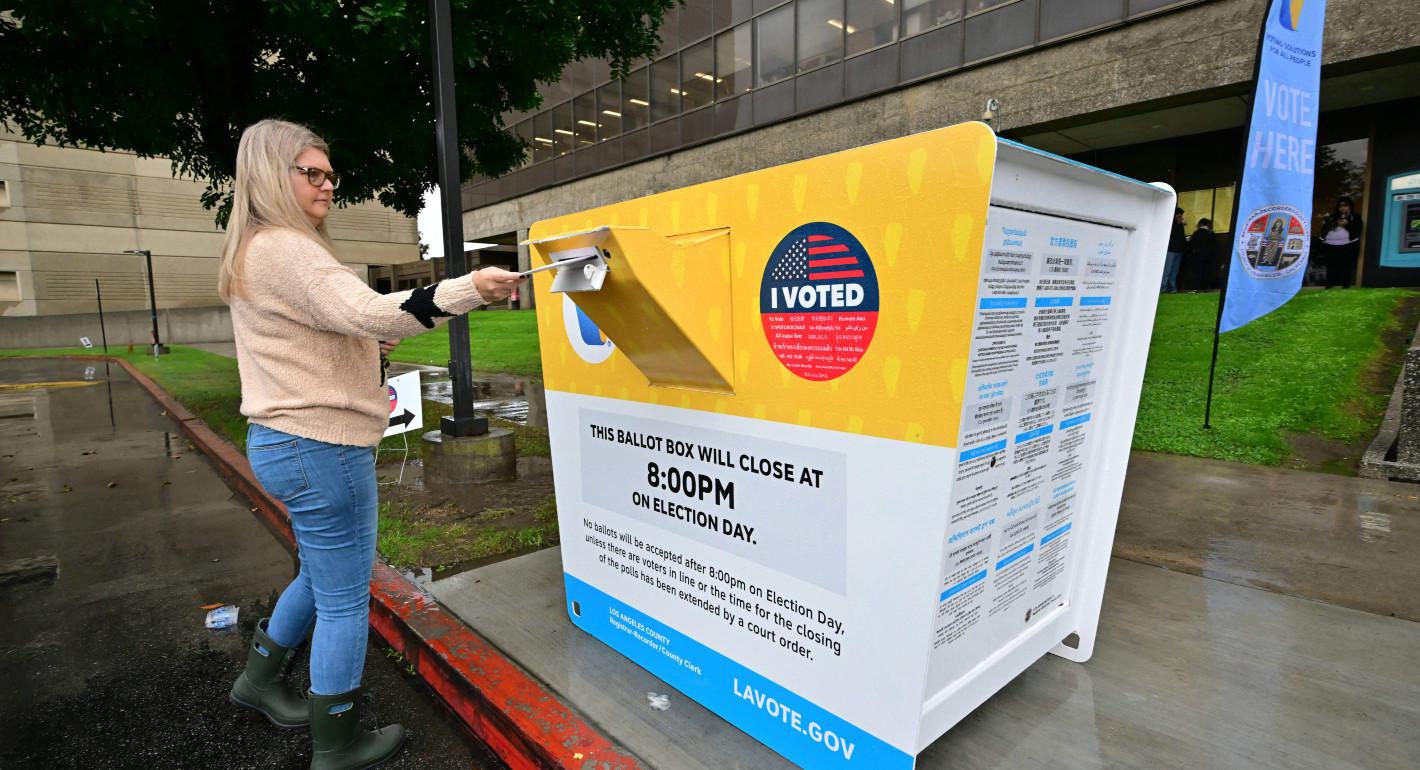
Before the pandemic, a voter could request her ballot by mail, fill it out at home, and drop it in the mail prior to Election Day or at a voting precinct on Election Day itself. For the 2020 election, California sent all registered voters their ballots by mail as a coronavirus precaution. Governor Gavin Newsom signed legislation in 2021 to make all-mail voting permanent. Eight states and the District of Columbia now allow elections by mail.
California has long been known as a place for innovation, both in the private sector and in politics, and it has experimented with reforms that seek to expand citizens’ political access or to hold politicians accountable. In 1911, California amended its constitution to allow voters to place issues directly on the ballot and circumvent the legislature through the initiative process, and also to express approval or disapproval of California laws through referenda. That same year, the state also implemented a recall process for citizens to remove elected leaders from office.
So for more than a century, Californians have been accustomed to direct engagement in the democratic process. In the past fifty years alone, more than 550 measures—originating either with the legislature or with citizens—have been put before California voters. Many of its recent democratic reforms were adopted through the initiative process.
One such reform—currently a major issue for many states—was to eliminate partisan gerrymandering. In 2008, Proposition 11 amended the practice of having the California State Assembly redraw legislative districts after census reapportionment, transferring authority to a redistricting commission composed of fourteen citizens. In 2010, Proposition 20 transferred authority over congressional redistricting to the same commission. Analyses of elections in California since the commission began show that elections have become more competitive, with fewer safe seats for incumbents. President Joe Biden’s Freedom to Vote Act included provisions to ban partisan gerrymandering, but the legislation died in the Senate.
Another California voting innovation, adopted by the state in 2010, is its “top two” system of primaries. Most primary elections are conducted by the parties. The primary might be open (to all citizens) or closed (except to party registrants), but under most systems, voters can only vote for one party’s candidates in the primaries. In the top-two system, one ballot is used for all primary candidates, and the top two vote-getters then move on to the general election—even if they both come from the same party. Washington and Louisiana have similar primary systems that list all candidates together. In 2020, Alaska adopted a modified version of California’s system, with the top four candidates in the primary proceeding to the general election. The many debates around primaries include whether they contribute to partisan polarization, but California elections show how different methods of electing candidates in primaries might affect voter turnout and quality of candidates.
Finally, a handful of Californian cities use ranked-choice voting (RCV), a method that has gained steam among reform advocates in recent years. RCV allows voters to rank all candidates in order of preference instead of choosing a single candidate. With RCV, if one candidate receives majority of “1” rankings, that person is declared the winner. But if no candidate receives a majority of 1s, then the candidate with the lowest number of votes is eliminated, and that person’s ballots are distributed to the remaining candidates. This process continues until one candidate has received a majority of voters’ first, second, or third votes.
Advocates of RCV argue that it better captures the range of voters’ preferences and prevents strategic voting. They also note that RCV incentivizes candidates and campaigns that are moderate, since they need to attract as many votes as possible, rather than relying on an activist base. However, some skeptics argue that RCV is complicated for voters, that it might decrease voter turnout, and that it does not produce better outcomes than plurality elections, in which the person with the most votes wins.
Maine and Alaska use RCV for congressional and state elections, and a handful of cities use it for mayoral or municipal elections. Many of those cities, including Oakland, San Francisco, Berkeley, and San Leandro, are in California. Analysis of these cities shows mixed effects: women and minority candidates have performed better in ranked-choice elections than in plurality elections, but turnout is lower. In addition, errors with RCV ballots can cause them to be eliminated, and one study found higher rates of ballot errors with minority voters. And the ultimate winner in a ranked-choice contest is not always the majority winner, given that the many ballots that are eliminated in multiple rounds of vote redistribution may produce a plurality winner. Californian cities have now employed RCV longer than most other American municipalities that use it, and lessons from these elections can inform the work of reform advocates as they bring RCV to other locales.
Congress is unlikely to take on the issue of national political reform, even though citizens have grown more concerned with the state of American democracy. Some states are experimenting with ways to strengthen the electoral process and democracy. California has been open to new ways of electing candidates, drawing legislative districts, and voting in election season, and its lessons should play a crucial role in conversations about democracy as a policy area.

Former Nonresident Scholar, Carnegie California
Didi Kuo was a nonresident scholar with Carnegie California. She is a scholar of democratization and political parties.
Recent Work

Thomas Carothers, Didi Kuo
Carnegie does not take institutional positions on public policy issues; the views represented herein are those of the author(s) and do not necessarily reflect the views of Carnegie, its staff, or its trustees.

Europe is facing rising populism internally as well as external pressures from Russia, China, Turkey, and the United States.

Dimitar Bechev

A notable degree of participative democracy has firmly arrived in Europe. But to have more far-reaching impact, democratic deliberation needs to move into a radically new phase.

Richard Youngs

European NATO countries are wrestling with the possibility of U.S. disengagement from the alliance. With the continent’s security increasingly uncertain, governments must restore the credibility of their collective defense.



Hans-Dieter Lucas, Adam Thomson, Pierre Vimont

The domestic impacts of how long it is taking to end the war in Ukraine have pushed the French electorate to the political extremes and compromised the country’s diplomatic capacity.

Rym Momtaz

Before the next wave of EU enlargement takes place, the union needs to grapple with thorny questions of how power is distributed among its members.


Emil Sondaj Hansen, Ditte Brasso Sørensen