

Commentary
The EU can impose sanctions but struggles to enforce them without the United States. With Washington increasingly disinterested in backing European interests, the bloc must now fend for itself.
Nicu Popescu, Tiago Antunes
{
  "authors": [
    "Xing Jiaying",
    "Li Mingjiang"
  ],
  "type": "commentary",
  "centerAffiliationAll": "",
  "centers": [
    "Carnegie Endowment for International Peace",
    "Carnegie China"
  ],
  "collections": [
    "Carnegie China Commentaries"
  ],
  "englishNewsletterAll": "",
  "nonEnglishNewsletterAll": "",
  "primaryCenter": "Carnegie China",
  "programAffiliation": "",
  "programs": [],
  "projects": [],
  "regions": [
    "East Asia",
    "China",
    "United States"
  ],
  "topics": [
    "Technology"
  ]
}
Source: Getty
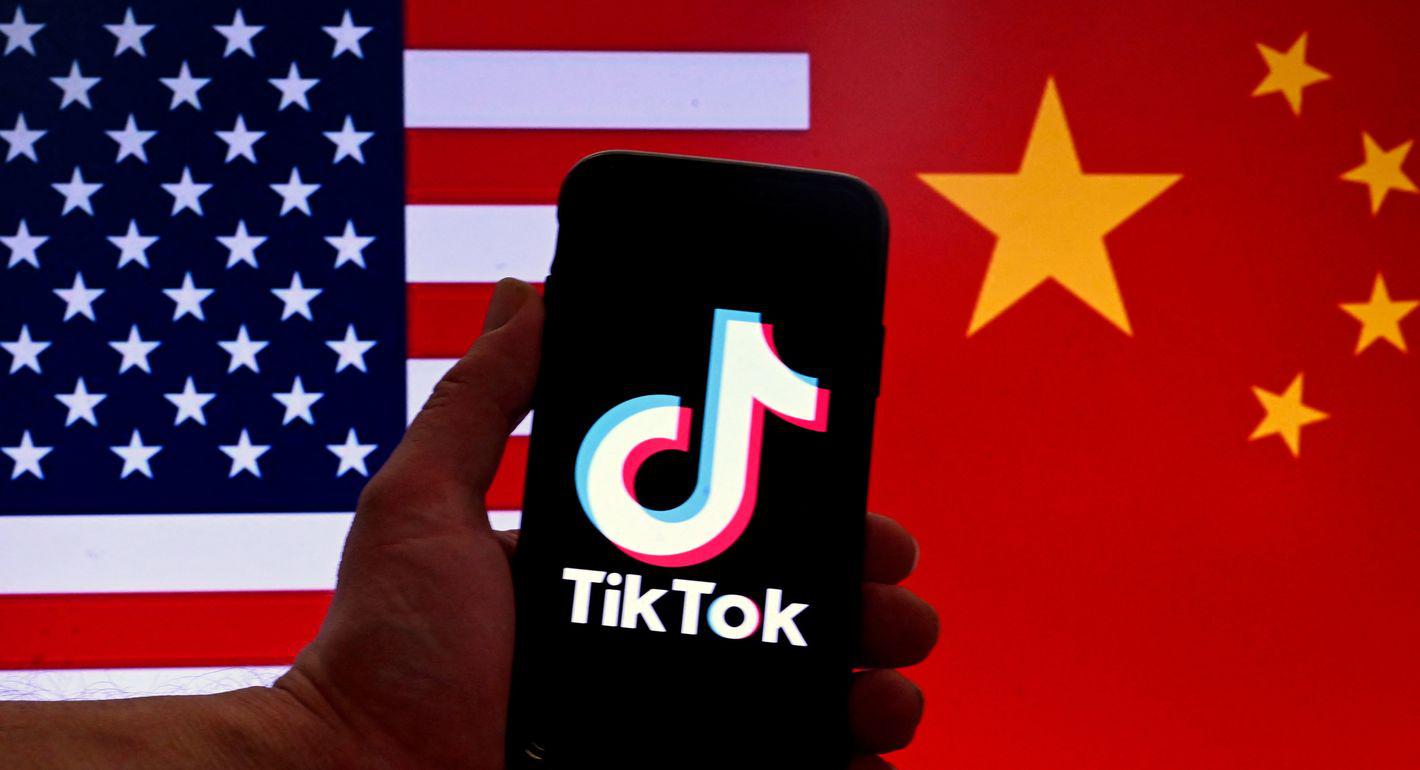
Beijing’s reaction to Washington’s proposed ban on TikTok could manifest in three distinct scenarios.
This publication is a product of Carnegie China. For more work by Carnegie China, click here.
In March, the U.S. House of Representatives overwhelmingly passed a bill that would require TikTok to divest from its Chinese parent company, ByteDance, or face a ban within the United States. The Senate is expected to vote on this matter soon, with President Joe Biden expressing his intention to sign the bill into law. However, factors such as the timing of the Senate vote, the November U.S. presidential election, and legal action by TikTok make the app’s U.S. future anything but certain.Should the app find itself compelled to be sold to another entity, ByteDance may not have the autonomy to make its own decision. Through a series of policy changes and public statements, Beijing has signalled that it won’t be a passive actor in the TikTok settlement in the U.S. Rather than endorse the company’s sale to mitigate ByteDance’s commercial losses, Beijing is more likely to make a political decision to prohibit such a transaction under the guise of export control regulations. The approach could fuel sustained political discourse against Washington, fostering further diplomatic tension between China and the United States.
Also in early 2020, China’s National Development and Reform Commission (NDRC) and the Ministry of Commerce (MOFCOM) introduced new measures governing foreign investments, mergers, acquisitions, and equity dealings involving Chinese companies. The measures, which mirror similar processes in other nations, formalize China’s national security review mechanism and bolster its economic security regime. While the interaction between this new regulatory framework and the Export Control Law remains uncertain, their confluence could significantly impact potential TikTok transactions.
Furthermore, MOFCOM and the Ministry of Science and Technology collaborated to revise the list of technologies that are subject to export bans or restrictions to align with China’s evolving export control policies. The catalogue, which was revised again in late 2023, includes two items specifically targeting TikTok’s data-mining algorithm: personalized information push-service technology based on data analysis and artificial intelligence interactive interface technology.
These recent legal developments constitute crucial components of China’s broader technology restrictions and export control strategy. In light of these regulatory changes, ByteDance’s efforts to sell TikTok will face heightened scrutiny and complexity. Compliance with government reviews and obtaining export licenses will be imperative for any transactions involving restricted technology. Since ByteDance conducts much more business in the Chinese market than in the United States, the company will likely weigh the policies and concerns of the Chinese government in its decision-making.
Beijing’s reaction to Washington’s proposed ban on TikTok could manifest in three distinct scenarios.
In one scenario, Chinese authorities would permit both ByteDance’s relinquishment of TikTok to a foreign entity and the export of the company’s core technology. Although this move could alleviate economic burdens for ByteDance, it risks triggering domestic political repercussions, as well as strong public backlash. Beijing has long framed TikTok’s technology as integral to national security and technological sovereignty, and it depicts Washington’s ban as an act of aggression. Although the Chinese government is not fully accountable to the public, it still faces domestic pressure. Given the significant political costs involved with allowing TikTok’s sale, this scenario appears the least probable. This is especially true, given that China’s official statements suggest a determination to intervene and influence the TikTok deal. For example, MOFCOM has cautioned against any forced sale of TikTok, underscored the need for adherence to Chinese regulations, and affirmed China’s commitment to safeguarding its rights and interests.
In a second and more probable scenario, Beijing would curtail ByteDance’s sale of TikTok’s algorithms in accordance with domestic regulations but allow a sale of the platform to go through. This measured approach would be perceived as safeguarding Chinese intellectual property rights and asserting control over cutting-edge technology while also maintaining a competitive edge in the global arena.
However, this stance would complicate matters for foreign entities seeking to acquire TikTok, given that one of its strengths lies in its sophisticated machine-learning algorithm. If Beijing acquiesces to the sale without transferring its core technology, potential buyers may seek to negotiate lower prices. Such a scenario could also face resistance from Chinese nationalists and hawkish politicians who view ByteDance as emblematic of China’s technological prowess and the challenges its tech firms face in global markets. Thus, Beijing’s conditional approval of TikTok’s sale may also trigger domestic pushback.
In the third and most likely scenario, China would outright block any TikTok sale, citing national security concerns, fair competition, and legitimate interests. Such an action could fuel global apprehensions about Chinese government oversight of technology acquisitions by foreign entities. Moreover, Beijing’s refusal to proceed with the deal could prompt Washington to block usage of the application. Despite potential repercussions, Beijing may prioritize political interests over ByteDance’s commercial pursuits. Sacrificing ByteDance’s financial interests in favor of gaining political leverage in Sino-U.S. relations could be a strategic move for Chinese leaders.
Preventing TikTok from being acquired by any American entity, even at the cost of billions of dollars to the company and its Chinese owner, could provide China with an ongoing opportunity to critique the United States. Beijing may exploit the TikTok situation to denounce what it perceives as excessive U.S. securitization of technology, politicization of commercial activities, unfair foreign investment policies, and hypocrisy regarding freedom of speech. This strategy could complement Beijing’s broader efforts to undermine American democracy and political freedom, serving both international and domestic political objectives.
In order to appease public sentiment at home and prevent the export of sensitive technology, Beijing is unlikely to approve ByteDance’s potential sale of TikTok. Of course, this will come with costs to ByteDance’s business and threaten to escalate tensions with the United States. So far, the Chinese government has signaled that it is willing to bear these risks.

Xing Jiaying
Xing Jiaying is a PhD student at the S. Rajaratnam School of International Studies (RSIS) at Nanyang Technological University.

Nonresident Scholar, Carnegie China
Li Mingjiang’s main research interests include Chinese foreign policy, China-ASEAN relations, Sino-U.S. relations, global governance, and Asia-Pacific security.
Carnegie does not take institutional positions on public policy issues; the views represented herein are those of the author(s) and do not necessarily reflect the views of Carnegie, its staff, or its trustees.

The EU can impose sanctions but struggles to enforce them without the United States. With Washington increasingly disinterested in backing European interests, the bloc must now fend for itself.


Nicu Popescu, Tiago Antunes

Ahead of a tough winter for Ukraine, Donald Trump’s swing back toward Russia bodes ill. But instead of panicking, Kyiv’s European allies are focusing on action.

Rym Momtaz

While the EU and European governments are embracing the much-lauded middle-power moment, this entails three difficult conundrums.

Richard Youngs

Europe is facing rising populism internally as well as external pressures from Russia, China, Turkey, and the United States.

Dimitar Bechev

The European Commissioner for Trade is headed to China. But after President Xi’s bridge-building visit to Washington, can a more isolated EU overcome Beijing’s stranglehold on critical raw materials? Who will blink first?
Rym Momtaz, ed.