

Book
Europe is facing rising populism internally as well as external pressures from Russia, China, Turkey, and the United States.
Dimitar Bechev
{
  "authors": [
    "Wang Qiyue",
    "Li Mingjiang"
  ],
  "type": "commentary",
  "centerAffiliationAll": "",
  "centers": [
    "Carnegie Endowment for International Peace",
    "Carnegie China"
  ],
  "collections": [
    "Carnegie China Commentaries"
  ],
  "englishNewsletterAll": "",
  "nonEnglishNewsletterAll": "",
  "primaryCenter": "Carnegie China",
  "programAffiliation": "",
  "programs": [],
  "projects": [],
  "regions": [
    "China",
    "Japan"
  ],
  "topics": [
    "Foreign Policy"
  ]
}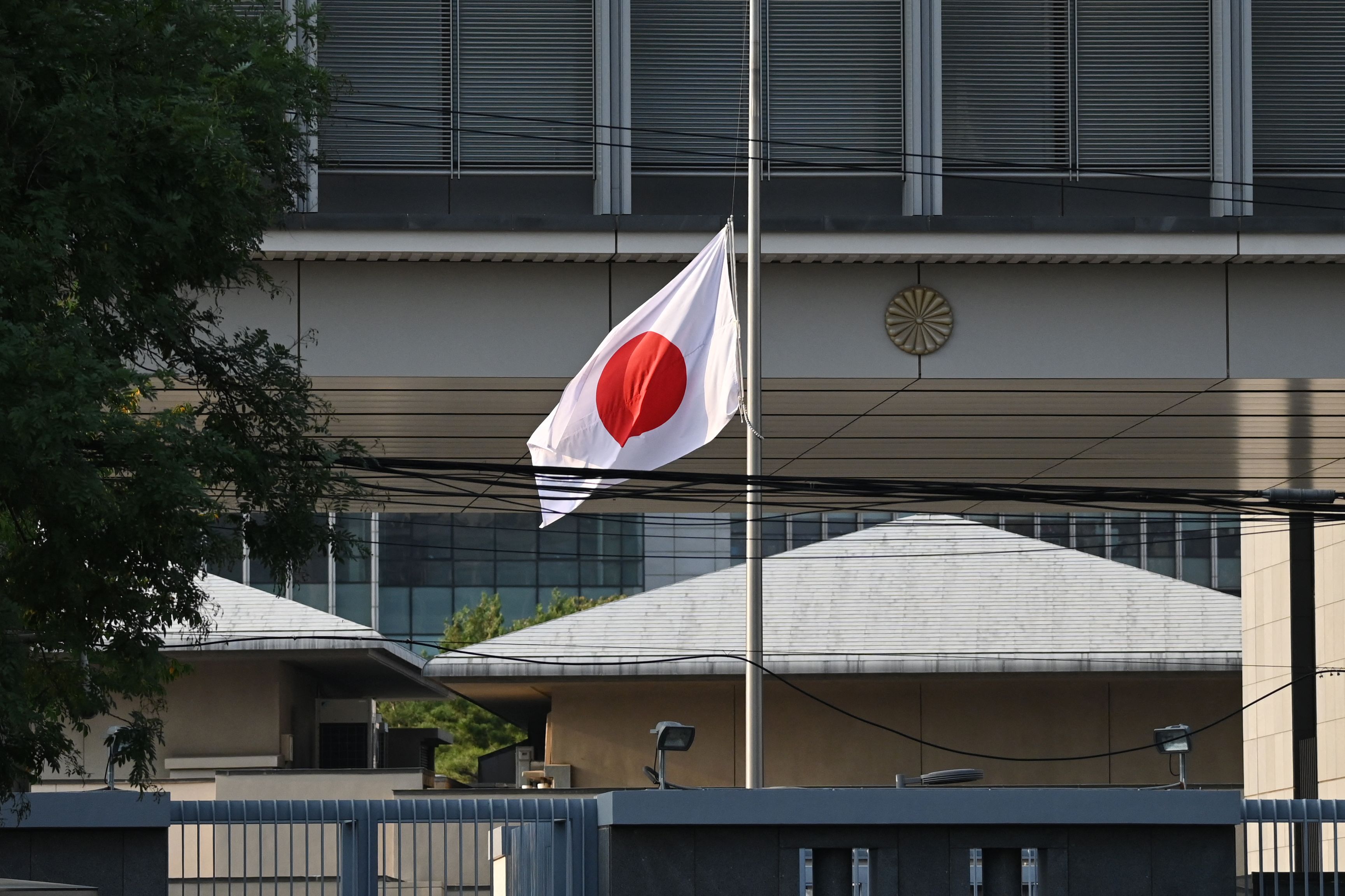
Source: Getty
Patriotic and nationalist sentiments have been co-opted by self-media and social media platforms to generate profit. This has given rise to a traffic-driven business of cyber nationalism that relies on extreme xenophobic rhetoric.
This publication is a product of Carnegie China. For more work by Carnegie China, click here.
Last month, the stabbing of a Japanese schoolboy on his way to a Japanese school in Shenzhen ignited heated discussions across Chinese social media and drew international attention. The suspect, a forty-four-year-old unemployed man with a criminal record, is in custody, and the case remains under police investigation. On September 23, 2024, China’s Foreign Minister Wang Yi met with Japanese Foreign Minister Yoko Kamikawa in New York, affirming that the attack was an isolated incident. He said that China would ensure the safety of foreigners within its borders and urged Japan to avoid politicizing or escalating the situation.
Despite efforts by China’s Ministry of Foreign Affairs to downplay the incident’s impact on Sino-Japanese relations, Japanese expatriates are growing concerned, especially in light of two attacks on Japanese children in China within three months. The attacks have sparked questions about the perpetrators’ motives: were they isolated incidents or targeted attacks on Japanese individuals? And more broadly, is China still a safe environment for foreigners, particularly Japanese people? Once seen as symbols of deepening economic ties between China and Japan, Japanese schools across China are now much more concerned about security.
There are various perspectives on why these attacks have occurred in such close succession. Historically, China’s suffering during World War II and Japan’s reluctance to fully acknowledge its war crimes are often cited as factors fueling negative sentiments toward Japan among the Chinese populace. Japan’s refusal to admit past mistakes, alongside its right-wing historical narrative, has made it difficult for people in China to forgive Japan’s wartime atrocities. These unresolved issues continue to strain Japan’s relations with China as well as other countries like South Korea, posing a challenge to stability in Northeast Asia.
However, a new trend has emerged in China, driven primarily by nonstate actors—namely self-media (zimeiti, independently operated accounts) practitioners, as well as the social media platforms themselves.
Simply put, patriotic and nationalist sentiments—such as pride in China’s accomplishments and anger over past foreign invasions—have been co-opted by self-media and social media platforms to generate profit. This has given rise to a traffic-driven business of cyber nationalism (aiguo liuliang shengyi) that relies on extreme xenophobic rhetoric. Generating rumors about tensions between China and Japan has become a surefire way to drive traffic. In short videos, China and Japan are often portrayed as enemies and they gain widespread attention. Other videos promote conspiracy theories, such as claims that Japanese schools in China are modern-day “concessions” or that Ms. Hu Youping, who sacrificed her life to protect Japanese children during an attack in Suzhou, was actually a “Japanese secret agent.”
With algorithms curating personalized recommendations, viewers are constantly exposed to this content, often falling into rage-induced echo chambers of nationalist rhetoric. Speculation has grown that the suspects in the Shenzhen and Suzhou incidents may have been influenced by such videos, which foster confrontation with Japan. This raises serious concerns about the traffic-driven business of cyber nationalism.
The commercialization of cyber nationalism is not unique to China but has global parallels in the digital age. Western scholars have described “commercial nationalism” as the exploitation of nationalist sentiment to boost sales or viewership. However, what sets China’s experience apart is the significant role that profit-driven nonstate actors—primarily self-media practitioners and social media platforms—play in this phenomenon.
Today, social media has eclipsed traditional media as the primary source of information for many Chinese internet users. The pursuit of user traffic, which generates substantial revenue in China’s relatively relaxed regulatory environment, has come to dominate social media. Platforms and content creators chase sensational topics to drive user engagement, or “stickiness.” Stoking nationalist sentiment has become a powerful tool for attracting attention amid rising domestic political shifts and increased international tensions. As a result, a wave of nationalist self-media has emerged, benefiting from the business of cyber nationalism.
It’s important to note that this business model has flourished with the state’s tolerance and even tacit approval. In the context of growing geopolitical tensions between China and the United States along with its allies (including Japan), lashing out online at nations that are critical of China has found acceptance in Chinese society.
This atmosphere online has had a freezing effect on Chinese intellectuals who are against ultra-nationalism but remain silent in public due to the possibility of being targeted by hardline nationalists, accusing them of being unpatriotic.
That said, the sustainability of this business model depends on nonstate actors staying within the government’s political boundaries and social governance objectives. Self-media content must avoid causing social unrest, and efforts to mobilize social movements must remain constrained. When the state perceives that the activities of self-media and platforms present more risks than rewards—for instance, by sowing division, undermining state media, or creating public opinion crises—the government can tighten regulations on their operations. Regulatory policies in recent years suggest an increasing trend toward stricter control over self-media and social media platforms.
Signs suggest that various Chinese authorities are learning a lesson from these recent incidents. A growing number of policy elites have realized that unconstrained anti-Japan and anti-West content on Chinese social media will lead to more decoupling in China’s international relations, especially in the economic arena. Following the attacks on Japanese children in Suzhou and Shenzhen, regulatory pressure has increased on online platforms. Platforms like iFeng, NetEase, and Kuaishou have issued notices outlining measures to curb content that promotes extremist nationalism or fosters tensions between China and Japan. However, given the size and profitability of the cyber nationalism industry and the state’s continued partial tolerance, fully eradicating its harmful effects may not be realistic.
Still, addressing this issue is critical. While China criticizes Japan for its failure to fully confront its wartime history, it is equally important to recognize that tolerating extreme xenophobic voices within its own borders does nothing to foster a healthy perspective on international affairs. Curbing and reducing online nationalist influence will help China retain Japanese investment and reduce “de-risking” pressures from many other countries amidst mounting socio-economic challenges in the country. As China pursues its grand foreign policy objective of building “a community with a shared future for mankind,” it is crucial to ensure that this harmful rhetoric does not hinder its progress.

Wang Qiyue
Wang Qiyue is a PhD candidate at the S. Rajaratnam School of International Studies (RSIS) at Nanyang Technological University (Singapore).

Nonresident Scholar, Carnegie China
Li Mingjiang’s main research interests include Chinese foreign policy, China-ASEAN relations, Sino-U.S. relations, global governance, and Asia-Pacific security.
Carnegie does not take institutional positions on public policy issues; the views represented herein are those of the author(s) and do not necessarily reflect the views of Carnegie, its staff, or its trustees.

Europe is facing rising populism internally as well as external pressures from Russia, China, Turkey, and the United States.

Dimitar Bechev

Much has been said of the changes Brussels is trying to make to the EU enlargement process. Here’s why gradual integration might—or might not—be the answer.
Dimitar Bechev

The European Commissioner for Trade is headed to China. But after President Xi’s bridge-building visit to Washington, can a more isolated EU overcome Beijing’s stranglehold on critical raw materials? Who will blink first?

Rym Momtaz, ed.

European NATO countries are wrestling with the possibility of U.S. disengagement from the alliance. With the continent’s security increasingly uncertain, governments must restore the credibility of their collective defense.



Hans-Dieter Lucas, Adam Thomson, Pierre Vimont

The new U.S.–Denmark–Greenland agreement will help Washington exert political, economic, and financial dominance under the guise of security. Yet, it acknowledged Copenhagen’s and Nuuk’s sovereignty on the island.

Marc Pierini