

Report
- +2
George Perkovich, Jessica Tuchman Mathews, Joseph Cirincione, …

REQUIRED IMAGE
Charles E. Bennett was a war hero, a man of deep religious belief, a southern conservative Democrat, and a member of the House of Representatives for 44 years. He believed in a strong military, large defense budgets, a powerful Navy and integrity in government.
This is not an analysis. It is a tribute. On November 6 at Arlington National Cemetery, family and friends gathered for the funeral of former Congressman Charles E. Bennett. He was a war hero, a man of deep religious belief, a southern conservative Democrat, and a member of the House of Representatives for 44 years. He believed in a strong military, large defense budgets, a powerful Navy and integrity in government. He opposed wasteful spending, the B-2 bomber, the MX missile and the Star Wars program. He had no use for nuclear weapons, saying we would never use them and they sucked money away from the weapons troops really needed. He never took a gift from a defense contractor, fought to close the corrupting revolving door between government and industry, and legislated tough, realistic tests for all weapon programs.
Charles Bennett gave up a law practice in Jacksonville, Florida, shunned a chance to be a Navy officer and enlisted in the Army in World War II. He led a band of guerrilla fighters behind enemy lines in the Philippines. When he came out of the jungle, he had contracted polio. Told he would never walk again, Bennett refused to accept the doctors' diagnosis. After two years of grueling therapy, he strapped on braces, used two canes and ran for Congress. He entered the House in 1949, the year I was born. The defense budget was then $13 billion. President Truman had him for dinner at the White House. He became friends with another newcomer to the House and a young veteran from Massachusetts, John Kennedy.
I had the honor of working for Congressman Bennett for six years on the House Armed Services Committee, beginning in 1985. He treated me like a son. The feeling was mutual; he was the same age my father would have been had he lived. During that time, Bennett was asked to chair the Military Reform Caucus with Congressman Tom Ridge. The two former infantrymen (Ridge served with honor in Vietnam) became good friends, both dedicated to making sure the troops had the best weapons possible for the job they had to do. Together, they supported rigorous operational weapon testing, including the revolutionary concept of live-fire testing-making sure that all our weapons were tested under combat conditions before they were handed over to the troops. They fought to change the design and improve the armor on the Bradley Fighting Vehicle, saying it put troops at unnecessary risk without protecting them from cheap, plentiful rocket-fired grenades-the weapons now blowing up Bradleys in Baghdad. Bennett could not stop the Star Wars program, but he saved taxpayers billions by successfully leading a bi-partisan effort with Ridge to cut its budget five years in a row.
The two votes he said he always regretted were his vote against the Civil Rights Act of 1964 and his vote for the Gulf of Tonkin Resolution.
With the Cold War ending, Bennett wrote an op-ed in 1990 with his vision of the world we could create:
"We want to reduce the number of weapons of mass destruction. Though the emotional intensity devoted to this goal has varied, it remains one of our key national security concerns. Now, after decades of fearful competition, we are working to implement what used to be considered radical proposals: eliminating chemical and biological weapons, and cutting in half American and Soviet strategic nuclear weapons.
"While we must maintain adequate conventional forces to protect ourselves and or allies, the kind of force we need is about to change radically.It will be a military devoted as much to maintaining peace through verification of arms control treaties as sustaining big armies poised for combat.This cooperation should set the tone for the world of the 1990s. It is, after all, the kind of world America wants: to be cooperating with the Soviet Union and other nations in the amelioration of the evils of poverty, malnutrition, illiteracy, overpopulation, and air and water pollution."
Those are his words, not an aide's. He never got to see that world fully realized, but he never lost the vision.
In the end, Charles Bennett got great care at the nursing home in Jacksonville. Not because he was a former congressman, but because everyone on staff knew someone who at sometime in their life had been helped by Charlie Bennett.
He had a military honor guard at his funeral. Horses drew a casket through the November drizzle, troops stood at attention, firing their rifles in salute. His braces gone, they interred his ashes in a place of honor, surrounded by thousands of other veterans. The minister quoted St. Paul's words, "I have fought the good fight. I have finished the race. I have kept the faith."
That was Charles E. Bennett.
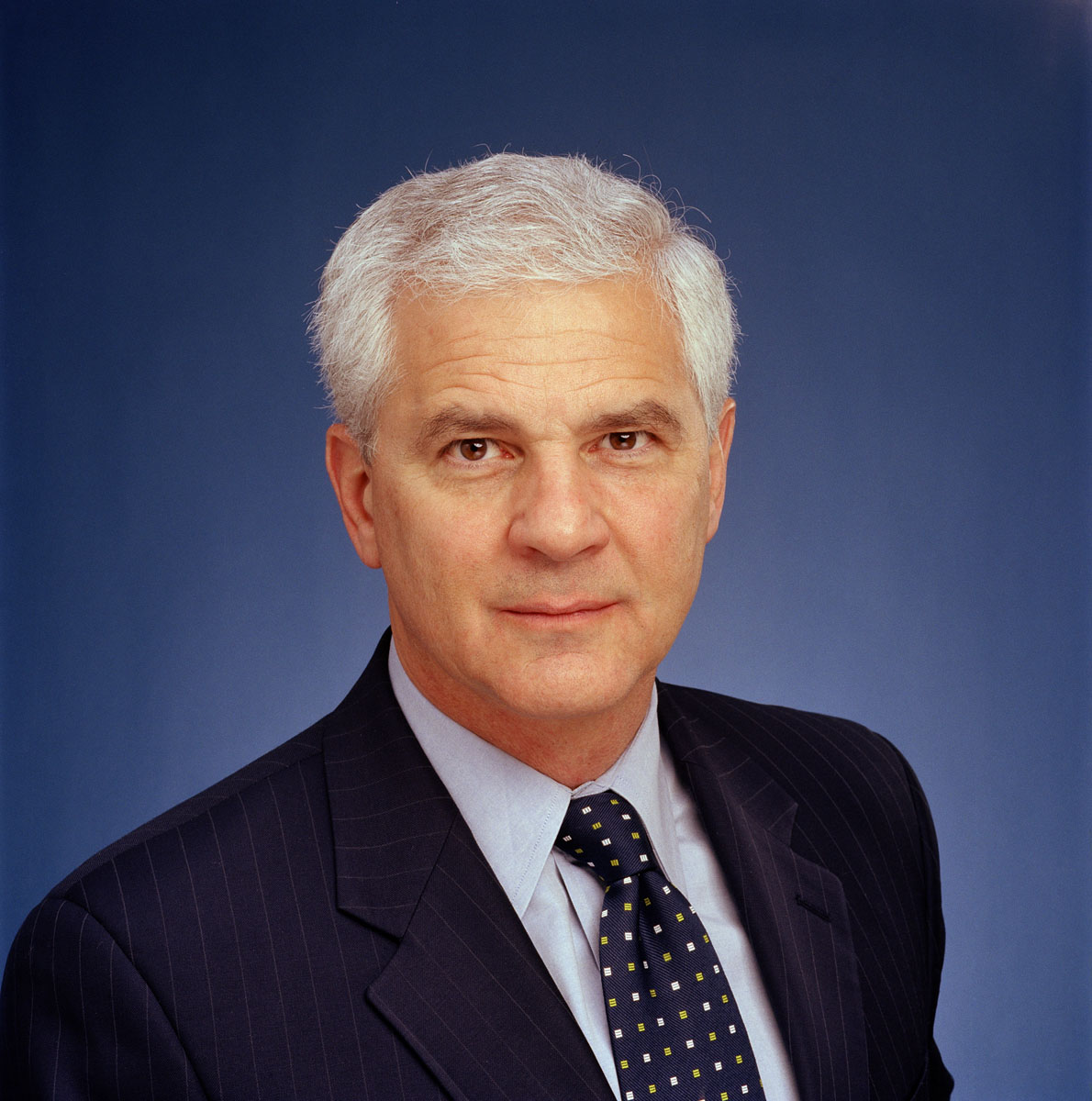
Former Senior Associate, Director for NonProliferation
Recent Work


George Perkovich, Jessica Tuchman Mathews, Joseph Cirincione, …
Joseph Cirincione
Carnegie does not take institutional positions on public policy issues; the views represented herein are those of the author(s) and do not necessarily reflect the views of Carnegie, its staff, or its trustees.

While the EU and European governments are embracing the much-lauded middle-power moment, this entails three difficult conundrums.

Richard Youngs

Europe is facing rising populism internally as well as external pressures from Russia, China, Turkey, and the United States.

Dimitar Bechev

A notable degree of participative democracy has firmly arrived in Europe. But to have more far-reaching impact, democratic deliberation needs to move into a radically new phase.
Richard Youngs

European NATO countries are wrestling with the possibility of U.S. disengagement from the alliance. With the continent’s security increasingly uncertain, governments must restore the credibility of their collective defense.



Hans-Dieter Lucas, Adam Thomson, Pierre Vimont

Before the next wave of EU enlargement takes place, the union needs to grapple with thorny questions of how power is distributed among its members.


Emil Sondaj Hansen, Ditte Brasso Sørensen