

Article
Леонид Гозман, Michael McFaul

REQUIRED IMAGE
Source: Carnegie
The results of the parliamentary vote last Sunday suggest that Russia has entered new political era. For the first decade of post-communist politics in Russia , the central cleavage was between left and right, communist and anti-communist, or ?reformers? and non-reformers. The central issue was the economy and policies to reform it. The vote tally from Sunday's election suggests that a third parameter ? nationalism -- has overtaken these earlier divides and debates. The long term consequences could be terrifying.
Of the major Russian political parties, three are rising, and three are falling. United Russia , The Liberal Democratic Party of Russia, and Motherland (Rodina) all won more votes in the election than in the last election in 1999. The Communist Party of the Russian Federation (CPRF), Yabloko, and the Union of Right Forces all won fewer votes in 2003 than in 1999. The last two? Russia 's liberal, democratic, pro-Western parties?did so poorly that they will not even be represented in the new Duma.
Several factors unite these winners and losers and distinguish them from each other. First, the winners ?United Russia, LDPR, and Motherland ? are all parties created initially by the state, the LDPR over a decade ago, United Russia (called Unity before) in 1999, and Motherland during this electoral cycle. In contrast, societal actors founded the Communist Party, Yabloko, and the Union of Right Forces. Parties beholden to the state are gaining popular support. Parties beholden to societal forces are losing strength.
Second, the three winners in last Sunday's voters are all loyal to the president. Unified Russia ran in this election as the party of Putin and is fully subservient to the Kremlin. Neo-nationalist Vladimir Zhirinovsky, the LDPR leader, and the leaders of Motherland are more colorful personalities than the gray suits leading Unified Russia, but these two parties will also serve the interests on the president on important issues. In contrast, the three losers are all parties are all opposition parties that have never fully succumbed to the president's will.
Third, and most importantly, all three winners in Sunday's vote are nationalist parties. Running on the coattails of President Vladimir Putin, Unified Russia leaders and campaign materials called for a ?strong? state and ?orderly? country. Motherland leader Dmitry Rogozin even more stridently echoed nationalist themes in his campaign appearances, compelling some of his opponents in other parties to publicly use the word ?fascist? to describe his ideology. And the LDPR's head, Vladimir Zhirinovsky, is a long time populist demagogue who has relied on outrageous xenophobic and racist one-liners to keep his party in the parliament since it splashed on to the Russian political scene in the 1993 parliamentary vote by capturing a quarter of the popular vote. In this year's election, Zhirinovsky's main campaign slogan was ?I am for Russians, I am for the poor,? an echo of the nationalist-socialist cocktail that proved so explosive a half century ago.
After the 1993 election, many (including me) worried about the specter of fascism in Russia . After his strong showing in 1993, however, Zhirinovsky and his ideas seemed to fade from the center of Russian politics. In 1999, his party barely made it in to the Duma, winning a mere six percent of the vote. At the end of the decade, it seemed as if one of Russia 's greatest successes was that nationalism did not take hold as a major force in Russian politics ? a sharp contrast to the deadly destructive role that nationalism played in Serbia , the only other empire to collapse after the fall of communism. Today, Zhirinovsky is back. So are his clones.
In ideological terms, the losers in this election can be mapped on traditional left-right scale. The Communist of Party is the left or center party and the Union of Right Forces and Yabloko are right of center (with Yabloko closer to the center). For most of the 1990s, those on the right battled keep out of power those on the left. As in Western party systems, economic debates defined the battle lines between left and right in Russia . Now, this battle is over; serious debates about economic issues are no longer a central theme of Russian politics.
To be sure, the Communist Party has tried to capture the nationalist, patriotic vote before, but never with any success. And Union of Right Forces leader Anatoly Chubais recently has floated the idea of Russia as a ?liberal empire?, but the concept did not steal votes away from the three winning nationalist parties. Instead, these parties won votes in the past without inflaming nationalist sentiments within the Russian electorate. As of yesterday, their non-nationalist themes seem less important to Russian voters.
It is premature to predict Russia 's long-term political trajectory after a single vote. We made that mistake back in 1993. This said, the trend line after Sunday does not look promising. During his presidency, Putin has sought to eliminate or emasculate alternative sources of political power. Since becoming president in 2000, Putin has chased away or arrested oligarchs with political ambitions, seized control of all national television networks, emasculated the power of the Federal Council (Russia's equivalent of the U.S. Senate), and tamed regional barons who once served as a powerful balance to Yeltsin's presidential rule. The individual rights of Russian citizens, including especially those living in Chechnya , are abused now more than anytime since the collapse of the Soviet Union . Putin believes that he is on a mission to clean up the mess left behind during the Yeltsin era and create a new and powerful Russia state. ?Managed democracy? is the euphemism for this agenda of democratic erosion.
To this less democratic regime, the Kremlin has now added nationalism as the principle ideological theme, and helped to empower nationnalists as the political leaders on the rise. Under the control of the more moderate, Western-oriented Putin, the increasingly centralized, less pluralistic political regime in Russia today has not been deployed to carry out massive repression against the Russian people or threaten countries on Russia 's borders. But who takes power after Putin? The electoral results from yesterday suggest that the liberals have no chance, while the nationalists of a more virulent sort than Putin are up and coming. In their hands, the regime that Putin has built could become really threatening to the people of Russia , to Russia 's neighbors, and eventually to the West.
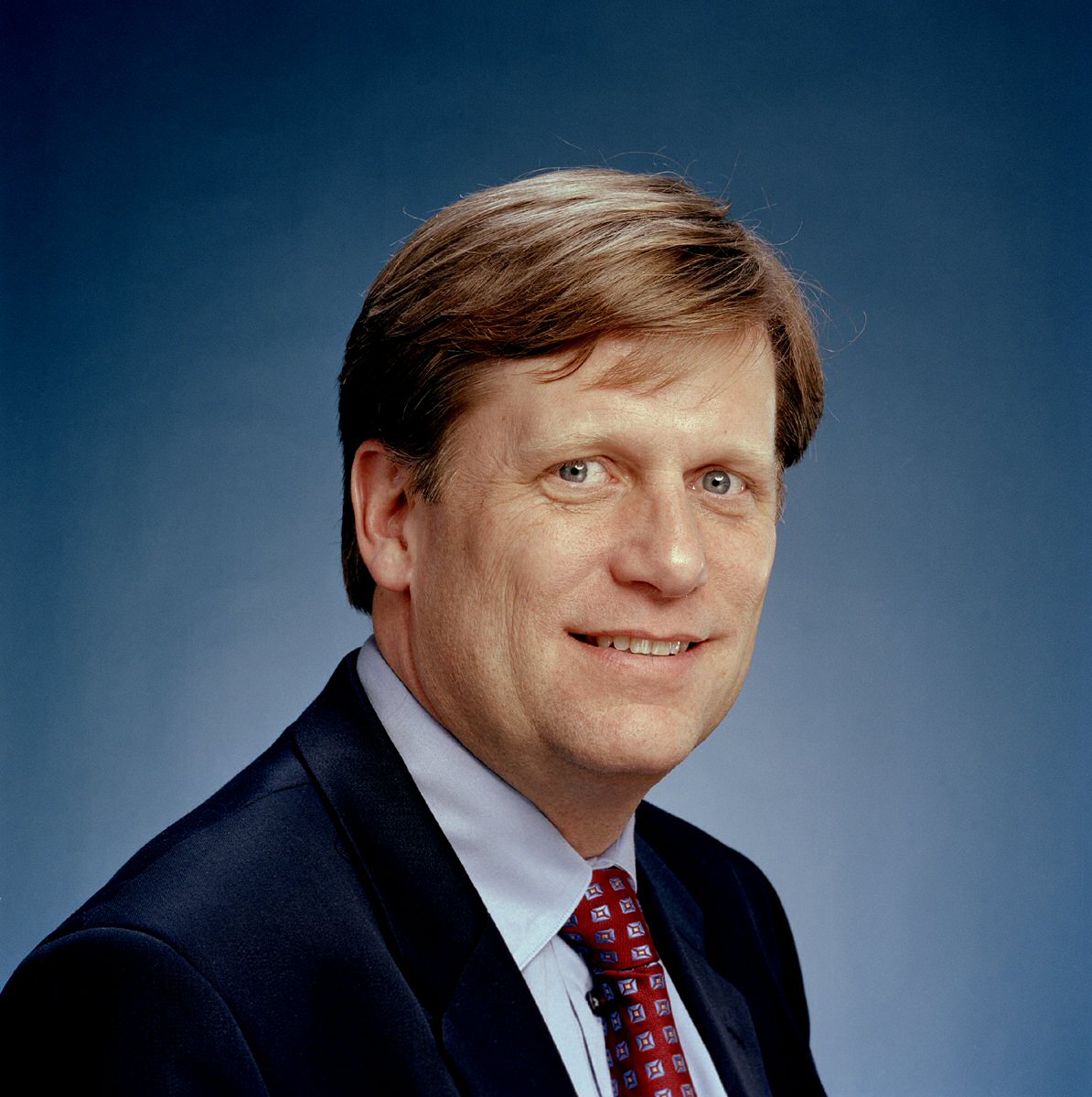
Former Senior Associate
In addition to his role at Carnegie, McFaul is Peter and Helen Bing Senior Fellow at the Hoover Institution and associate professor of political science at Stanford University.
Recent Work
Леонид Гозман, Michael McFaul
Michael McFaul, Sanja Tatic

European Commission President Ursula von der Leyen is about to give her annual address on the state of the EU. Here’s what she won’t—but should—say.

Rym Momtaz

The EU’s responses to two recent incidents expose the gulf between European perceptions and capabilities. Unless the union can bridge that gap, it will never become a real geostrategic power.
Rym Momtaz

European states control several Overseas Countries and Territories around the world that carry strategic, economic, and environmental weight. As great powers challenge the rules-based order, defending them is a geopolitical imperative for Europe.

Marc Pierini

In supporting Europe’s far-right, MAGA and Russia both want the same thing: a weaker EU. Europe must defend itself without abandoning the openness these forces exploit.

Armida van Rij

As we close out another season of Strategic Europe, it is worth taking stock of the deep shifts underway.
Rym Momtaz