

Commentary
Funding Ukraine remains a priority for European leaders. As Russia’s war of aggression heads into another winter, two feasible options to mobilize support for Kyiv should be fast-tracked.
Vladyslav Rashkovan, Gregory P. Wilson

Source: Getty
For the last two decades, Soviet and the Russian leaders worked with Western leaders to integrate the former Soviet empire, and above all else Russia, into the western community of states. To accelerate integration, it is necessary to fortify those multilateral institutions in which Russia is already a member and invent new security institutions that help face common enemies.
For the last two decades, Soviet and the Russian leaders worked with Western leaders to integrate the former Soviet empire, and above all else Russia, into the western community of states. Disputes over NATO expansion, the wars in Chechnya, or the bombing campaign against Serbia periodically slowed the process of integration. Nonetheless, leaders in both Russia and the West never let the long-term economic, security, and even ideological benefits of integration be jeopardized by these intermittent disagreements.
Today, however, disagreements between Moscow and the West are not simply slowing the process of integration, but threatening to stop it entirely. Western leaders have criticized Russian President Vladimir Putin for his antidemocratic tendencies at home and a more aggressive, anti-western trend in Russian foreign policy. Russian leaders blame the West for unfair play regarding trade and investment, and ridicule the United States in particular for alleged hypocritical manipulation of rhetoric about liberty and democracy to camouflage American grabs for power and influence in Russia's spheres of influence. As a result, the relationship between Russia and the West are now more tense and complicated than they have ever been in the last twenty years.
In Moscow, Washington, London, and Berlin, aspiring to the goal of integration is considered naïve and passé. In fact, there are powerful constituencies in the West and East who think it beneficial, legitimate, and natural to support Russia's isolation from the West.
In Russia, they are represented by the corrupt bureaucracy and advocates of authoritarianism who believe that greater contact with the West restricts their power and diminishes their wealth. In the West, and especially in the United States, they are represented by policymakers and analysts who believe that Russians do not value democracy, Russian leaders are imperialists, and Russia therefore can never be considered part of the West.
We (still) disagree. The West is not inherently threatening to Russia's national interests nor are Russians genetically disposed towards autocracy nor historically destined to remain imperial. Rather, Russia's integration into the West is not only possible but desirable. Integration – under the right conditions – still serves the long-term interests of Russia and the West. In addition to discussing important issues such as Iran, nuclear weapons, and human rights, the G8 leaders meeting in St. Petersburg this week should reaffirm their commitment to Russia's integration into the West and then plot out a concrete roadmap for making progress towards this goal.
Above all else, Russia's full integration into the West would enhance the security of both Russia and the West. In the last decade, the same enemy has attacked Moscow, Washington, London, and Madrid. A strong Russia allied truly and fully with the West would make the defeat of this common enemy more likely as Russia potentially can bring to this battle military assets, strategic locations, and deep knowledge about this enemy. Russia also needs the West as a partner in combating terrorism along Russia's borders and even within Russia itself.
As an unqualified member of the West, Russia's economy would become more integrated into the world capitalist system, more transparent, and therefore more capable of sustaining growth that was more equitable and less dependent on the prices of oil and gas. Russia is not an agrarian society making a rapid transition to an industrial economy, but a post-industrial economy with the critical asset – a highly educated, urban workforce – to compete and prosper as a core member of the most advanced economies in the world. If Russia fails to integrate into the world economy, but instead drifts back towards state-led autarky, Russia will gradually drift to the periphery of the world economy, relegated to supplying raw materials to the advanced post-industrial economies. The West also would benefit from a Russian economy fully integrated into Western markets since such an expansion of the “core” of advanced industrialized economies provides win-win opportunities for all traders and investors.
To jumpstart the process of integration, G8 leaders meeting in St. Petersburg should state unambiguously that they want to see Russia become a full-fledged member of all Western multilateral institutions. They should start by declaring a mutual interest in Russia joining NATO, and then spell out concrete criteria and milestones for membership, even if the roadmap stretches twenty years long. Everyone understands that Russia could only join NATO after undertaking several democratic reforms, including guarantees for the rights of the opposition, freedom of media and political competition. Russia's leaders will never make these changes in response to Western heckling, but only when they see the tangible benefits from integration. Such benefits will only become apparent if the West commits genuinely to Russia's full membership into Western institutions.
European leaders must also outline a timeline and criteria for Russia's membership into the European Union, even if the process will take chunks of centuries. Current interim arrangements between the EU and Russia must be reformatted as stepping stones to full integration, not half measures to keep Russia out of Europe.
To accelerate integration, it is also necessary to fortify those multilateral institutions in which Russia is already a member -- the United Nations, the OSCE, the Council of Europe, Russia-NATO Council, and even the Shanghai Cooperation Organization if Asian powers such as Japan, South Korea, and the United States are allowed to become full members. Russian membership into the World Trade Organization and the retirement of Jackson-Vanik restrictions on Russian trade with the United States are long overdue.
Russia and the West should also consider inventing new security institutions to face our common enemies. For instance, Russia, the United States, and Europe might work together to partner with Middle Eastern countries in forming a regional security organization, not unlike the CSCE that the United States and the Soviet Union anchored when first formed in 1974. Russia, the United States, and Europe could also take the lead in establishing a new international regime for supplying and disposing of nuclear fuel for light water reactors around the world.
Some will dismiss our vision as idealistic. But the alternative is far worse—a Russia isolated yet again from the West and a West fighting the war on terror and trying to prevent the proliferation of weapons of mass destruction without a critical ally. The Saint-Petersburg summit gives the leaders of great powers the perfect opportunity to rededicate our countries to a more lasting, fundamental, a mutually beneficial relationship between Russia and the West, no matter how long it takes.
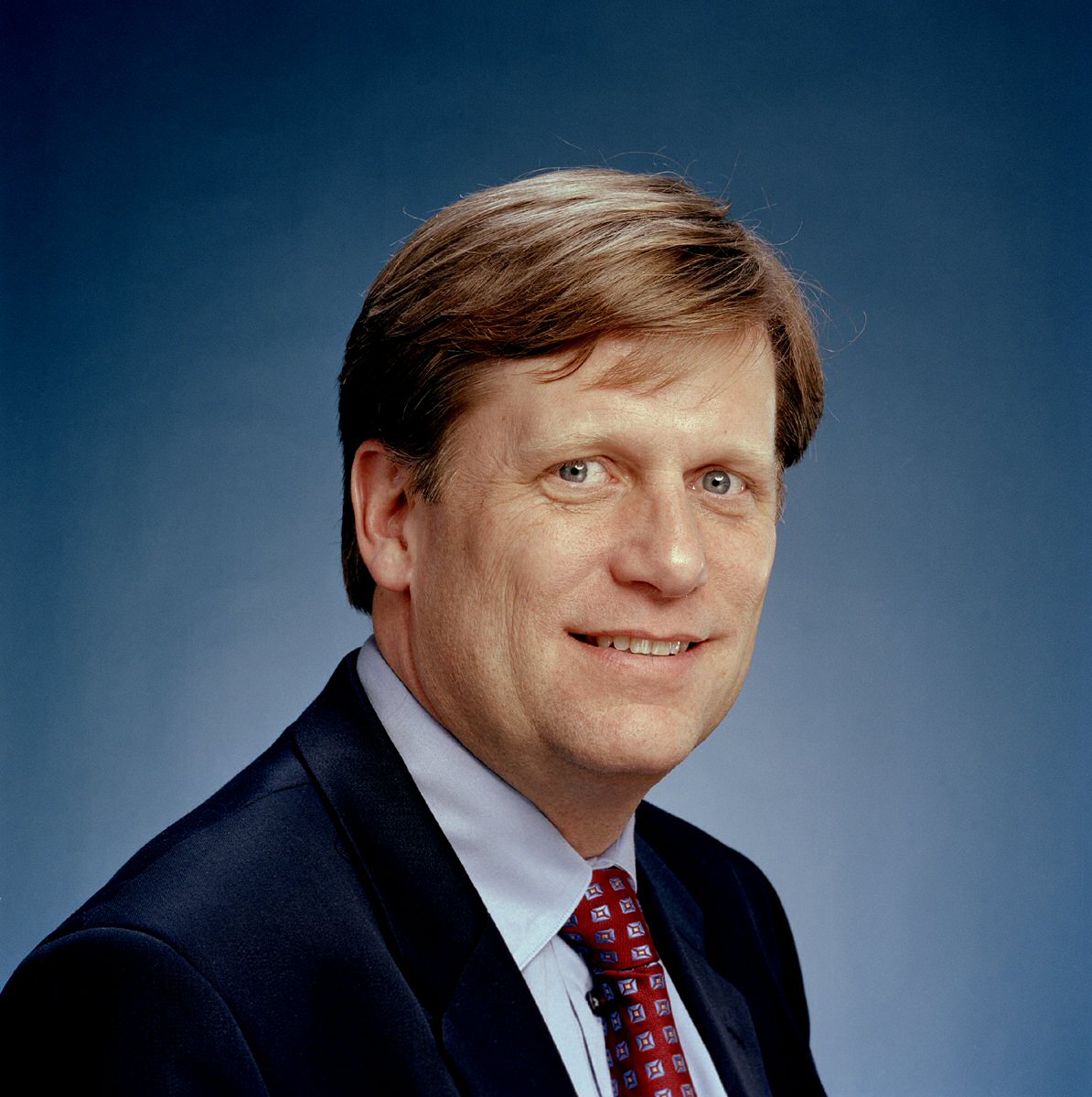
Leonid Gozman is Deputy Chairman of the Union of Right Forces, a political party in Russia, and a Director of United Energy Systems. Michael McFaul is a senior associate at the Carnegie Endowment for International Peace, and a Hoover fellow and professor of political science at Stanford University.
Леонид Гозман
Former Senior Associate
In addition to his role at Carnegie, McFaul is Peter and Helen Bing Senior Fellow at the Hoover Institution and associate professor of political science at Stanford University.
Carnegie does not take institutional positions on public policy issues; the views represented herein are those of the author(s) and do not necessarily reflect the views of Carnegie, its staff, or its trustees.

Funding Ukraine remains a priority for European leaders. As Russia’s war of aggression heads into another winter, two feasible options to mobilize support for Kyiv should be fast-tracked.


Vladyslav Rashkovan, Gregory P. Wilson

While the EU and European governments are embracing the much-lauded middle-power moment, this entails three difficult conundrums.

Richard Youngs

Europe is facing rising populism internally as well as external pressures from Russia, China, Turkey, and the United States.

Dimitar Bechev

A notable degree of participative democracy has firmly arrived in Europe. But to have more far-reaching impact, democratic deliberation needs to move into a radically new phase.
Richard Youngs
Much has been said of the changes Brussels is trying to make to the EU enlargement process. Here’s why gradual integration might—or might not—be the answer.
Dimitar Bechev