

Report
- +2
George Perkovich, Jessica Tuchman Mathews, Joseph Cirincione, …

REQUIRED IMAGE
U.S. President George Bush has won reelection. He is the first President to receive more than 50 percent of the votes cast since 1988 and got more votes than anyone President in American history. In addition, his Republican Party has increased its majority in both houses of the US Congress, giving the President an even more comfortable base of support in Washington. Overall, President Bush can claim a mandate from the American people, and it is reasonable for him and his advisors to view the vote as an endorsement on their policies and priorities. This will have serious and possibly profound implications for US policy and for many other countries, particularly key US allies in East Asia, Europe, and the Middle East. The end result may be to project the split nature of American politics onto the rest of the world, forcing countries to choose between the United States or alternative approaches to their security.
Source: Munhwa Ilbo
U.S. President George Bush has won reelection. He is the first President to receive more than 50 percent of the votes cast since 1988 and got more votes than anyone President in American history. In addition, his Republican Party has increased its majority in both houses of the US Congress, giving the President an even more comfortable base of support in Washington. Overall, President Bush can claim a mandate from the American people, and it is reasonable for him and his advisors to view the vote as an endorsement on their policies and priorities. This will have serious and possibly profound implications for US policy and for many other countries, particularly key US allies in East Asia, Europe, and the Middle East. The end result may be to project the split nature of American politics onto the rest of the world, forcing countries to choose between the United States or alternative approaches to their security.
Some experts believe that in President Bush’s second term, which will begin on January 21, 2005, American policymakers will be more realistic and less extreme than during the first four years. The constraints of the war in Iraq, the nuclear challenges facing American security in North Korea and Iran, and a growing economic challenge marked by growing budget deficits at home, some argue, will all force the President to moderate his policies and adopt a more balanced approach in his relationships around the world. In addition, this theory goes, re-elected presidents quickly start to think about their places in history and President Bush himself has talked about wanting to be the peace president in his second term, as contrasted with being the wartime president in his first.
The more likely outcome, however, is that the President and key advisors including Vice President Richard Cheney will see the election results as a mandate for their views that put an emphasis on preserving US power. It is likely that US officials in the coming years will try to advance American interests through an even more assertive, self-centered approach to foreign and security affairs. Political appointments to the cabinet will have a real impact on US policy and will not be known for several weeks or months. However, it is likely that the moderating influence of Secretary of State Colin Powell will not be present in the second Bush term and that the neo-conservatives will assume even more power than they currently hold. Moreover, the likely attention to the President’s place in history could easily focus on eliminating additional potential threats to American power, as was the motive for regime change in Iraq.
The overall result if this more assertive presidency emerges is that the United States may increasingly ask its allies to make hard choices about the extent of their loyalty to America and its policies. In North East Asia and South Korea in particular, this may mean greater American pressure on Seoul to restrict its engagement with North Korea and to take stronger steps to isolate and pressure Pyongyang. This pressure will extend not only to Seoul, but possibly to Beijing where Washington will hope to convince China’s leaders to cut aid to Pyongyang as a way to force North Korea back to the six party talks and into accepting US terms in that negotiation. Beyond the issue of North Korea, states in East Asia may be forced to choose between their relationship with the United States and their own priorities or domestic political considerations. President Bush said early in the war on terrorism that states were either with the United States or with the terrorists. This "with us or against us" approach may increasingly apply to other US foreign, security and economic policies as well.
In other parts of the world, states may also be forced to choose between their relationship with the United States and other concerns. In the Middle East, the issue of Iran’s nuclear program is the most immediate, but not only challenge. The United States still hopes that Iran will be referred to the UN Security Council. While Iran’s past violations of its International Atomic Energy Agency safeguards clearly warrant such a transfer, European states, Russia and China may not be comfortable with moving to the UN in case the Bush administration decides to repeat the approach it took on Iraq, using the UN when it served the US and abandoning it when the body did not live up to White House expectations. The lack of a long-term U.S. strategy for Iran beyond moving the issue to the UN Security Council also adds to these concerns.
On the wider issues of the war on terror and international security, it is likely that under President Bush, the US will continue to assert itself and its own interests and force US friend and foes alike to choose sides. This, in turn, may lead some states to consider stronger affiliations with each other, particularly in Europe where the European Union may provide a potential counterweight to American policies. In East Asia, China is the only realistic counterweight to the United States. The prospect of choosing between a more strident America and a strengthening China may be the choice put to many countries. This brings with it dangerous implications, including the real prospect that as the US pursues its own interests at the expense of others, countries will do the same, including pursuing diplomatic, political, economic and even military programs that may provide them with at least a basis for protection from US unilateral actions.
This analysis by Jon Wolfsthal first appears in the November 4th edition of the South Korean Newspaper Munwha Ilbo.
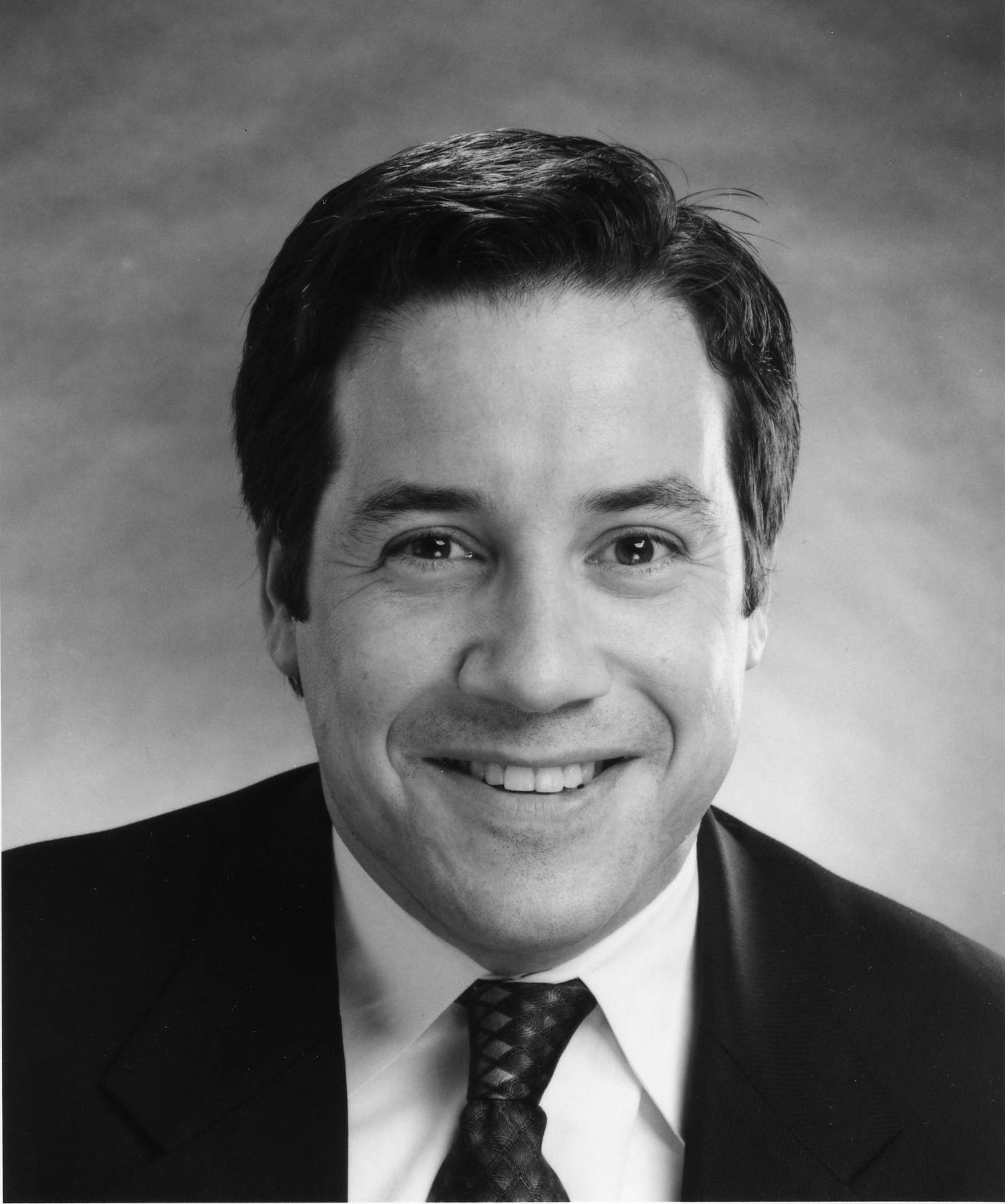
Former Nonresident Scholar, Nuclear Policy Program
Jon Wolfsthal was a nonresident scholar with the Nuclear Policy Program.
Recent Work



George Perkovich, Jessica Tuchman Mathews, Joseph Cirincione, …
Jon Wolfsthal
Carnegie does not take institutional positions on public policy issues; the views represented herein are those of the author(s) and do not necessarily reflect the views of Carnegie, its staff, or its trustees.

Ahead of a tough winter for Ukraine, Donald Trump’s swing back toward Russia bodes ill. But instead of panicking, Kyiv’s European allies are focusing on action.

Rym Momtaz

While the EU and European governments are embracing the much-lauded middle-power moment, this entails three difficult conundrums.

Richard Youngs

Europe is facing rising populism internally as well as external pressures from Russia, China, Turkey, and the United States.

Dimitar Bechev

European NATO countries are wrestling with the possibility of U.S. disengagement from the alliance. With the continent’s security increasingly uncertain, governments must restore the credibility of their collective defense.



Hans-Dieter Lucas, Adam Thomson, Pierre Vimont

The new U.S.–Denmark–Greenland agreement will help Washington exert political, economic, and financial dominance under the guise of security. Yet, it acknowledged Copenhagen’s and Nuuk’s sovereignty on the island.

Marc Pierini