

Paper
Douglas H. Paal
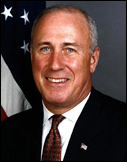
Source: Getty
The next U.S. administration should commit greater leadership time to developing a more considered and engaged Asian policy that begins with a call for a new multilateral organization in East Asia.
A senior US figure has predicted that the incoming US administration will commit greater leadership time to developing a more considered and engaged Asian policy.
Interviewed by PublicAffairsAsia.com, Doug Paal, a former adviser to George W Bush, says it is essential for the White House to address the geo-political consequences of "the rise of India and China".
"The US has for some time had a standard rhetoric of the recognition of the importance of Asia, but when it comes to turning up to meetings or to devoting leadership time to Asia it does not happen," he says.
"That’s partly because of the conflicts that are currently being fought. But with a new administration there will be a chance to take advantage of the fact that we are at an inflection point in history."
He also says that the US now recognises its increasing dependence on Asian nations.
"We have talked for 25 years about the rise of Asia, but the fact is look at look at the industrialisation, look at the sovereign wealth, look at the demographics," he said.
"In the next 25 years Asian states are going to be more important to us and we need to apportion our talents and our time accordingly."
Paal, who now holds a senior position at the Carnegie Endowment for World Peace, also calls for the construction of "a new multi-lateral organisation" for East Asia.
“We should all be throwing out ideas to find out what sort of organisation suits the broadest group of parties the most,” he says.
The interview originally appeared at PublicAffairsAsia.com.

Distinguished Fellow, Asia Program
Paal previously served as vice chairman of JPMorgan Chase International and as unofficial U.S. representative to Taiwan as director of the American Institute in Taiwan.
Recent Work
Douglas H. Paal

Douglas H. Paal, Tong Zhao, Chen Qi, …
Carnegie does not take institutional positions on public policy issues; the views represented herein are those of the author(s) and do not necessarily reflect the views of Carnegie, its staff, or its trustees.

Funding Ukraine remains a priority for European leaders. As Russia’s war of aggression heads into another winter, two feasible options to mobilize support for Kyiv should be fast-tracked.


Vladyslav Rashkovan, Gregory P. Wilson

While the EU and European governments are embracing the much-lauded middle-power moment, this entails three difficult conundrums.

Richard Youngs

Europe is facing rising populism internally as well as external pressures from Russia, China, Turkey, and the United States.

Dimitar Bechev

Much has been said of the changes Brussels is trying to make to the EU enlargement process. Here’s why gradual integration might—or might not—be the answer.
Dimitar Bechev

The European Commissioner for Trade is headed to China. But after President Xi’s bridge-building visit to Washington, can a more isolated EU overcome Beijing’s stranglehold on critical raw materials? Who will blink first?

Rym Momtaz, ed.