

Commentary
Ahead of a tough winter for Ukraine, Donald Trump’s swing back toward Russia bodes ill. But instead of panicking, Kyiv’s European allies are focusing on action.
Rym Momtaz
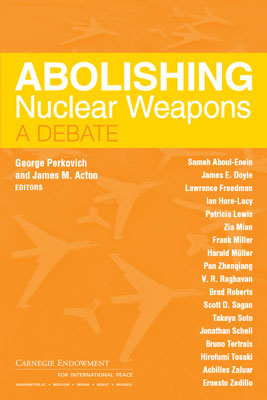
A distinguished group of experts from thirteen countries explore how to overcome obstacles to nuclear disarmament and pose questions that require further official and nongovernmental deliberation.
Source: Carnegie Endowment for International Peace
IMGXYZ1894IMGZYXIn the past few years, horizontal and vertical proliferation have collided. That is, the need for significant strengthening of the nonproliferation regime in the wake of nuclear developments in North Korea, Iran, Iraq, and Pakistan is now absolutely clear. So too, however, is growing unwillingness among non–nuclear-weapon states to even consider additional measures in what they see as the absence of serious progress by the nuclear-armed states toward disarmament.
The pathbreaking paper Abolishing Nuclear Weapons by George Perkovich and James Acton was first published by the International Institute for Strategic Studies as an Adelphi Paper in September 2008. One of the paper’s major aims was to prompt serious international analysis, discussion, and debate, recognizing divergent views within and between nuclear-armed states and those that do not possess these weapons. The absence of such engagement in official forums such as Non-Proliferation Treaty Review Conferences and the Conference on Disarmament makes it vital for nongovernmental actors to take the lead in hopes that governments will see the value of such dialogue and follow.
The present volume takes the next step. To advance the sort of analysis and dialogue Perkovich and Acton call for, they have invited a distinguished group of experts—current and former officials, respected defense analysts—from thirteen countries, nuclear and non-nuclear, to critique the Adelphi Paper. Their diverse views explore pathways around obstacles to nuclear disarmament and sharpen questions requiring further official and nongovernmental deliberation. Perkovich and Acton are grateful to the contributors for the thoroughly constructive character of their critiques.
Included in this Volume:
The volume concludes with an essay by Perkovich and Acton that works through some of the key questions or paradoxes raised by the critiques. Their focus is on major issues and crucial differences. They do not defend their original text, rebut points, or cite passages to show where they may have been misunderstood. Rather, in the spirit of the commentators, they use the points raised from diverse international viewpoints to clarify and sharpen the big picture.
Few, if any, top-tier issues attract as much simplistic analysis, as many verbal red herrings, and as little serious work by governments as does the feasibility of nuclear disarmament. As was pointed out in Abolishing Nuclear Weapons, none of the nuclear-weapon states "has an employee, let alone an inter-agency group, tasked full time with figuring out what would be required to verifiably decommission all its nuclear weapons."
Perkovich and Acton's endeavor launched with Abolishing Nuclear Weapons, advanced in this volume, and continuing into the future, is to jump-start a broad and deep international debate, based on serious analysis, of what it would take to achieve the immensely important and equally difficult goal of nuclear disarmament. Like this volume, that debate will have to include active participation by all states—non-nuclear as well as nuclear-armed.

Japan Chair for a World Without Nuclear Weapons, Senior Fellow
George Perkovich is the Japan Chair for a World Without Nuclear Weapons and a senior fellow in the Carnegie Endowment for International Peace’s Nuclear Policy Program. He works primarily on nuclear deterrence, nonproliferation, and disarmament issues.

Jessica T. Mathews Chair, Co-director, Nuclear Policy Program
Acton holds the Jessica T. Mathews Chair and is co-director of the Nuclear Policy Program at the Carnegie Endowment for International Peace.
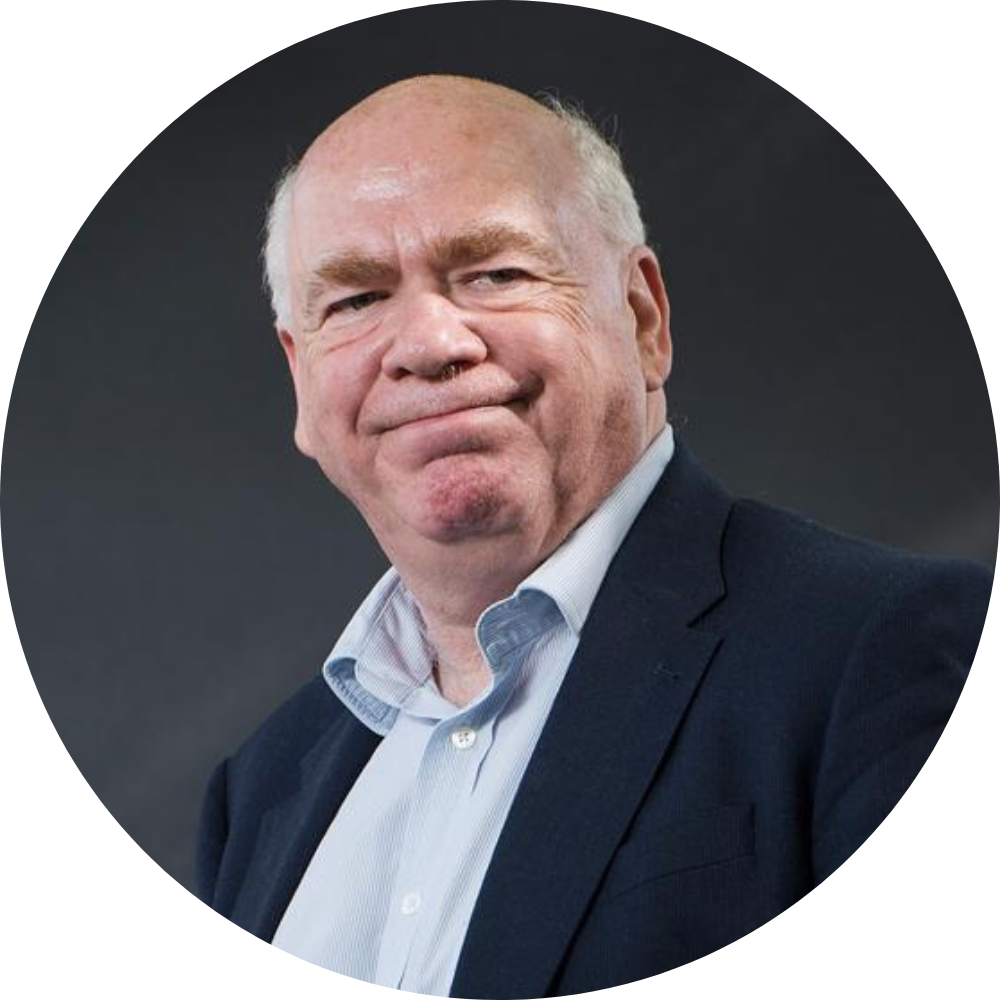
Lawrence Freedman
Sir Lawrence Freedman is emeritus professor of War Studies, King's College London. He was professor of War Studies from 1982 to 2014 and vice-principal from 2003 to 2013. Before joining King's he held research appointments at Nuffield College Oxford, the International Institute for Strategic Studies and the Royal Institute of International Affairs. Elected a fellow of the British Academy in 1995, he was appointed official historian of the Falklands Campaign in 1997. In June 2009 he was appointed to serve as a member of the official inquiry into Britain and the 2003 Iraq War. He has written on international history, strategic theory and nuclear weapons issues, as well as commenting on current security issues. Among his recent books are Strategy: A History (2013), The Future of War: A History (2017), and Ukraine and the Art of Strategy (2019). In September he will publish Command: The Politics of Military Operations from Korea to Afghanistan.
Frank Miller
Jonathan Schell
Brad Roberts
Brad Roberts is director of the Center for Global Security Research at Lawrence Livermore National Laboratory. Among his recent publications is an edited CGSR Occasional Paper entitled “Taking Stock: US-China Track 1.5 Nuclear Dialogue."
Harald Müller
Bruno Tertrais
Foundation for Strategic Research
Deputy Director of the Fondation pour la recherche stratégique (FRS)
Achilles Zaluar
Scott Sagan
Takaya Suto
Hirofumi Tosaki
James E. Doyle
Patricia Lewis
Ian Hore-Lacy
Pan Zhenqiang
V.R. Raghavan
Sameh Aboul-Enein
Ernesto Zedillo
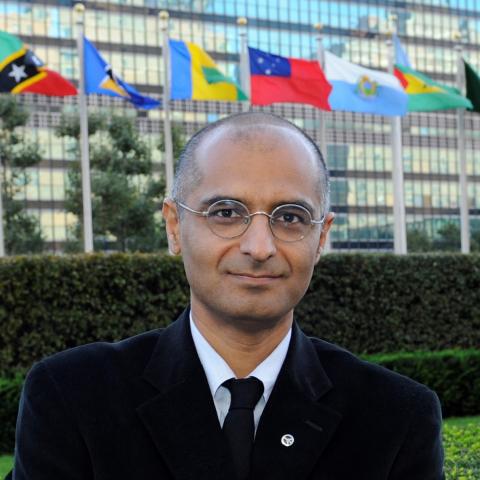
Zia Mian
Zia Mian is a physicist and co-director of Princeton University's Program on Science and Global Security, part of the Princeton School of Public and International Affairs.
Carnegie does not take institutional positions on public policy issues; the views represented herein are those of the author(s) and do not necessarily reflect the views of Carnegie, its staff, or its trustees.

Ahead of a tough winter for Ukraine, Donald Trump’s swing back toward Russia bodes ill. But instead of panicking, Kyiv’s European allies are focusing on action.

Rym Momtaz

Funding Ukraine remains a priority for European leaders. As Russia’s war of aggression heads into another winter, two feasible options to mobilize support for Kyiv should be fast-tracked.


Vladyslav Rashkovan, Gregory P. Wilson

While the EU and European governments are embracing the much-lauded middle-power moment, this entails three difficult conundrums.

Richard Youngs

Europe is facing rising populism internally as well as external pressures from Russia, China, Turkey, and the United States.

Dimitar Bechev

Much has been said of the changes Brussels is trying to make to the EU enlargement process. Here’s why gradual integration might—or might not—be the answer.
Dimitar Bechev