

Paper
Adam Baczko, Gilles Dorronsoro, Arthur Quesnay
Source: Getty
The alienation of ethnic Pashtuns is a major factor in the Taliban’s success in southern Afghanistan, but it could seriously impair the group’s progress in the north.
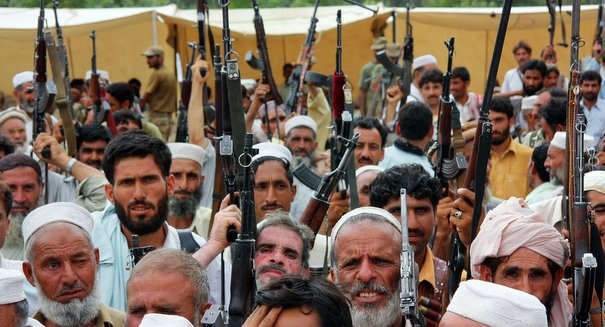
In all my visits to Afghanistan since 1988, I have never seen as high a level of distrust and hostility between Pashtuns and other ethnic groups as I have witnessed this year. This contested country has a long history of ethnic tensions, which have only become more acute in recent decades. The old ethnic hierarchy that placed the Pashtuns -- the most numerous ethnic group in Afghanistan, at around 40 percent of the population -- at the top was only reluctantly accepted before 1978. Once war and internal conflict erupted after 1978, other ethnic groups refused altogether to accept the hierarchy.
After the Afghan state’s presence in the countryside collapsed, the non-Pashtun ethnic groups—the Hazara, Tajiks, and Uzbeks—were empowered. When the unifying narrative of jihad faded after President Mohammad Najibullah’s fall in 1992, political parties capitalized on existing social tensions and resentments to build their bases as representatives of different ethnic groups.
During a stay in Kandahar last week, I saw both tribal and ethnic alienation among the local Pashtuns. The zirak tribes, which enjoy working relations with Kabul, control the resources, including development and security forces. The non-zirak are de facto excluded, and thus more likely to support the Taliban. The second level of alienation is vis à vis Kabul, where power is seen to be wielded by non-Pashtun northerners. The election process, which locals widely perceive as rigged, is only fueling the resentment.
Far from promoting common understanding, media outlets have actively fueled [ethnic] resentment in the last few years.
As a result of the changing balance of power between the different groups, the Pashtuns have suffered discrimination in northern Afghanistan, where they are a minority, and the Taliban is at its weakest.
The Afghan media has played a major role in expanding the geographical scope of ethnic and sectarian conflict. Far from promoting common understanding, media outlets have actively fueled resentment in the last few years. Major political competitors, including Jamiat-e Islami head and former Afghan president Burhanuddin Rabbani and the young Afghan-Australian media mogul Saad Mohseni, own TV and radio channels and use them to mobilize their constituents. One TV channel recently accused the Afghan Shi’a of working for Iran and promoting Iran’s interests in Afghanistan. The legal boundary between information and defamation is unclear and, in practice, sanctions are limited.
The alienation of the Pashtuns is a major factor in the Taliban’s success in southern Afghanistan, but it could seriously impair the group’s progress in the north.
Pashtuns are alienated from the central government, which they believe is in the hands of non-Pashtun leaders. Although President Hamid Karzai descends from an aristocratic family in Kandahar, he is often seen as pliant to the will of the United States. And non-Pashtuns resent what they view as favoritism toward the Pashtuns, who allegedly receive the bulk of international money.
The alienation of the Pashtuns is a major factor in the Taliban’s success in southern Afghanistan, but it could seriously impair the group’s progress in the north. The “ethnic question,” then, is key for the insurgency: How can the Taliban play on Pashtun resentment in the south and simultaneously broaden the insurgency to include other ethnic groups in the north?
To address this dilemma, the Taliban have been using members drawn from non-Pashtun communities who affiliate with them because of their ideological devotion. The strategy seems to work to a certain extent: In Samangan Province, in northern central Afghanistan, the Taliban have found support in the local Tatar community. Uzbek and Turkmen militants (and some militants from Uzbekistan) give the Taliban a local face in the north.
And in the longer term, if the Taliban appear to be winning the war against the international coalition, they will rally more non-Pashtun groups to their cause.
Former Nonresident Scholar, South Asia Program
Dorronsoro’s research focuses on security and political development in Afghanistan. He was a professor of political science at the Sorbonne in Paris and the Institute of Political Studies of Rennes.
Recent Work
Adam Baczko, Gilles Dorronsoro, Arthur Quesnay
Gilles Dorronsoro
Carnegie does not take institutional positions on public policy issues; the views represented herein are those of the author(s) and do not necessarily reflect the views of Carnegie, its staff, or its trustees.

The new U.S.–Denmark–Greenland agreement will help Washington exert political, economic, and financial dominance under the guise of security. Yet, it acknowledged Copenhagen’s and Nuuk’s sovereignty on the island.

Marc Pierini

A summer of escalation in the Black Sea has hurt Ukraine economically and is exacerbating world food security. A truce is needed—as is a broader reframing of Europe’s Ukraine strategy.

Thomas de Waal

Are Germany’s economic, industrial, and political struggles becoming a liability for the EU’s ability to rise to the geopolitical moment?

Rym Momtaz, ed.

European states control several Overseas Countries and Territories around the world that carry strategic, economic, and environmental weight. As great powers challenge the rules-based order, defending them is a geopolitical imperative for Europe.
Marc Pierini

Mounting economic strain and battlefield losses will not necessarily make the Kremlin less dangerous. They could instead push Moscow toward a more aggressive hybrid campaign designed to test NATO’s Eastern flank, exploit allied hesitation, and fracture European resolve.


Maksym Beznosiuk, Robert Benson