• Research
  • Strategic Europe
  • About
  • Experts
Carnegie Europe logoCarnegie lettermark logo
EUUkraine
  • Donate
Afghanistan: The Impossible Transition

Source: Getty

Paper

Afghanistan: The Impossible Transition

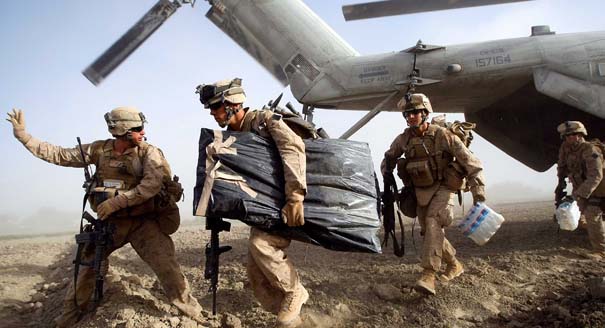
A combination of two critical problems threatens to undermine the mission of the United States–led coalition in Afghanistan: the failure of the counterinsurgency strategy and a disconnect between political objectives and military operations.

Link Copied
By Gilles Dorronsoro
Published on Jun 15, 2011

Additional Links

Full Text

A combination of two critical problems threatens to undermine the mission of the United States–led coalition in Afghanistan: the failure of the counterinsurgency strategy and a disconnect between political objectives and military operations. If anything, the current strategy is making a political solution less likely, notably because it is antagonizing Pakistan without containing the rise of the armed opposition. That has put the coalition in a paradoxical situation, in which it is being weakened militarily by a non-negotiated and inevitable withdrawal while at the same time alienating potential negotiating partners.

The Obama administration has made new appointments to head the defense and intelligence agencies, and, in Afghanistan, has installed a new leadership to oversee U.S. military forces and named a new ambassador. The U.S. administration must take advantage of these appointments to establish greater coherence in both policy and operations:
  • The 2014 transition anticipated by the coalition is unrealistic because the Afghan army will not be capable of containing an insurgency that is gathering significant strength. If the transition were carried out, it would provide a considerable boost to the insurgency and, ultimately, the defeat of the Karzai regime. The July 2011 withdrawal must not significantly weaken the coalition, or it will create a military and political vacuum and ultimately make the success of the negotiations less likely.

  • In the border provinces of Pakistan, we are now seeing the creation of a sanctuary liable to harbor jihadist groups, including Lashkar-e-Taiba and al-Qaeda fighters. This is alarming because counterterrorism operations cannot eliminate groups in a sanctuary that is steadily growing larger. Meanwhile, the coalition’s operations are essentially focused on the southern regions where these jihadist groups do not exist. In practice, the only way to contain the threat posed by transnational jihadist groups is to politically reintegrate the Taliban and Hezb-e-Islami into a coalition government in order to isolate the most radical groups.

  • The Western withdrawal therefore inevitably requires a political agreement with the Taliban leadership, which implies abandoning the coalition’s reintegration policy. Confrontation with Pakistan is not an option since American leverage on Islamabad is limited and the Pakistani army has some influence over the insurgents, which would be useful should negotiations take place.

About the Author

Gilles Dorronsoro

Former Nonresident Scholar, South Asia Program

Dorronsoro’s research focuses on security and political development in Afghanistan. He was a professor of political science at the Sorbonne in Paris and the Institute of Political Studies of Rennes.

    Recent Work

  • Paper
    Waiting for the Taliban in Afghanistan

      Gilles Dorronsoro

  • In The Media
    Bin Laden Death Points to Way Out of Trap

      Gilles Dorronsoro

Gilles Dorronsoro
Former Nonresident Scholar, South Asia Program
Gilles Dorronsoro
South AsiaAfghanistanPakistanSecurityMilitaryForeign Policy

Carnegie does not take institutional positions on public policy issues; the views represented herein are those of the author(s) and do not necessarily reflect the views of Carnegie, its staff, or its trustees.

More Work from Carnegie Europe

  • Commentary
    Strategic Europe
    Taking the Pulse: Can European Defense Survive the Death of FCAS?

    France and Germany’s failure to agree on the Future Combat Air System (FCAS) raises questions about European defense. Amid industrial rivalries and competing strategic cultures, what does the future of European military industrial projects look like?

      • Rym Momtaz

      Rym Momtaz, ed.

  • Commentary
    Strategic Europe
    Macron Makes France a Great Middle Power

    France has stopped clinging to notions of being a great power and is embracing the middle power moment. But Emmanuel Macron has his work cut out if he is to secure his country’s global standing before his term in office ends.

      • Rym Momtaz

      Rym Momtaz

  • Commentary
    How Can Europe Renew a Stalled Enlargement Process?

    Despite offering security benefits to candidates and the EU alike, the enlargement agenda appears stalled. Why is progress not being made, and is it time for Europe to rethink its approach?

      Sylvie Goulard, Gerald Knaus

  • Turkey Erdogan Caucasus Central Asia
    Article
    How Turkey Can Help the Economies of the South Caucasus to Diversify

    Over the past two decades, regional collaboration in the South Caucasus has intensified. Turkey and the EU should establish a cooperation framework to accelerate economic development and diversification.

      • Feride Inan
      • Güven Sak
      • Berat Yücel

      Feride İnan, Güven Sak, Berat Yücel

  • Commentary
    Strategic Europe
    Can Europe Still Matter in Syria?

    Europe’s interests in Syria extend beyond migration management, yet the EU trails behind other players in the country’s post-Assad reconstruction. To boost its influence in Damascus, the union must upgrade its commitment to ensuring regional stability.

      Bianka Speidl, Hanga Horváth-Sántha

Get more news and analysis from
Carnegie Europe
Carnegie Europe logo, white
Rue du Congrès, 151000 Brussels, Belgium
  • Research
  • Strategic Europe
  • About
  • Experts
  • Projects
  • Events
  • Contact
  • Careers
  • Privacy
  • For Media
  • Gender Equality Plan
Get more news and analysis from
Carnegie Europe
© 2026 Carnegie Endowment for International Peace. All rights reserved.