• Research
  • Strategic Europe
  • About
  • Experts
Carnegie Europe logoCarnegie lettermark logo
EUUkraine
  • Donate
From Violence to Moderation: Al-Jama'a al-Islamiya and al-Jihad

Source: Getty

Paper
Malcolm H. Kerr Carnegie Middle East Center

From Violence to Moderation: Al-Jama'a al-Islamiya and al-Jihad

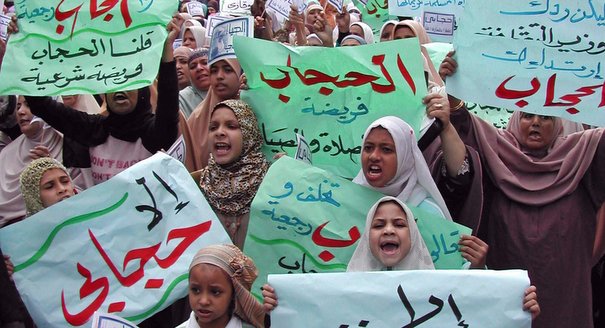
Recognition by Egypt's leading Jihadists that violence has failed to achieve political change and in fact has been counterproductive has led them to a remarkable change of course.

Link Copied
By Amr Hamzawy and Sarah Grebowski
Published on Apr 29, 2010

Additional Links

Full Text
Recognition by Egypt’s leading Jihadists that violence has failed to achieve political change and in fact has been counterproductive has led them to a remarkable change of course, concludes a paper by Amr Hamzawy and Sarah Grebowski.
 
After years of violent confrontation with the Egyptian government and society, and defeat by the country’s security forces, al-Jama‘a al-Islamiya and, later, segments of al-Jihad have accepted their failure to radically change society and politics, and to recognize the harm that their violent activities—formerly justified using religious concepts—have inflicted on Muslims and non-Muslims alike. These developments have given rise to a Jihadi revisionism that renounces violence and redefines attitudes toward the state, politics, and society.
 
The same Islamic concepts that once were used to justify violence have been redefined to sanction and urge nonviolent social and political activism. Revisionist documents outline a careful cost-benefit analysis that effectively rules out the use of violence to achieve the groups’ goals. A variety of factors prevent al-Jama‘a and al-Jihad from fully implementing these reformed views, such as the Egyptian regime’s refusal to allow members of either group to reintegrate into the country’s political and social fabric and al-Jihad’s specific challenge of disseminating revisionist ideas throughout its fragmented movement that still largely condones violence. However, Jihadi revisionism has led both groups to forego violence and shifted Egypt’s Islamist spectrum toward moderation.
 

About the Authors

Amr Hamzawy

Director, Middle East Program

Amr Hamzawy is a senior fellow and the director of the Carnegie Middle East Program. His research and writings focus on governance in the Middle East and North Africa, social vulnerability, and the different roles of governments and civil societies in the region.

Sarah Grebowski

Carnegie Middle East Center

Authors

Amr Hamzawy
Director, Middle East Program
Amr Hamzawy
Sarah Grebowski
Carnegie Middle East Center
North AfricaEgyptPolitical Reform

Carnegie does not take institutional positions on public policy issues; the views represented herein are those of the author(s) and do not necessarily reflect the views of Carnegie, its staff, or its trustees.

More Work from Carnegie Europe

  • Commentary
    Strategic Europe
    Can Europe Still Matter in Syria?

    Europe’s interests in Syria extend beyond migration management, yet the EU trails behind other players in the country’s post-Assad reconstruction. To boost its influence in Damascus, the union must upgrade its commitment to ensuring regional stability.

      Bianka Speidl, Hanga Horváth-Sántha

  • Commentary
    Strategic Europe
    Europolis, Where Europe Ends

    A prophetic Romanian novel about a town at the mouth of the Danube carries a warning: Europe decays when it stops looking outward. In a world of increasing insularity, the EU should heed its warning.

      Thomas de Waal

  • Commentary
    Strategic Europe
    Taking the Pulse: What Issue Is Europe Ignoring at Its Peril in 2026?

    2026 has started in crisis, as the actions of unpredictable leaders shape an increasingly volatile global environment. To shift from crisis response to strategic foresight, what under-the-radar issues should the EU prepare for in the coming year?

      Thomas de Waal

  • Commentary
    Can Europe and Africa Mend Fences?

    Despite the strategic importance of relations between the EU and the African Union, deep divisions remain between the blocs. At their upcoming summit, both partners should strive to build a mutually beneficial cooperation.

      Marta Martinelli

  • Commentary
    Strategic Europe
    Armenia’s Election Is a Foreign Affair

    As the 2026 Armenian election approaches, Prime Minister Nikol Pashinyan is facing fierce opposition from both Russia and the diaspora. He will need the help of Europe, the United States, and regional neighbours to advance his ambitious foreign policy. 

      Thomas de Waal

Get more news and analysis from
Carnegie Europe
Carnegie Europe logo, white
Rue du Congrès, 151000 Brussels, Belgium
  • Research
  • Strategic Europe
  • About
  • Experts
  • Projects
  • Events
  • Contact
  • Careers
  • Privacy
  • For Media
  • Gender Equality Plan
Get more news and analysis from
Carnegie Europe
© 2026 Carnegie Endowment for International Peace. All rights reserved.