

Commentary
Before the next wave of EU enlargement takes place, the union needs to grapple with thorny questions of how power is distributed among its members.
Emil Sondaj Hansen, Ditte Brasso Sørensen
Source: Getty
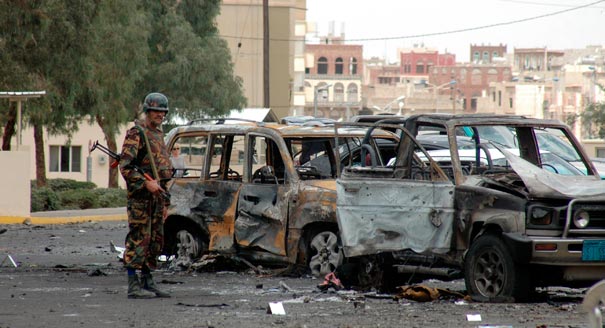
The violent jihad advocated by al-Qaeda is not widely accepted by Yemenis at this point, and there is a small window of opportunity to take steps to undermine al-Qaeda’s influence.
Al-Qaeda has successfully adapted its message in Yemen to exploit local grievances. Still, the violent jihad it advocates is not widely accepted by Yemenis at this point, and there is a small window of opportunity to take steps to undermine al-Qaeda’s influence.
An effective strategy to combat Al-Qaeda in the Arabian Peninsula (AQAP) must identify how the group’s message resonates with Yemenis and develop ways for state institutions to address underlying complaints, contends a paper by Alistair Harris.
“Complementary to targeted intelligence and Yemeni-led law enforcement activities, an effective strategy to combat AQAP must seek to understand which parts of the group’s narrative are resonating and why and how state institutions can address the grievances—real or perceived—articulated by AQAP,” writes Harris.
Alistair Harris
Carnegie does not take institutional positions on public policy issues; the views represented herein are those of the author(s) and do not necessarily reflect the views of Carnegie, its staff, or its trustees.

Before the next wave of EU enlargement takes place, the union needs to grapple with thorny questions of how power is distributed among its members.


Emil Sondaj Hansen, Ditte Brasso Sørensen

The new U.S.–Denmark–Greenland agreement will help Washington exert political, economic, and financial dominance under the guise of security. Yet, it acknowledged Copenhagen’s and Nuuk’s sovereignty on the island.

Marc Pierini

A summer of escalation in the Black Sea has hurt Ukraine economically and is exacerbating world food security. A truce is needed—as is a broader reframing of Europe’s Ukraine strategy.

Thomas de Waal

Are Germany’s economic, industrial, and political struggles becoming a liability for the EU’s ability to rise to the geopolitical moment?

Rym Momtaz, ed.

European states control several Overseas Countries and Territories around the world that carry strategic, economic, and environmental weight. As great powers challenge the rules-based order, defending them is a geopolitical imperative for Europe.
Marc Pierini