

Commentary
Sergei Aleksashenko, Mikhail Krutikhin, Yuval Weber
Source: Getty
With inflation rising, trade balances falling, and economic growth slowing, the outlook for Russia's economy is bleak. Official plans for strict budget tightening will only add to the troubles.
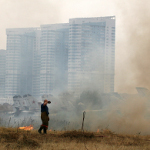
Even before the summer, the outlook for Russia’s economy was not good. After the record heat, drought, and massive wildfires—as well as the government’s inadequate response—the forecast is even worse. Though growth strengthened in the second quarter in year-over-year terms, it decelerated in quarter-over-quarter terms. The economy appears to have lost its momentum since June and the government’s estimate of 4 percent growth in 2010 is no longer likely; growth of about 3.5 percent seems more plausible.
Even so, the government has prioritized eliminating the deficit by 2015. If budget assumptions hold up, Russia will likely need to cut expenditures, with serious implications for economic growth. In addition, inflation is already rising and may emerge as the most serious economic problem in 2011, undermining both economic growth and social stability.
According to Rosstat’s preliminary estimate, Russia’s GDP growth strengthened in the second quarter, growing by 5.2 percent (y/y) compared to 3.3 percent (y/y) in the first quarter. This was largely the result of a base effect, however, as GDP contracted in the second quarter of 2009. In q/q seasonally adjusted annualized terms, 2010 second quarter growth was much slower—2 percent, compared to 6.1 percent in the three previous quarters.
It is unclear where even this low growth came from. The Development Center estimates that net exports subtracted 4 percentage points from GDP growth in the second quarter, while investment and private consumption were sluggish.1 Assuming these estimates are correct, inventories and/or public consumption would have had to increase at unrealistically sharp rates in order for GDP growth to have reached Rosstat’s 5.2 percent number.

Since the second quarter, the economy appears to have lost its momentum even according to official statistics. The Ministry of Economic Development’s (Minecon) flash estimate—which tends to be more optimistic than Rosstat’s assessment—shows that GDP contracted by 0.3 percent in July, and the principal losses from the summer’s poor harvest are not expected until August and September. Most experts estimate that the economy will lose 0.7–1 percent of GDP from the drought.
Nonetheless, despite the third quarter weakness, the government continues to forecast 4 percent growth for this year. A rate around 3.5–3.6 percent seems more realistic, given Russia’s current momentum and uncertainties in the global economy. Following the big 7.9 percent decline in GDP last year, this would represent a very sluggish recovery indeed, leaving Russian GDP still far below pre-crisis levels.2
After three months of budget debate, the Ministry of Finance (Minfin) has emerged the unconditional winner. The government set the federal budget for 2011–2013 and made returning to a zero-deficit budget by 2015 its priority.
With the price of oil only expected to increase slightly—the budget assumes prices of $75/bbl in 2011, $78 in 2012, and $79 in 2013—oil-related revenues will not be able to drive budgetary revenues as they did before the crisis. In addition, the slow increase will not compensate for the revenue lost from export duty deductions for the new oil fields in Eastern Siberia and off-shore. Minfin has proposed a number of small steps to increase revenues—by 0.5 percent of GDP in 2011, 0.8 percent in 2012, and 1.1 percent in 20133—but they will not be enough. Minfin estimates that revenues will fall from 17.4 percent of GDP in 2011 to 16.5 percent in 2012 and 16.1 percent in 2013.
Balancing the budget will therefore require freezing and/or reducing expenditures in real terms. According to Minfin, total expenditures will fall from 20.9 percent of GDP in 2011 to 19.6 in 2012 and 19.0 in 2013. Nonetheless, the government intends to increase social expenditures,4 as well as spending on national defense and security. These increases will necessitate cuts in all other areas. Some items will likely fall below their 2010 levels in nominal (!) terms by 2013, while military expenditures will rise not only in real terms, but also as a share of GDP.
While the Ministry of Finance believes that reducing expenditures as a share of GDP will have only short-term negative effects, the actual effects will be much more serious.
The government has also decided to stop using reserve funds to finance the deficit, turning instead to receipts from privatization and the market. This should not be read as a change in policy toward state versus private ownership, however. Though it has promised to sell big stakes—up to 25 or 30 percent—in Sberbank, Rosneft, Transneft, VTB bank, and Sovkomflot, among others, the government has no intention of losing its controlling stake in any of those companies.
While the Ministry of Finance believes that reducing expenditures as a share of GDP in a low-growth economy will have only short-term negative effects, the actual effects will be much more serious. Public demand is steadily declining as the share of the federal budget held by payments to households grows quickly. The bulk of the federal expenditure cuts are in investment and significant underinvestment in infrastructure is becoming another concern. In Tver, Governor Dmitry Zelenin has stated that the regional budget can maintain no more than 120 of its 16,000 kilometers of roads annually. And Minister of Finance Alexei Kudrin said that federal financing of road maintenance will not be able to reach 70 percent of the required level any sooner than ten years from now. Thus, the medium-term influence of rigid budgetary policy will also constrain the economy’s growth from the supply side.
Though inflation tends to be low or even negative in August, consumer prices this August rose by 0.6 percent (m/m), triggered by drought, the poor harvest,5 and the government’s ban on grain exports. A comparable rate has not been seen in August since 2000. As a result, twelve-month rolling inflation grew by 6.1 percent in August, compared to 5.5 percent in July.
The Ministry of Economic Development has already raised its forecast for inflation this year from 5.5–6 percent to 7–7.5 percent. This forecast would require monthly inflation of 0.4–0.5 percent until year-end, however, and is likely to be exceeded, given that inflation tends to accelerate in the fall.

Projected annual consumer price inflation of 8.5–9 percent, with a significant chance of double-digit inflation in the first half of next year, is more realistic. Because food products hold a relatively high share of the Russian consumer’s basket—38 percent in 2010—rising world prices for basic food products will very quickly and strongly affect Russian CPI. For example, when the world price of wheat jumped 2–3 times in 2007, food inflation in Russia rose by more than 21 percent, while non-food inflation was 7–8 percent.
If inflation rises above 10 percent next year, Russian authorities will have to make a tough choice between meeting the announced deficit targets and addressing growing public discontent by increasing pension and wage indexation. Even today, close to 40 percent of the public regards high inflation as the government’s biggest failure. The parliamentary elections in December 2011 and the presidential election in March 2012 will only increase the pressure.
Sergei Aleksashenko, former deputy minister of finance of the Russian Federation and former deputy governor of the Russian central bank, is a scholar-in-residence in the Carnegie Moscow Center’s Economic Policy Program.
1. These numbers are based on the following growth estimates for the second quarter: Exports grew by 8.7 percent (y/y) while imports expanded by one third in physical volume terms; investment grew by 5.3 percent (y/y); and private consumption increased by approximately 3.5 percent (y/y).
2. In a recently released revision of GDP data from 2002 to the present, Rosstat raised GDP growth estimates for 2006 and 2007, and lowered estimates for 2008. The improved methodology used also significantly reduced the discrepancy between production- and consumption-based accounts of GDP, which had reached a staggering 1.3–1.7 percent of GDP in 2006.
3. These include increasing the natural resource tax for oil and gas; gasoline, tobacco, and alcohol excises; and export duties for oil products, nickel, and copper.
4. Social expenditures include transfers to extra-budgetary funds (mostly the pension fund) whose revenues will increase in 2011 due to increases in corresponding taxes, causing social spending to fall, technically. But, starting from 2012, social expenditures will again outpace inflation (6.7 percent in 2012 and 7.7 percent in 2013).
5. The Ministry of Agriculture has lowered its forecast by one third.
Former Scholar in Residence, Economic Policy Program, Moscow Center
Aleksashenko, former deputy minister of finance of the Russian Federation and former deputy governor of the Russian central bank, was a scholar-in-residence in the Carnegie Moscow Center’s Economic Policy Program.
Recent Work
Sergei Aleksashenko, Mikhail Krutikhin, Yuval Weber
Sergei Aleksashenko
Carnegie does not take institutional positions on public policy issues; the views represented herein are those of the author(s) and do not necessarily reflect the views of Carnegie, its staff, or its trustees.

As we close out another season of Strategic Europe, it is worth taking stock of the deep shifts underway.

Rym Momtaz

The hybrid warfare landscape is evolving rapidly, leaving policymakers without clear strategies. To better inform their work in addressing emerging challenges, governments must dig deeper into the underlying dynamics at play.


Raluca Csernatoni, Alicia Wanless
The EU had to compromise to adopt a twenty-first sanctions package against Russia, exposing growing cracks in the union’s resolve. Is this latest, weaker round worth it to keep pressure on Moscow?
Rym Momtaz, ed.

Trump is distracted and Ukraine wants Europe to step up. The continent’s leaders must find their voice and assert it in talks with Russia.

Alissa de Carbonnel

Mounting economic strain and battlefield losses will not necessarily make the Kremlin less dangerous. They could instead push Moscow toward a more aggressive hybrid campaign designed to test NATO’s Eastern flank, exploit allied hesitation, and fracture European resolve.

Maksym Beznosiuk