

Q&A
- +1
Amr Hamzawy, Andrew Leber, Eric Lob, …
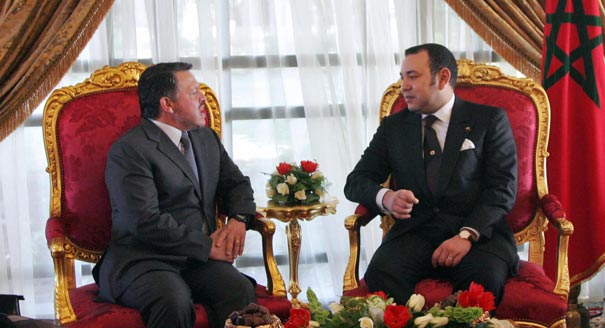
Source: Getty
Efforts at reform in Jordan have been blocked by a resilient class of political elites and bureaucrats, who fear that such efforts would move the country away from a decades old rentier system to a merit-based one.
On February 1, 2011, after weeks of protests that preceded the uprisings in both Tunisia and Egypt, King Abdullah II dismissed the unpopular government of Samir Rifai and entrusted Marouf Al Bakhit, an ex-army general and former prime minister, with forming a new government. Bakhit’s major task would be “to take speedy practical and tangible steps to unleash a real political reform process that reflects [Jordan’s] vision of comprehensive reform, modernization and development.” While the references to political reform abounded in this newest letter, they were far from new.
Since acceding to the throne in 1999, the king has entrusted almost every appointed government with some aspect of political reform. What was novel about this particular letter was his candid admission that “the process has been marred by gaps and imbalances” and that these were the result of “fear of change by some who resisted it to protect their own interests . . . costing the country dearly and denying it many opportunities for achievement.”
In several speeches and press interviews over the last few years, the king has hinted at his frustration with those who did not wish to embrace change. The words in this letter, however, marked the clearest attack yet on those who resisted reform. The accusation was explicit: the motives behind resistance to change from such groups, which had in fact been created and sustained by the system over many decades, stemmed from their desire to protect their own private interests—even at the expense of the state.
Could reform efforts have taken a different course in Jordan? In a country where the king has broad powers over all branches of government, his expressed frustration over the struggling reform efforts begs the question of why the status quo remains intact. This decade-long process, initiated by the king, has been largely ignored by an ossified layer of elites seeking to protect their own interests. The clear discrepancy between the king’s directives to the seven prime ministers he had entrusted to form governments in his twelve years of power—and the actual record of reform completed by these respective governments—points to a structural problem that is all too often ignored.
Much research has been done on the creation of rentier and semi-rentier systems in the Arab world, whereby the state relies on rents from such nonproductive sources as oil or external assistance. Such rents, however, are also specifically utilized to provide privileges to the political elite in exchange for its loyalty. These groups, developed by many Arab systems over decades, support the existing order because it occupies a privileged position that would be compromised by merit-based systems, rather than ones based on clientelism and patronage.
In the case of Jordan, this group has become so entrenched, powerful, and ossified that it is now not only resisting such reform from below but—more dangerously—from above. In other words, these elites have become recalcitrant, self-appointed guardians of the state who believe they alone should decide how the country ought to evolve. They have no qualms about opposing the directives of the leaders or systems that created them in the first place if those leaders are seen as adopting policies that threaten their interests.
An examination of the political reforms conducted by successive governments in Jordan over the last decade suggests that, in most cases, the king’s directives were ignored, diluted, and, at times, directly opposed. This does not imply that the objectives of this class and the monarch were always in contradiction, but suggests that the rentier system has, over time and through entrenchment, created monsters who will only acquiesce as long as the system perpetuates the old policy of favors.
These groups are therefore more likely to pursue policies that are antithetical to political reform, thus resulting in the gaps and imbalances lamented by the king’s latest letter. These rentier systems have already proven to be difficult to maintain and, in an Arab world that is increasingly demanding better governance and greater accountability, such ossified systems will come to pose significant threats to stability, particularly in resource-poor countries such as Jordan.

Vice President for Studies
Marwan Muasher is vice president for studies at Carnegie, where he oversees research in Washington and Beirut on the Middle East. Muasher served as foreign minister (2002–2004) and deputy prime minister (2004–2005) of Jordan, and his career has spanned the areas of diplomacy, development, civil society, and communications.
Recent Work



Amr Hamzawy, Andrew Leber, Eric Lob, …
Marwan Muasher
Carnegie does not take institutional positions on public policy issues; the views represented herein are those of the author(s) and do not necessarily reflect the views of Carnegie, its staff, or its trustees.

With its public finances in shambles, the far right polling at 35 percent ahead of the 2027 presidential election, and a growing protest movement, is France’s crisis a threat to the EU’s geopolitical awakening?

Rym Momtaz, ed.

A notable degree of participative democracy has firmly arrived in Europe. But to have more far-reaching impact, democratic deliberation needs to move into a radically new phase.

Richard Youngs

The European Commissioner for Trade is headed to China. But after President Xi’s bridge-building visit to Washington, can a more isolated EU overcome Beijing’s stranglehold on critical raw materials? Who will blink first?
Rym Momtaz, ed.

The domestic impacts of how long it is taking to end the war in Ukraine have pushed the French electorate to the political extremes and compromised the country’s diplomatic capacity.
Rym Momtaz

Before the next wave of EU enlargement takes place, the union needs to grapple with thorny questions of how power is distributed among its members.


Emil Sondaj Hansen, Ditte Brasso Sørensen