

Testimony
Rachel Kleinfeld
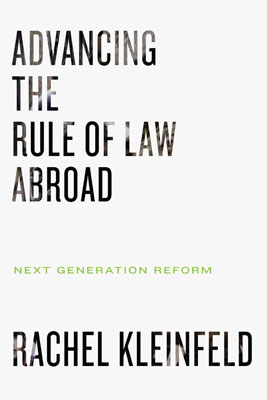
A growing movement of second-generation reformers view the rule of law not as a collection of institutions and laws that can be built by outsiders, but as a relationship between the state and society that must be shaped by those inside the country.
Source: Washington, DC: Carnegie Endowment for International Peace, 2012

In Advancing the Rule of Law Abroad, Rachel Kleinfeld describes the history and current state of reform efforts and the growing movement of second-generation reformers who view the rule of law not as a collection of institutions and laws that can be built by outsiders, but as a relationship between the state and society that must be shaped by those inside the country. Based on research in countries from Indonesia to Albania, Kleinfeld makes a compelling case for new methods of reform that can have greater chances of success at helping these internal reformers and improving the rule of law.
“Rachel Kleinfeld not only assesses past efforts to support the rule of law abroad, but offers innovative approaches for future assistance. The work of scholars and practitioners alike will benefit measurably from her insights.”
—Kenneth Wollack, President, National Democratic Institute
“While policymakers increasingly recognize the risks to U.S. national security when the rule of law breaks down abroad, there is far less consensus on what to do about it. Advancing the Rule of Law Abroad tackles this question head-on with timely and powerful insight. Full of careful analysis and accessible prose, Kleinfeld brings conceptual clarity to an emerging field.”
—Jeremy Weinstein, Stanford University, Former Director for Development and Democracy, National Security Council
“This book is impressive, thoughtful, and full of practical wisdom. Kleinfeld analyzes many of the challenges we faced in helping civilian rule-of-law development experts in Iraq and Afghanistan. This should be on the reading list of anyone preparing to perform rule-of-law work in a post-conflict setting.”
—Brigadier General Mark Martins, U.S. Army
Advancing the Rule of Law Abroad was named by Foreign Affairs as one of the best books of 2012 on political and legal topics. “Kleinfeld brings together a good grasp of the scholarship on law and society with the sensibilities and hard-earned experience of a field practitioner. The result is essential reading for the foreign policy community.”
—G. John Ikenberry, Foreign Affairs

Senior Fellow, Democracy, Conflict, and Governance Program
Rachel Kleinfeld is a senior fellow in Carnegie’s Democracy, Conflict, and Governance Program, where she focuses on issues of rule of law, security, and governance in democracies experiencing polarization, violence, and other governance problems.
Recent Work
Rachel Kleinfeld
Renée DiResta, Rachel Kleinfeld
Carnegie does not take institutional positions on public policy issues; the views represented herein are those of the author(s) and do not necessarily reflect the views of Carnegie, its staff, or its trustees.
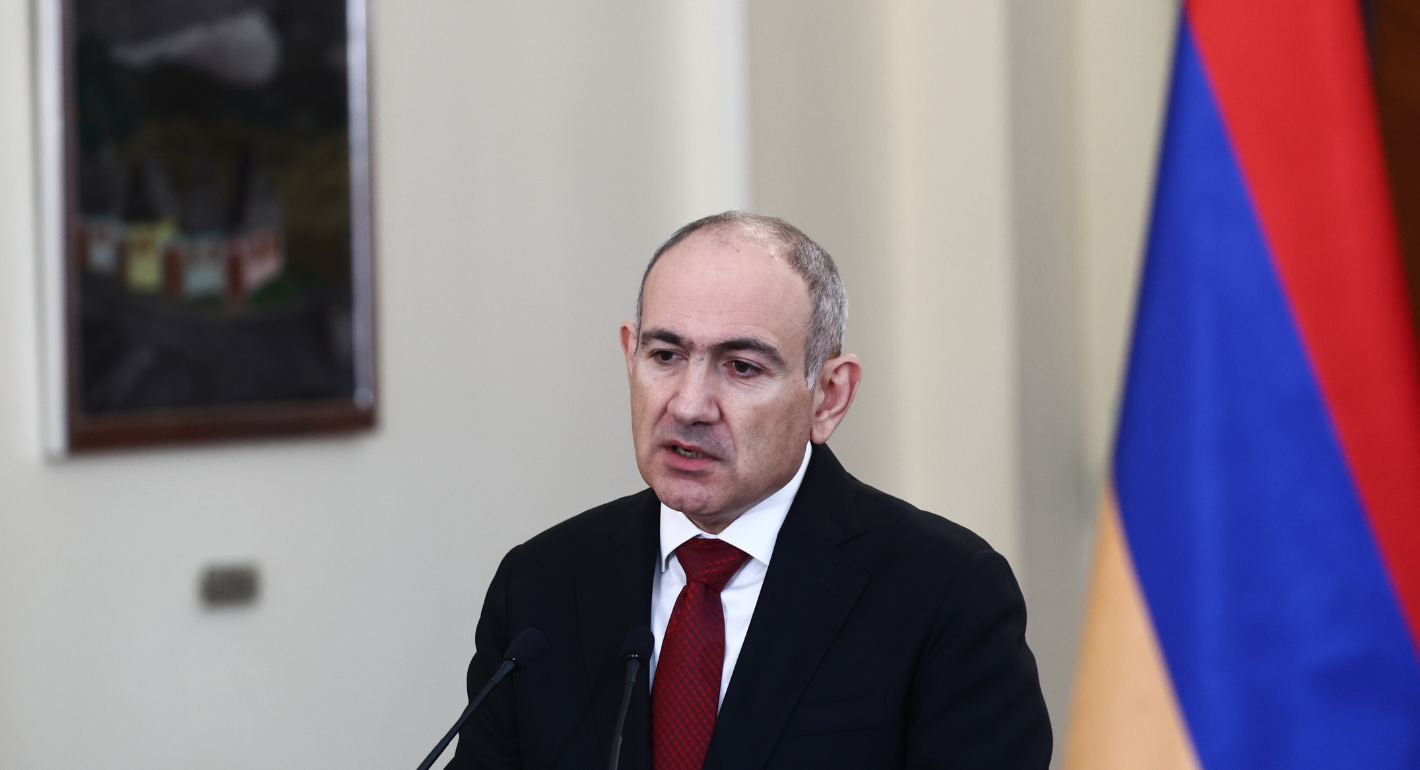
Europe has an interest in supporting Armenian leader Nikol Pashinyan as he tries to make peace with neighbors and loosen ties with Russia. But it is depersonalized support in the long term, not quickfire flash, that will win the day.

Thomas de Waal

Following Ursula von der Leyen’s gaffe equating Turkey to Russia and China, relations with Ankara risk deteriorating even further. Without better, more consistent diplomatic messaging, how can the EU pretend to be a geopolitical power?

Sinan Ülgen

Closer EU-UK ties could help address urgent European concerns. But is the EU ready for rapprochement with the United Kingdom?

Rym Momtaz, ed.

Europe has been standing by while its Southern neighborhood is being redrawn by force. To establish a path to peace between Israel and Lebanon, it’s time for Europeans to get involved with hard power.
Rym Momtaz

In Ukraine, Gaza, and Iran, AI warfare has come to dominate, with barely any oversight or accountability. Europe must lead the charge on the responsible use of new military technologies.

Raluca Csernatoni