

Commentary
Uri Dadush
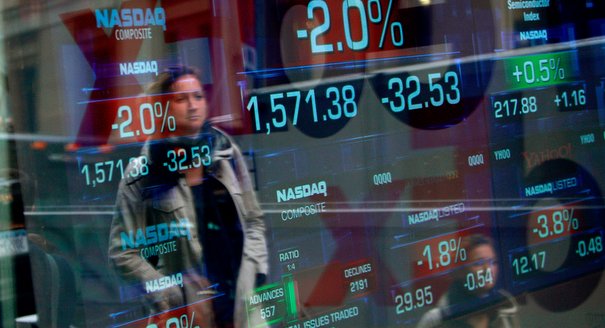
Source: Getty
The U.S. fiscal deal is a step in the right direction. But Washington still needs to address the biggest cause of the chronic fiscal crisis—exploding healthcare costs.
Contrary to an avalanche of criticism of the U.S. fiscal deal from both the American Republican Right and Democratic Left, as well as a number of independent analysts, the agreement is consequential—and most of it is good news.
Don’t get me wrong. The critics certainly have a point. This is a partial deal and far from what is needed to put the United States back on a sustainable fiscal path. But it is still a very important step in the right direction.
The deal ends a months-long standoff between the U.S. administration, the Senate Democrats, and the House Republicans. It will, among other things, end the payroll tax holiday, worth 2 percent of salaries up to a threshold. It will raise federal income tax rates for the most affluent—from 35 percent to 39.6 percent for individuals earning over $400,000 and for households earning over $450,000—and increase the capital gains and dividends tax rate for these individuals and households from 15 percent to nearly 23.8 percent. And the deal will extend Bush-era tax rates for the middle class.The deal is a positive development for a number of reasons. First, it will dampen U.S. growth in 2013 but avoids an extremely risky sudden stop of demand at a time of great global vulnerability, especially in the ailing eurozone.
Second, by clarifying tax burdens for many years to come, it removes an enormous source of uncertainty that has deterred both U.S. investors and consumers over many months. Tax uncertainty has a more pervasive deleterious impact than uncertainty about public expenditure cuts, which by their nature affect specific activities.
Third, it takes a significant bite out of the deficit: about one-sixth of the 2012 deficit estimate of 7 percent of GDP or about one-quarter of the deficit when account is taken of the fact that the U.S. economy is operating well below potential at present. It does so by raising taxes now while leaving enough on the negotiating table—most importantly, the decision to lift the debt ceiling—to achieve an agreement on expenditure cuts. Despite the protestations, such a deal will probably be struck in coming weeks—after much drama—reducing the deficit further.
Fourth, it makes some progress toward redressing the extraordinary surge in U.S. income inequality of the past three decades and its many undesirable consequences, including the failure to make progress on combatting widespread poverty among the bottom 20 percent of the population. There are enormous income gaps in America. The top 20 percent of earners makes, on average, over twenty times as much as the bottom 20 percent. Comparable ratios for the OECD group of advanced countries are much smaller. The average tax rate for very high earners (26 percent) is not very different from that paid by the middle class (between 14 and 18 percent). The tax changes agreed to as part of the fiscal deal are, moreover, progressive (see table).
The fiscal agreement removes a large dose of uncertainty, finally sets the United States on the long and winding road toward fiscal consolidation, and places the greater burden of adjustment on those most capable of bearing it. But the deal does not go far enough.
Washington still needs to address the biggest single cause of America’s chronic fiscal crisis—exploding healthcare costs. Healthcare costs in the United States, both private and public, amount to 18 percent of GDP, about 8 percentage points of GDP more than the OECD average, for worse health outcomes. The huge gap may well widen in coming years, achieving a size comparable to that of the entire U.S. manufacturing sector. The IMF projects that government healthcare spending could rise from roughly 10 percent of GDP to 16 percent by 2030.
The last-minute fiscal agreement also does not even begin to deal with the enormous complexity and distortive nature of the U.S. tax system, including its systematic encouragement of consumption and housing at the expense of savings and corporate investment. Americans cannot afford to overspend and undersave much longer.
The United States is no longer the economic giant that drives global demand. But it remains by far the largest economy. It still owns the reserve currency. And it has a disproportionate influence both on financial markets and on thinking about economic policy, even though its fiscal mess has clearly eroded its standing.
Accordingly, despite its incompleteness, the deal’s significance for other countries is considerable. The signal that the United States is finally beginning to deal with its large fiscal deficit will encourage those who argue for the same in tiny and giant economies alike—from Israel to India. Moreover, the Obama administration’s determination to mitigate or break the trend toward ever-higher income inequality sends an important policy message to many other countries that are on similar trajectories.
Finally, the coming debate over how to rein in and rationalize healthcare and other social spending will be key. Advanced countries confronted with similar problems and developing countries eager to avoid repeating the mistakes of their richer brethren will watch U.S. moves with great interest. Borrowing from Churchill, the deal struck on New Year’s Day does not mark the end of the great American fiscal war. But it may mark the beginning of the end of the war.

Former Senior Associate, International Economics Program
Dadush was a senior associate at the Carnegie Endowment for International Peace. He focuses on trends in the global economy and is currently tracking developments in the eurozone crisis.
Recent Work
Uri Dadush
Uri Dadush
Carnegie does not take institutional positions on public policy issues; the views represented herein are those of the author(s) and do not necessarily reflect the views of Carnegie, its staff, or its trustees.

As we close out another season of Strategic Europe, it is worth taking stock of the deep shifts underway.

Rym Momtaz

The hybrid warfare landscape is evolving rapidly, leaving policymakers without clear strategies. To better inform their work in addressing emerging challenges, governments must dig deeper into the underlying dynamics at play.


Raluca Csernatoni, Alicia Wanless

Trump is distracted and Ukraine wants Europe to step up. The continent’s leaders must find their voice and assert it in talks with Russia.

Alissa de Carbonnel

Over the past ten years, NATO has held almost as many summits as it did during the entirety of the Cold War. Are they still useful, or is it time to stop holding annual meetings?
Rym Momtaz, ed.
Nearly a year and a half after Europeans leaned into sucking up to Trump, the strategy has produced some benefits when it comes to Ukraine.
Rym Momtaz