

In The Media
Vikram Nehru

Source: Getty
To fully rejuvenate its economy, Malaysia needs to become an ethnically blind society run by an ethnically blind government.
Electioneering in Malaysia has been at a fever pitch for many months now as Prime Minister Najib Razak prepares to call a general election. But hidden from view and away from the election’s sound and fury, the Malaysian government has been implementing some remarkable economic and institutional reforms that will stand the country in good stead in coming decades. Yet, arguably the single most important obstacle to economic rejuvenation in Malaysia remains unaddressed.
The government’s current efforts are aimed at tackling some of Malaysia’s deepest structural problems so the country can finally beat the middle-income trap. Wages in Malaysia have climbed to the point that the country can no longer compete internationally in labor-intensive manufacturing. But skills and systems haven’t improved to a level that allows Malaysia to compete effectively in the same product space as advanced countries. Without further reforms, it is difficult to see how Malaysia can escape from this trap, restore sustained rapid growth, and become one of the world’s advanced economies.
Avoiding this trap is a challenge that many middle-income countries face. Only a handful of the 101 developing countries as of the 1950s have since made the leap to high-income status, many of them in Asia—Hong Kong, Japan, South Korea, Singapore, and Taiwan. At one time, Malaysia seemed set to join this select group, but its efforts faltered when the government was unable to implement crucial economic reforms. Now it is once again making a determined push through focused government policies with an emphasis on execution.Malaysia’s New Economic Model, designed to more than double the country’s per capita income by 2020, is driving the effort. Its central pillar—the Economic Transformation Program—focuses on government and private sector attention on twelve key economic areas (ranging from agriculture to tourism) and six cross-cutting reforms (from human capital development to inequality reduction). Its second pillar—the Government Transformation Program, which is designed to improve service standards in key government programs such as lowering crime and improving public transport—is also significant.
But more important than the content of the programs has been the systematic and businesslike way the Najib administration has gone about their implementation. The responsible unit is run by a hard-charging minister, Dato Sri Idris Jala, who has a business background and has surrounded himself with world-class professionals. He reports directly to the prime minister.
Each program has actionable and measurable milestones, with an annual scorecard that is available on the web and open to public scrutiny. To underline the credibility of the effort, the government has an international auditing firm (PricewaterhouseCoopers in 2012) validate the data underpinning the targets and invites a panel of renowned economists from around the world to review and critique the program and its results.
Each ministry is assigned its own set of targets, and the performance of cabinet ministers is evaluated, in part, on the results they achieve. These are made public, giving the people an opportunity to judge ministerial effectiveness. The message is clear—program execution is paramount.
With such transparent and direct accountability, it should come as no surprise that virtually all targets in the Economic Transformation and Government Transformation Programs have been met or exceeded. Private investment has increased, leading to robust macroeconomic performance despite a tepid global economy.
And Malaysia’s economy looks poised for faster growth as its business climate improves. In 2010, Malaysia was ranked 23rd (out of 183 economies) in the world for the ease of doing business; today, it is ranked twelfth. The World Economic Forum now ranks Malaysia 21st out of 142 economies in its world competitiveness rankings—up from 26th in 2010.
All of this would have been cause to celebrate—but for one important caveat. The program does nothing to address a long-standing affirmative action program called the Bumiputera—or sons of the soil—policy. Under the policy, Bumis (ethnic Malays and indigenous groups) get preferential access to a range of economic opportunities, including jobs, education, business ownership, real estate, procurement contracts, and finance. The Bumiputera policy was introduced after race riots in 1969. It made eminent sense at the time and helped reduce inequality in the country. But the policy is an anachronism today. Not only does it undermine Prime Minister Najib’s “1Malaysia” policy—which emphasizes national unity and ethnic harmony—it also contributes to increased inequality in Malaysia, which is now more severe within ethnic groups (including among Bumis) than between them.
Prime Minister Najib has tried hard to reform the Bumiputera policy, but he has had to compromise in the face of intense pressure from within his own party as well as from powerful ethnic Malay interest groups. The Malay elite have reaped enormous benefits thanks to the policy, and they are unlikely to relinquish their privileges easily.
What’s more, their support partly explains why Najib enjoys a high standing with the electorate when his ruling coalition does not. Although below its previous highs, Najib’s popularity is still 63 percent—an enviable level when compared to political leaders in other Asian democracies.
But the opposition coalition is gaining supporters in the form of alienated ethnic Chinese and Indian Malaysians as well as poor ethnic Malays and indigenous groups without access to economic opportunities.
If Najib does win the election, as most people expect (although by a slimmer margin than in 2008), his first priority should be to replace the Bumiputera policy with ethnically blind programs designed to eradicate poverty, reduce inequality of opportunity, and increase inclusiveness. If geared toward rural areas and the poorer states, such programs would automatically focus on poor ethnic Malays and indigenous groups. But they should not discriminate against poor ethnic Chinese and Indians either. Similarly, allowing Bumis and non-Bumis to compete for some of the top education and civil service positions would lend greater credibility to Prime Minister Najib’s “1Malaysia” policy and broaden his political support.
Malaysia’s transformation programs are worthy of emulation by other middle-income developing countries. But to beat the middle-income trap, Malaysia needs to become an ethnically blind society run by an ethnically blind government.
Van Tran, a junior fellow at the Carnegie Endowment, provided background research for this article.
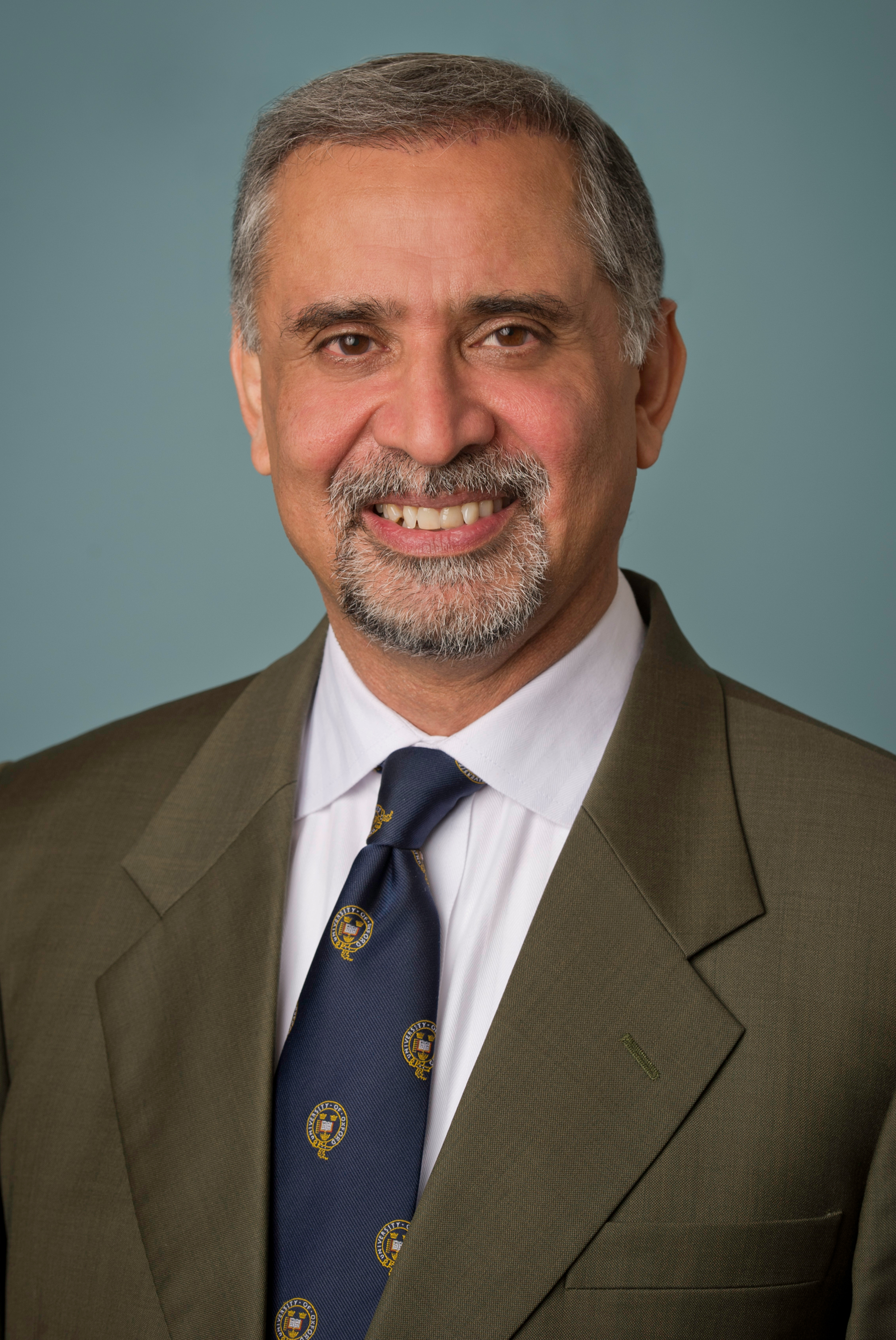
Former Nonresident Senior Fellow, Asia Program
Nehru was a nonresident senior fellow in the Carnegie Asia Program. An expert on development economics, growth, poverty reduction, debt sustainability, governance, and the performance and prospects of East Asia, his research focuses on the economic, political, and strategic issues confronting Asia, particularly Southeast Asia.
Recent Work
Vikram Nehru
Vikram Nehru
Carnegie does not take institutional positions on public policy issues; the views represented herein are those of the author(s) and do not necessarily reflect the views of Carnegie, its staff, or its trustees.
Montenegro and Albania are frontrunners for EU enlargement in the Western Balkans, but they can’t just sit back and wait. To meet their 2030 accession ambitions, they must make a strong positive case.


Dimitar Bechev, Iliriana Gjoni

The U.S.-sponsored TRIPP deal is driving the Armenia-Azerbaijan peace process forward. But foreign and domestic hurdles remain before connectivity and economic interdependence can open up the South Caucasus.


Thomas de Waal, Areg Kochinyan, Zaur Shiriyev

Economic growth is at the heart of a dilemma between planetary and international security.

Olivia Lazard
The war in Iran proves the United States is now a destabilizing actor for Europe and the Arab Gulf. From protect their economies and energy supplies to safeguarding their territorial integrity, both regions have much to gain from forming a new kind of partnership together.

Rym Momtaz

European reactions to the war in Iran have lost sight of wider political dynamics. The EU must position itself for the next phase of the crisis without giving up on its principles.

Richard Youngs