

Paper
Ashley J. Tellis
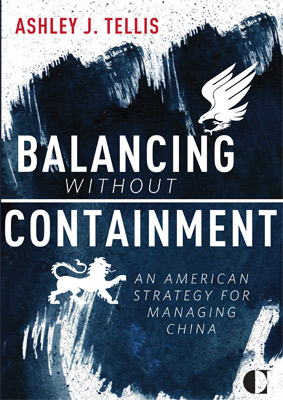
China is poised to become a major strategic rival to the United States.
China is poised to become a major strategic rival to the United States. Whether or not Beijing intends to challenge Washington’s primacy, its economic boom and growing national ambitions make competition inevitable. And as China rises, American power will diminish in relative terms, threatening the foundations of the U.S.-backed global order that has engendered unprecedented prosperity worldwide. To avoid this costly outcome, Washington needs a novel strategy to balance China without containing it.
Bolster Regional Actors. By increasing the national power of China’s neighbors, the United States can constrain Beijing’s behavior and limit its capacity for aggressiveness. This investment is in Washington’s best interest irrespective of whether it is repaid in kind because it will diminish China’s ability to misuse its growing strength and increase American geopolitical maneuverability in the Indo-Pacific. But the United States must be wary of Chinese tactics to subvert these efforts.
Selectively Deepen Globalization. The United States should make trade liberalization a top priority. Since comprehensive global liberalization remains a distant goal, Washington should work to quickly conclude key regional trade pacts, including the Trans-Pacific Partnership and the Transatlantic Trade and Investment Partnership, which promise increased relative gains to the United States and its allies vis-à-vis China.
Bolster U.S. Military Capabilities. To preserve its military superiority in the face of growing Chinese power, Washington should invest in improving U.S. power projection capabilities that will allow it to defeat challenges posed by China’s new strategic denial systems and regain U.S. freedom of action in the Indo-Pacific.
Reinvigorate the U.S. Economy. Revitalizing the domestic economy is imperative to sustaining American hegemony. To maintain its global economic dominance, the United States must emphasize labor force renewal, promote disruptive technological innovations, increase efficiency in production, and resolve the political squabbles that prevent Washington from fixing the country’s public finances.
Former Senior Fellow
Ashley J. Tellis was a senior fellow at the Carnegie Endowment for International Peace.
Recent Work
Ashley J. Tellis
Ashley J. Tellis
Carnegie does not take institutional positions on public policy issues; the views represented herein are those of the author(s) and do not necessarily reflect the views of Carnegie, its staff, or its trustees.

As we close out another season of Strategic Europe, it is worth taking stock of the deep shifts underway.

Rym Momtaz

The hybrid warfare landscape is evolving rapidly, leaving policymakers without clear strategies. To better inform their work in addressing emerging challenges, governments must dig deeper into the underlying dynamics at play.


Raluca Csernatoni, Alicia Wanless
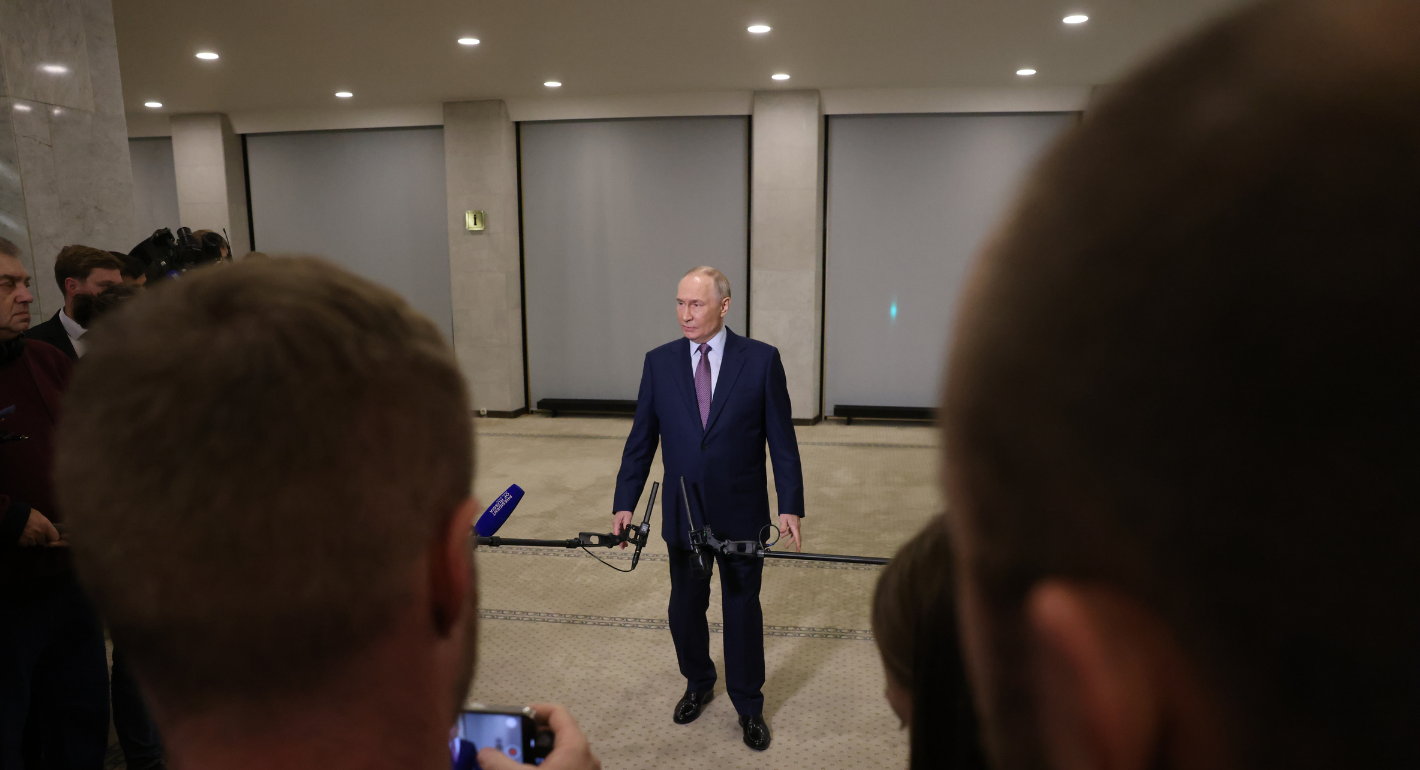
The EU had to compromise to adopt a twenty-first sanctions package against Russia, exposing growing cracks in the union’s resolve. Is this latest, weaker round worth it to keep pressure on Moscow?
Rym Momtaz, ed.

Trump is distracted and Ukraine wants Europe to step up. The continent’s leaders must find their voice and assert it in talks with Russia.

Alissa de Carbonnel

Mounting economic strain and battlefield losses will not necessarily make the Kremlin less dangerous. They could instead push Moscow toward a more aggressive hybrid campaign designed to test NATO’s Eastern flank, exploit allied hesitation, and fracture European resolve.

Maksym Beznosiuk