

Commentary
Judy Dempsey
{
  "authors": [
    "Judy Dempsey"
  ],
  "type": "commentary",
  "blog": "Strategic Europe",
  "centerAffiliationAll": "",
  "centers": [
    "Carnegie Endowment for International Peace",
    "Carnegie Europe"
  ],
  "collections": [],
  "englishNewsletterAll": "",
  "nonEnglishNewsletterAll": "",
  "primaryCenter": "Carnegie Europe",
  "programAffiliation": "",
  "programs": [],
  "projects": [],
  "regions": [
    "Europe"
  ],
  "topics": []
}
Source: Getty
Every week leading experts answer a new question from Judy Dempsey on the international challenges shaping Europe's role in the world.
Every week leading experts answer a new question from Judy Dempsey on the international challenges shaping Europe's role in the world.
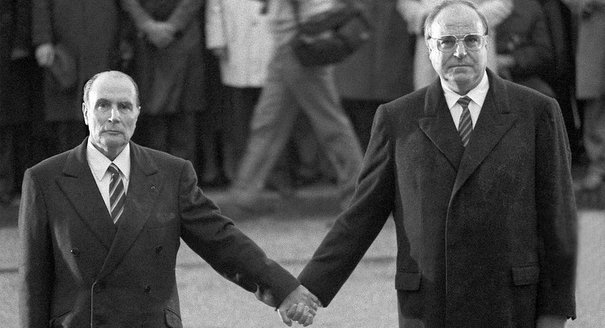
Historical precedents are not always a good thing. The Kohl-Mitterrand era served the key purpose of strengthening the European project as the end of the Cold War changed the face of Europe. But one cannot rely on the variable of personalities to rescue the EU. Given that Angel Merkel and Francois Hollande come from different political families, and that Germany and France have been affected differently by the crisis, it is to be expected that it is harder to reach compromises. And everyday politics are showing that Europe is not high on the priority list of any government. So two more questions are needed: Is the Franco-German axis a necessary precondition to further integration? And, more importantly, is it a sufficient condition? More variable geometry, with mobile alliances between countries shifting according to the subject matter, seems to be becoming more of a norm with which it will, perhaps, be necessary to reconcile. Ownership and participation from more member states is also needed to pursue greater integration—lest new initiatives and steps forward fall in the face of public opposition.
More than a decade ago, when I served as a young junior diplomat, an experienced ambassador taught me that the EU consisted of what Germany and France could agree to and the UK didn't oppose.
That is no longer the case. The Franco-German axis has run its course as the only engine moving the EU forward.
Instead, the new Europe is seeing new patterns of cooperation that crisscross Europe.
France and Poland agree on the value of the EU's agricultural subsidies.The Germans, Dutch, Swedes, and Danes are united in calling for better spending of the EU budget. France is leading the rest of Europe in trying to calm the situation in Mali. Groupings of countries now move particular policies forward.
Franco-German agreement is still great for Europe, but the European machine room at 27 is now a much more complicated constellation of power and initiatives with leaders popping up in different areas.
Obviously there are different views on the degree to which François Hollande and Angela Merkel diverge in their recipes to save the euro, and whether France will be able to keep its position as a problem-solver. In the course of the euro crisis, since 2010, analysts have seen a return of the Franco-German tandem, with the power of Paris and Berlin to shape outcomes in the Eurozone regime being strengthened again. Next was the question of what an unbalanced tandem, with Germany dominating, would mean for the Franco-German axis. France turning south? France shifting its focus from economic policy towards security policy—Libya, Mali—which is in its comfort zone more than in Germany’s? The end of the axis, and as a consequence, the end of the Eurozone?
I wonder to what extent the notion of the Franco-German axis is still a useful framework to analyze policies in Europe. Since the latest rounds of EU enlargements, both countries have lost relative clout in the Union of 27. Even within the 17 members of the Eurozone, agreement between France and Germany is no longer sufficient. The often quoted mechanism that France and Germany have to disagree to then manage to bridge a compromise between the other Union members is no recipe for success anymore. Too much is at stake in the rescue of the euro, and governments have to be increasingly responsive to their electorates—which is a good development.
In the course of the crisis, European Union affairs have been politicized to an unprecedented degree. Leaders these days travel to Brussels not as statesmen, but as elected representatives of their domestic constituencies. This has consequences for the notion of “axis”. In the past, different political allegiances by no means prevented German and French leaders working together on European affairs: Schmidt and Giscard, Kohl and Mitterrand, Schröder and Chirac. They set on track the common currency, the unification of Europe through enlargement, and the constitutional project.
Now that Eurozone leaders are working on a new regime for an integrated currency union, party allegiances matter a lot more at the European level. There is a battle of ideas out there on how to rescue the euro, and how to run successful, sustainable, and fair economies in Europe. The European Left feels that the current crisis shows the failure of a neo-liberal approach, and that austerity policies have made things worth. These days, economic and monetary policies in Europe are more about majorities, and less about axes.
There is only one way that this motor of the EU can be revived. President Hollande must reverse his course of leading a Club Med coalition and adopt one that resembles the franc fort approach of Francois Mitterrand—subsequently picked up by President Sarkozy—and work closely with Germany and other northern European nations to make France and Europe globally competitive. This includes making major concessions on the Common Agricultural Policy, a constituency which will not vote for him in any case.
He can take the lead or he can be forced, as was Mitterrand, by the financial markets and the EU, to adopt an approach closer to that of Germany. He can wait for the German elections next year with the hopes of a return of the Social Democrats to government and a subsequent easing of Germany’s fiscal approach, but this would further delay any restart of the Franco-German engine and is probably based on exaggerated expectations of what a Merkel-Steinbruck government would do. There will still, however, be room for some compromise on the mix between stimulus and fiscal austerity in this new coalition. Otherwise the engine will, at best, be in the shop for a major overhaul or at worst thrown into the junk yard.

Nonresident Senior Fellow, Carnegie Europe
Dempsey is a nonresident senior fellow at Carnegie Europe
Recent Work
Judy Dempsey
Judy Dempsey
Carnegie does not take institutional positions on public policy issues; the views represented herein are those of the author(s) and do not necessarily reflect the views of Carnegie, its staff, or its trustees.
In Ukraine, Gaza, and Iran, AI warfare has come to dominate, with barely any oversight or accountability. Europe must lead the charge on the responsible use of new military technologies.

Raluca Csernatoni

Montenegro and Albania are frontrunners for EU enlargement in the Western Balkans, but they can’t just sit back and wait. To meet their 2030 accession ambitions, they must make a strong positive case.


Dimitar Bechev, Iliriana Gjoni
Donald Trump has repeatedly bashed NATO and European allies, threatening to annex Canada and Greenland and deploring their lack of enthusiasm for his war of choice in Iran. Is this latest round of abuse the final straw?

Rym Momtaz, ed.
Donald Trump’s repudiation of NATO goes against the Make America Great Again vision of a U.S.-centered foreign policy. If the goal is to preserve the alliance by boosting Europe’s commitments, leaning into France’s vision is the most America First way forward.
Rym Momtaz
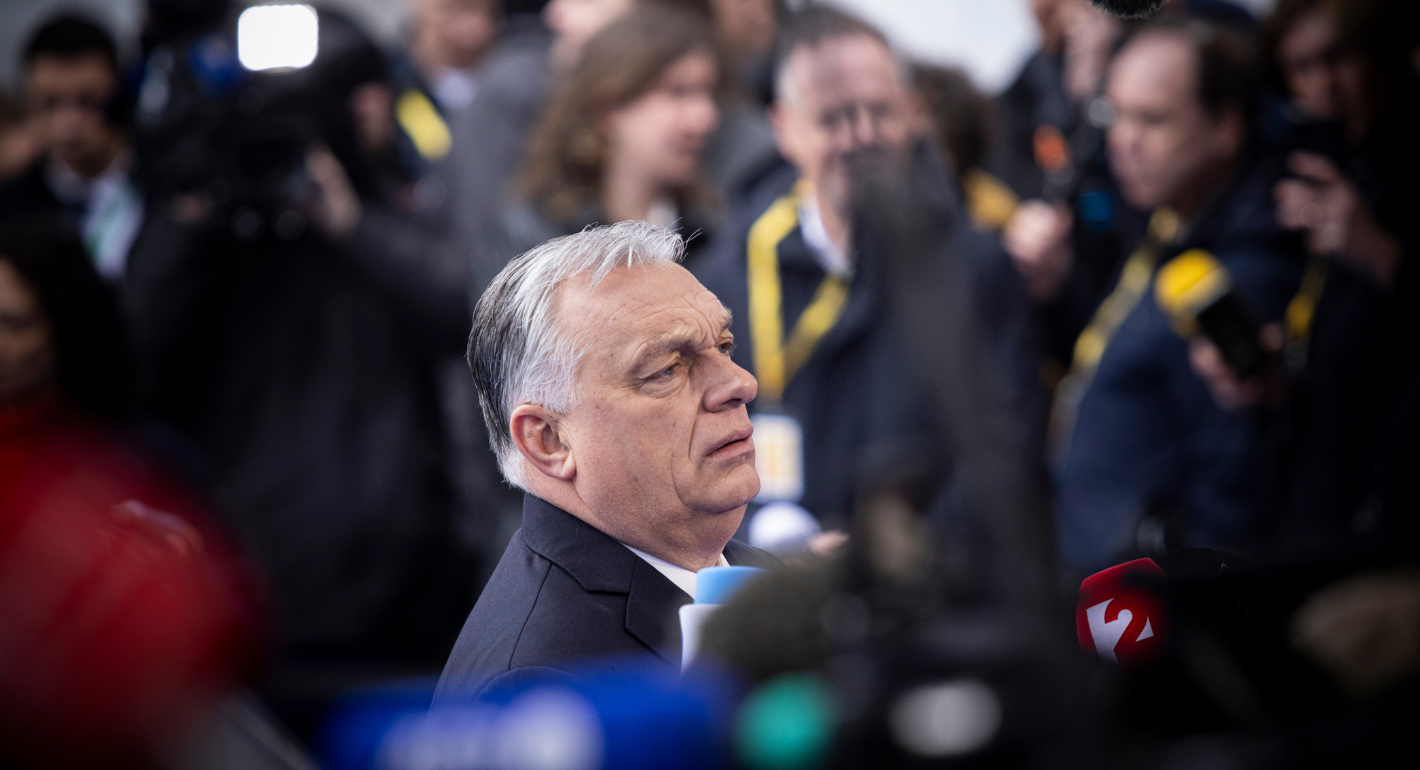
Hungarians head to the polls on April 12 for an election of national and European consequence. Three different outcomes are on the cards, each with their own implications for the EU.

Zsuzsanna Szelényi