

Commentary
Olga Shumylo-Tapiola
{
  "authors": [
    "Olga Shumylo-Tapiola"
  ],
  "type": "commentary",
  "blog": "Strategic Europe",
  "centerAffiliationAll": "",
  "centers": [
    "Carnegie Endowment for International Peace",
    "Carnegie Europe"
  ],
  "collections": [],
  "englishNewsletterAll": "",
  "nonEnglishNewsletterAll": "",
  "primaryCenter": "Carnegie Europe",
  "programAffiliation": "",
  "programs": [],
  "projects": [],
  "regions": [
    "Europe",
    "Russia",
    "North America"
  ],
  "topics": [
    "EU"
  ]
}
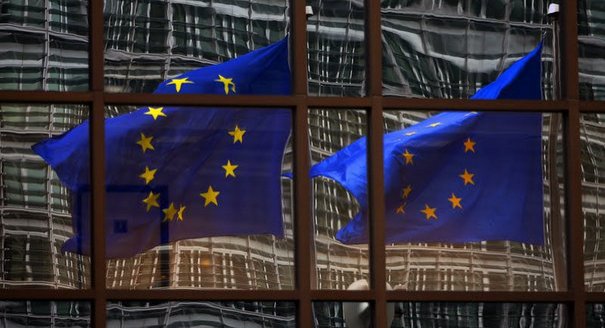
Source: Getty
Russia, Ukraine, and the EU’s other neighbors will have to learn that ultimatums are counter-productive and alienate the EU, forcing it to reject proposals coming from the east.
This week, two articles drew my attention, one on the EU-US free trade agreement in the New York Times, the second, a Moscow Times piece on the EU-Russia visa free travel debate. The first spoke of the importance of a new trade accord between Brussels and Washington hinting at difficulties along the way despite low customs tariffs and high regulatory convergence between the two. Tensions heightened as the United States was asked to agree with EU rules and standards. Yet, the piece was unemotional, business-like and rather friendly. On the other hand, the EU-Russia piece was full of blame and negative emotion. The Kremlin threatened retaliation if Brussels did not lift visas for Russia by the end of 2013. A decision on this is expected at the next EU-Russia summit in December 2012.
The difference between the two narratives was striking, as may be the outcome. Two big, powerful countries, both strategic partners of the EU, handling Brussels so very differently. The United States, despite its strength on the global arena and relatively pushy attitude elsewhere, seems to have recognized and respected the EU's normative supremacy. Sooner or later, Washington will likely agree to European norms paving the way for trade talks to begin. For the Russians, however, getting something out of the EU is a matter of national pride. Both the Kremlin and ordinary citizens alike consider the EU's unwillingness to lift visa requirements as a sign of disrespect towards Russia, perhaps even as punishment. The same goes for the EU-Russia trade talks. The Russians do not take the EU's technical criteria and posturing seriously, chalking it up to nothing but political decision-making by the heads of 27 member states. Russia believes it is too important for the EU to be ignored. Of late, one hears similar rhetoric being used by officials in Kyiv.
While both the United States and Russia, and even Ukraine, matter to Brussels, there is a clear line that the EU is not ready, willing or even capable of crossing. The EU's global strength comes largely from rules and norms that are created through consensus. Those who want to benefit from relations with the EU will have to adapt and pay the price.
Take the case of the possible free trade zone running from Lisbon to Vladivostok proposed by president Putin in 2010. If Putin were really serious about the project, the EU could potentially be interested, at least from an economic point of view. Yet, it would have to be fully in accordance with the EU's rules and regulations. As the EU-U.S. free trade debate suggests, there can be no negotiation on competition rules or sanitary and phytosanitary measures if a free trade area were to be created.
It is important for the EU to remain open to its neighbors in the east. Be that through trade or travel liberalization. Both will serve as a tool for transforming societies in Russia, Ukraine, and Moldova, even if only in the long run. However, the EU should be wary of three things.
First, it has to strictly adhere to its own conditions before signing any agreements. This is a matter of credibility, above all vis-à-vis its neighbors. Second, the EU should be fair towards its neighbors and make a firm commitment to sign an agreement as soon as the latter meet agreed upon conditions. Lastly, the EU should avoid politicizing the debate, especially when it comes to the issue of prioritizing who gets visa free travel in the region.
Russia, Ukraine, and the EU’s other neighbors will have to learn that ultimatums will not work with the EU. In fact, they are counter-productive. Such measures alienate the Union, forcing it to reject proposals coming from the east; the EU will not compromise on its norms. In short—blackmail is not the way to go.

Former Nonresident Associate, Carnegie Europe
Shumylo-Tapiola is a nonresident associate at Carnegie Europe in Brussels, where her research focuses on Eastern Europe and Eurasia.
Recent Work
Olga Shumylo-Tapiola
Olga Shumylo-Tapiola
Carnegie does not take institutional positions on public policy issues; the views represented herein are those of the author(s) and do not necessarily reflect the views of Carnegie, its staff, or its trustees.
The far right failed to win big in France’s municipal elections. But that’s not good news for the country’s left wing, which remained disunited while the broader right consolidated its momentum ahead of the 2027 presidential race.
Catherine Fieschi
Donald Trump has demanded that European allies send ships to the Strait of Hormuz while his war of choice in Iran rages on. He has constantly berated NATO while the alliance’s secretary-general has emphatically supported him.

Rym Momtaz, ed.
The EU is structurally incapable of reacting to today’s foreign policy crises. The union must fold the EEAS into the European Commission and create a security council better prepared to take action on the global stage.

Stefan Lehne
The war in Ukraine is costing Russia its leverage overseas. Across the South Caucasus and Middle East, this presents an opportunity for Europe to pick up the pieces and claim its own sphere of influence.


William Dixon, Maksym Beznosiuk
The war in Iran proves the United States is now a destabilizing actor for Europe and the Arab Gulf. From protect their economies and energy supplies to safeguarding their territorial integrity, both regions have much to gain from forming a new kind of partnership together.
Rym Momtaz