

Commentary
Nathalie Tocci, Jan Techau
{
  "authors": [
    "Jan Techau"
  ],
  "type": "commentary",
  "blog": "Strategic Europe",
  "centerAffiliationAll": "",
  "centers": [
    "Carnegie Endowment for International Peace",
    "Carnegie Europe"
  ],
  "collections": [],
  "englishNewsletterAll": "",
  "nonEnglishNewsletterAll": "",
  "primaryCenter": "Carnegie Europe",
  "programAffiliation": "",
  "programs": [],
  "projects": [],
  "regions": [
    "Europe",
    "Middle East",
    "Southern, Eastern, and Western Africa",
    "North America"
  ],
  "topics": [
    "EU"
  ]
}
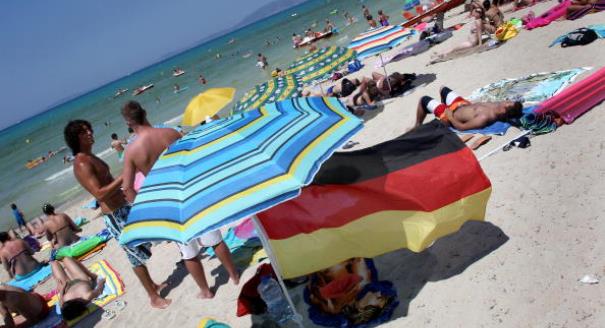
Source: Getty
As Europe’s political observers pack their suitcases, they should spare a thought for a few foreign policy concerns that will be just as pressing in the fall as they are now.
The holiday season has arrived. Policy papers are being left behind on desks and novels are being packed into beach bags. But real policy wonks can never completely stop worrying about the future of the planet—or at least that of the EU. Here are six questions I suggest all foreign policy junkies should spend half a sun-drenched thought on over the next few weeks. Because no matter what crazy new story will hit the headlines in September, these issues will be just as pertinent then as now.
1. Why is EU foreign policy still such a disappointment?
Because of illusions, essentially. First of all, Europe’s leading countries have visions of strength and self-sufficiency, even when the crisis has shown how weak and dependent they are. Second, Europeans don’t feel fundamentally threatened and believe that war is a thing of the past. Third, they think that their weakness is a moral asset, and they continue to outsource the morally difficult parts of peacekeeping to the United States. Europeans also have no idea how hard they will have to work over the next thirty years if they want to stay relevant. If they understood any of these things properly, EU foreign policy would start working overnight.
2. What are the three areas that Europe should focus on?
First, Turkey. Turkey is a future European power of the greatest strategic importance, but one based on a torn society. Europe has not yet fully grasped the sheer importance of tying Turkey closely to the West. Europe should push forward with the accession talks while simultaneously releasing substantial aid funds to bolster Turkey’s civic institutions, NGOs, and grassroots movements.
Second, North Africa. Europe has shamefully bungled its reaction to the Arab Spring. Its foreign policy in the region is timid and atomized. The EU is not using its strategic tools, the most important of which is EU market access for products from the region. Europe is inadvertently helping to turn North Africa into a region that could breed deadly threats, instability, and migratory pressure for at least a generation to come.
Third, Europe’s Eastern Neighborhood, specifically Ukraine. Kiev is unwilling to give up its balancing game between Russia and the West. But the game will have to end at some point. Then, a geopolitical race for regional influence will start (even though that kind of terminology is loathed in Brussels circles). Europe has all the tools it needs to compete in that race, but it does not use them strictly enough. It needs to exercise tough love, or it will lose the battle for influence over its Eastern periphery.
3. What about China?
Europe is not a direct player in China’s back yard, so the security dimension of China’s rise affects the Old World only indirectly. Nevertheless, Europe needs to be careful, principled, and tough. Massive Chinese investment in Central Europe buys Beijing influence in EU decisionmaking. China’s attempts to divide and rule in terms of trade policy is worrisome. The EU must maintain a strong mandate for its trade commissioner, otherwise it will find its trade rules being written by the Communist Party of China.
4. Closer to home, is there anything the EU could do immediately to improve its foreign policy?
The most important thing the EU can and must do now is to throw the full weight of all member states behind the diplomatic breakthrough between Serbia and Kosovo brokered by EU High Representative Catherine Ashton. This compromise now needs to be implemented. That will require great courage and leadership, especially in Serbia, where the domestic political situation is fragile. If it works, then Bosnia, which is even more difficult to resolve, could be next.
5. Foreign policy is the product of domestic decisionmaking. What is Europe’s home front producing in terms of foreign policy?
Not much, unfortunately, and that results in strategic drift. To the extent that EU member states engage in foreign policy, they prefer to address strategic issues with a tactical mindset. Recent examples include Turkey, where leading member states have dragged their feet over Turkey’s accession process in light of the Taksim Square protests, and China, where they have attempted to undermine a strong EU position in trade disputes.
More generally, there is no appetite among the EU’s big three to tackle major issues. As one observer wrote on Twitter recently: “Germany: able but unwilling; France: willing but unable; Britain: unwilling and unable.”
6. How important is America in all this?
The United States looks tired, too—no doubt about it. But if Europe hadn't created a North American branch office in the eighteenth century, European culture would probably have ceased to exist by now. Europe still relies on the United States for almost all of its security needs. It depends on a liberal global system that it cannot keep alive on its own. America does most of that by providing stability services to the world.
Europe had better start thinking hard about what it can do to help America in providing those services. The United States is less and less prepared to shoulder the bulk of the costs alone.

Director, Europe Team, Eurasia Group
Techau is director with Eurasia Group's Europe team, covering Germany and European security from Berlin. Previously, he was director of Carnegie Europe.
Recent Work

Nathalie Tocci, Jan Techau
Jan Techau
Carnegie does not take institutional positions on public policy issues; the views represented herein are those of the author(s) and do not necessarily reflect the views of Carnegie, its staff, or its trustees.
The EU had to compromise to adopt a twenty-first sanctions package against Russia, exposing growing cracks in the union’s resolve. Is this latest, weaker round worth it to keep pressure on Moscow?

Rym Momtaz, ed.

Trump is distracted and Ukraine wants Europe to step up. The continent’s leaders must find their voice and assert it in talks with Russia.

Alissa de Carbonnel

Mounting economic strain and battlefield losses will not necessarily make the Kremlin less dangerous. They could instead push Moscow toward a more aggressive hybrid campaign designed to test NATO’s Eastern flank, exploit allied hesitation, and fracture European resolve.

Maksym Beznosiuk
Over the past ten years, NATO has held almost as many summits as it did during the entirety of the Cold War. Are they still useful, or is it time to stop holding annual meetings?
Rym Momtaz, ed.
Nearly a year and a half after Europeans leaned into sucking up to Trump, the strategy has produced some benefits when it comes to Ukraine.
Rym Momtaz