

Commentary
Nathalie Tocci, Jan Techau
{
  "authors": [
    "Jan Techau"
  ],
  "type": "commentary",
  "blog": "Strategic Europe",
  "centerAffiliationAll": "",
  "centers": [
    "Carnegie Endowment for International Peace",
    "Carnegie Europe"
  ],
  "collections": [],
  "englishNewsletterAll": "",
  "nonEnglishNewsletterAll": "",
  "primaryCenter": "Carnegie Europe",
  "programAffiliation": "",
  "programs": [],
  "projects": [],
  "regions": [
    "Western Europe",
    "Europe"
  ],
  "topics": [
    "Climate Change",
    "EU"
  ]
}
Source: Getty
Ask any observer about political progress in Europe, and the answer will invariably be “That’s impossible.” Tragically, achieving the impossible has never been so necessary.
Many have wondered about the historical meaning of the 2008 collapse of Lehman Brothers and the subsequent financial and economic crisis, which is still sending shock waves around the world.
Was the crisis the end of capitalism, brought about by the inherent contradictions of an exploitative system, as predicted by Karl Marx? Was it the long-overdue periodic self-correction of a market that had enjoyed an unusually long bullish period after the end of the Cold War? Was it gung-ho globalization? Was it the end of the American century—or even the end of the West? Or was it perhaps just a huge Schumpeterian orgy of creative destruction?
Whatever the crisis amounts to, one thing is increasingly clear: in Europe, it has ushered in the era of the impossible.
Ask any politician, journalist, analyst, or diplomat about political progress in Europe, and the answer will invariably be “That’s impossible.” At the very least, you’ll get the slightly less absolute “That’s not possible at the moment,” combined with a shrug and the occasional rolling of the eyes.
The problem is, the commentators are right. This is not just another bout of good old-fashioned old-world pessimism, that most cherished of European sentiments. Nothing much seems possible in Europe today. From the visionary to the banal, no one really believes that any kind of reform, project, or initiative has any chance of becoming a reality in the EU. Progress is on leave in Brussels, Berlin, Paris, London, Rome, Madrid, The Hague, and many other capitals.
And it is not only Europeans who have given up. Folks in Washington, Ankara, Jerusalem, Moscow, and Beijing are equally convinced that nothing much will come out of Europe in the forseeable future. They all expect that the crisis slump, which, in reality, has been a political slump since the beginning, will continue. Nobody expects anything of the EU, either politically or economically—or, for that matter, in foreign policy.
The list of impossibilities is impressive. “More Europe,” of course, is a nonstarter; don’t even mention it. Equally unthinkable are political union, a more unified foreign policy, or—God forbid—a little more activity in the field of security and defense.
Is there any chance of more cooperation in justice and home affairs? Unlikely. A meaningful restructuring of the Common Agricultural Policy? Forget it! Adopting a services directive that could spark growth and employement? Impossible.
Any scope for implementing the Lisbon Agenda to make Europe more competitive? Don’t even think about it. Devising a much-needed immigration policy for an aging continent that refuses to produce offspring? No chance! Turning European universities into the world’s best academies? Impossible, you damned elitist!
How about opening up the huge European market to the developing world, especially North Africa? Too difficult. Embracing the shale gas revolution that will shake up geopolitics and geo-economics alike? Fracking is evil, so nope, sorry. More cooperation between NATO and the EU? Implausible. Pooling and sharing of defense assets? Impossible.
So what about banking union? Maybe banking union lite, at best. Enlargement? Dead in the water. Reforming the European Parliament, that most hopeless of EU institutions? Inconceivable. Installing a strong European Commission president with a solid mandate to protect the treaties and drive integration forward? Impossible.
And turning the European External Action Service—the EU’s foreign policy arm—into a powerful tool, instead of a second UN secretariat? Won’t work. Or, speaking of the UN, how about a single EU seat on the Security Council? Don’t be such a fool! Introducing competitive political elements into EU decisionmaking (read: pan-European elections) to address the EU’s massive legitimacy problem? Hysterical laughter.
Europe is drowning in its own culture of impossibility. There are a couple of exceptions, though. One is eurozone crisis management, where everything is possible, even outside the EU treaties, but please don’t mention it. The other is—miraculously—transatlantic trade, which a lot of people really want and so haven’t entirely given up on yet. But maybe it’s just a matter of time until they do.
The bitter irony of the era of impossibility is that it coincides with an era of unprecedented necessity. Not since the immediate aftermath of World War II has the case for “more Europe” been so compelling.
Globalization, the West’s relative decline, economic stagnation, demographics, the democratic deficit, energy scarcity, climate change, an increasingly unstable neighborhood: each of these factors alone would make a formidable case for more unified action. Taken together, they should make “more Europe” simply unavoidable.
But more unified action is only necessary if Europe really wants to survive. Instead, European citizens, politicians, and intellectuals alike—shell-shocked by the crisis, bored and insulted by Brussels’s hugely unsexy compromise machine, and infatuated by mild cases of resurgent nationalism—insist that the obvious way out is not an option.
Europeans are gambling their future away, utterly convinced that the alternative is impossible, and unaware that their culture of impossibility may be suicidal.
In the crisis of 2008–2013, Europeans seem to have forgotten the lessons of the crisis of 1914–1945. Not long ago, that was thought to be impossible.

Director, Europe Team, Eurasia Group
Techau is director with Eurasia Group's Europe team, covering Germany and European security from Berlin. Previously, he was director of Carnegie Europe.
Recent Work

Nathalie Tocci, Jan Techau
Jan Techau
Carnegie does not take institutional positions on public policy issues; the views represented herein are those of the author(s) and do not necessarily reflect the views of Carnegie, its staff, or its trustees.
Five countries staged the biggest political boycott in Eurovision history over Israel’s participation. With the FIFA World Cup and other sporting or cultural touchstones on the horizon, are boycotts effective?

Rym Momtaz, ed.
The full list of humiliations Europe has endured since Donald Trump returned to the White House makes for grim reading. But Washington’s adversarial approach to its allies undermines its own power base.
Rym Momtaz
The closure of the Strait of Hormuz has triggered a global energy crisis, but Europe is stuck in reaction mode. Without more strategic foresight, the EU will remain dependent on fossil fuels and will never be truly secure.


Milo McBride, Pauline Gerard
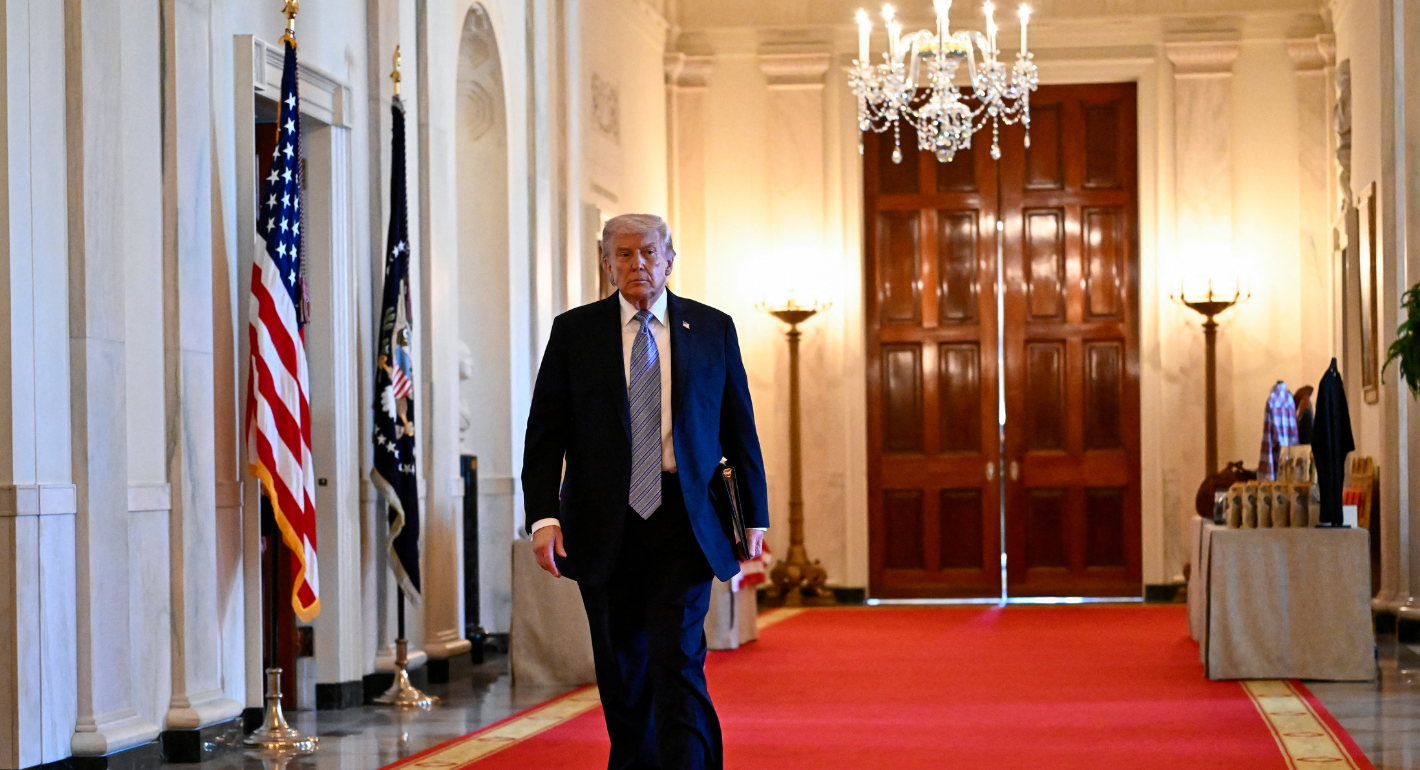
After spending much of 2025 trying to placate Donald Trump, some European leaders are starting to change posture. But is even a hostile Washington still so important to Europe that the U.S. president’s outbursts are worth putting up with?
Rym Momtaz, ed.
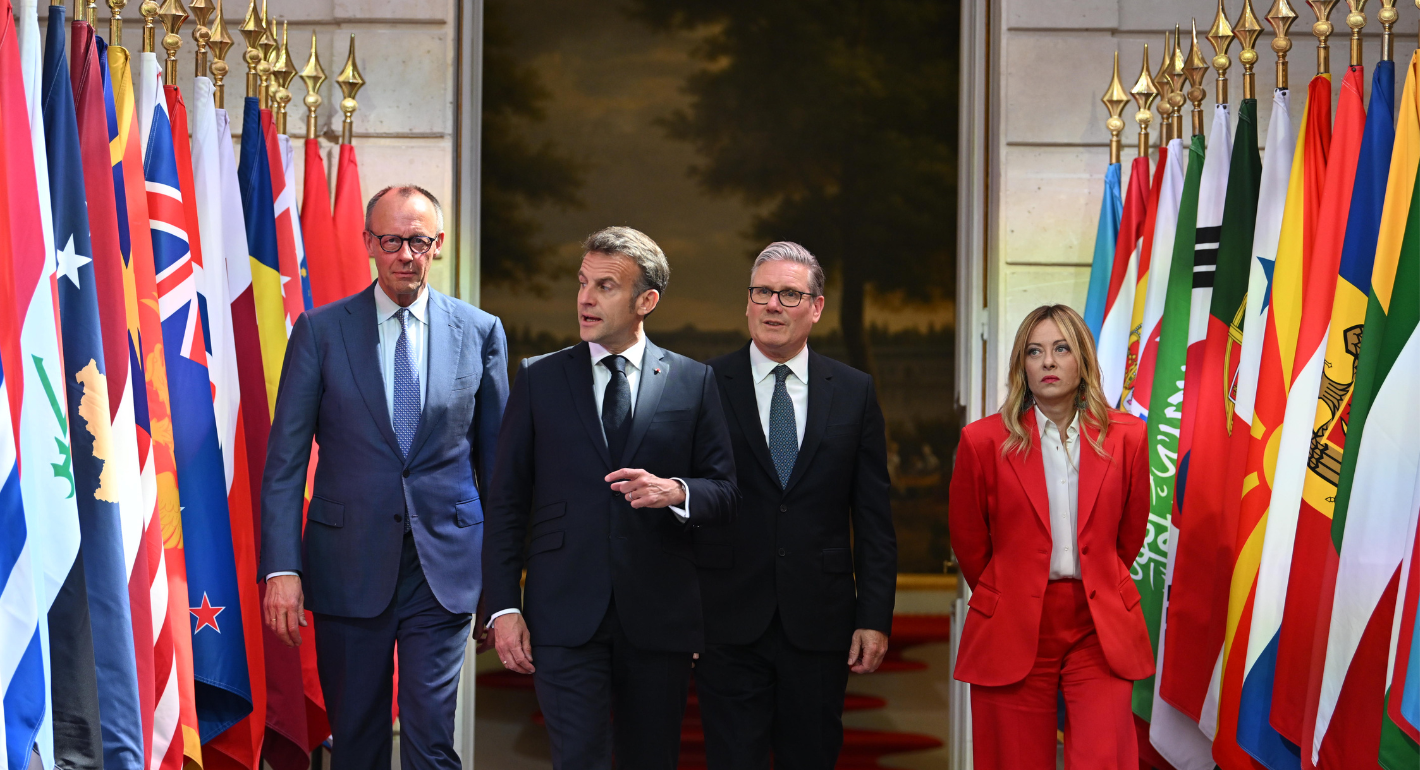
European leaders have now not only lost faith in Donald Trump’s U.S. presidency, but also in America’s hegemony as a whole. But short-term challenges make an immediate divorce unwise.
Rym Momtaz