

Commentary
The aftermath of the Ceuta crisis shows Europe has drawn the wrong lessons. Rather than doubling down on failed migration policies, the EU needs to address the underlying roots of such episodes.
Richard Youngs
{
  "authors": [
    "John Kornblum"
  ],
  "type": "commentary",
  "blog": "Strategic Europe",
  "centerAffiliationAll": "",
  "centers": [
    "Carnegie Endowment for International Peace",
    "Carnegie Europe"
  ],
  "collections": [],
  "englishNewsletterAll": "",
  "nonEnglishNewsletterAll": "",
  "primaryCenter": "Carnegie Europe",
  "programAffiliation": "",
  "programs": [],
  "projects": [],
  "regions": [
    "Western Europe",
    "Germany",
    "Europe",
    "North America"
  ],
  "topics": [
    "Climate Change"
  ]
}
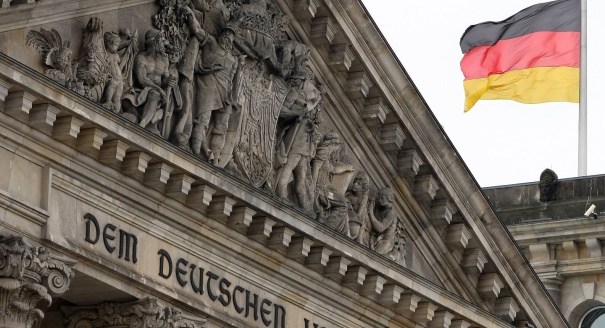
Source: Getty
Germany is not about to become a “better European” by altering its approach to the euro crisis. The world should get used to that and stop lambasting Berlin for its policies.
Here’s some startling news. Angela Merkel has been serious about her policy on the euro crisis from the beginning. She also believes, as do most Germans, in balanced budgets, spending only what you earn, and in sound fiscal management.
After a rough time in the first years after reunification, German voters have grown accustomed to limiting their standard of living. They also are proud of their constitution and of the peaceful approach to the world they have followed for more than sixty years. Increasingly, they are worried that the EU is bloated, undemocratic, and against their interests.
In other words, Merkel’s campaign was not attuned simply to pandering to voter tastes. Her most important talent is her ability to express the hopes and desires of the normal German citizen. Her other advantage is that she means it.
This means that large numbers of Europeans and many American officials are going to have to relearn their approach to Germany. Germany is not all of a sudden going to become a “better European” or open the spigots or allow certain countries to continue to pad their budgets with unnecessary expenditures.
Why? Because in the process of spending a trillion or more on reunification, Germans learned two things. First, that their society could pull together on a major national project and succeed. And second, that the life they lived before 1990 was padded with unnecessary benefits and subsidies that they could live without. Finally, they became even more proud of their constitution and the society it enabled them to build. And they don’t want to lose it.
Is this egotistical and dishonest, as a columnist from India argued in Handelsblatt on September 27?
Well, Germany sure is much more just and prosperous than most other countries, including India. But even more importantly, the type of rigor that Germany is pushing is probably the only hope of Europe remaining competitive globally in the years to come. To return to the type of “European solidarity” demanded by so many commentators this week would lower all of Europe, including Germany, to the common denominator of France and Italy. Not a pretty sight.
What is the real problem here?
It is the inescapable fact that all of the Western world, including the United States, has been living far beyond its income for several decades. Only a few countries have heard the message and cut back. Canada is one. Switzerland is another—but so too is Germany. German voters are already attuned to a drop in real wages. It is not comfortable and certainly not the long-term goal of society. But growing inroads by low-wage societies are taking their toll. We must all get used to it.
In this case, the European situation is different from that of the United States.
The United States has a large deficit and, at the moment, a dysfunctional political system. But America has tested internal adjustment mechanisms and a habit of balance among the various parts of the country. The American economy is also dynamic and recovering. Since none of these conditions pertains to Europe, the readjustment will be much more painful.
What about radicalism and the antidemocratic and far-right forces in Europe? Explaining the situation is the job of the political leadership across Europe. But instead of telling the truth, too many leaders and commentators are blaming Germany.
Greece has not even begun to make the changes necessary for it to stay in the euro. But, again, the fact is there is no alternative. The second phase of the industrial revolution (comprising the microelectronic one) is just beginning to take hold. Its destruction will be every bit as great as it was during the first phase in the nineteenth century. Better to get a head start on adjustment instead of waiting for the real crisis.
Could the Germans be a bit more understanding and flexible about various things? Most probably. But is there any alternative to what they are prescribing? Doubtful.
So: “Earth to Europe: Get a life.”
John Kornblum is a senior counselor at the international law firm Noerr LLP and a former U.S. ambassador to Germany.
John Kornblum
Centre for Strategic and International Studies
Carnegie does not take institutional positions on public policy issues; the views represented herein are those of the author(s) and do not necessarily reflect the views of Carnegie, its staff, or its trustees.

The aftermath of the Ceuta crisis shows Europe has drawn the wrong lessons. Rather than doubling down on failed migration policies, the EU needs to address the underlying roots of such episodes.

Richard Youngs

An overwhelming victory by a far-right-wing party in a small state in eastern Germany will have major repercussions for Chancellor Friedrich Merz’s coalition.

Judy Dempsey

Canadian Prime Minister Mark Carney has twice inspired praise for standing up to U.S. President Donald Trump: at the 2026 World Economic Forum in Davos and on Canada-U.S. trade negotiations. Is Carney showing a third way better than the EU has in dealing with the Trump administration?

Rym Momtaz, ed.

The EU’s responses to two recent incidents expose the gulf between European perceptions and capabilities. Unless the union can bridge that gap, it will never become a real geostrategic power.
Rym Momtaz

In supporting Europe’s far-right, MAGA and Russia both want the same thing: a weaker EU. Europe must defend itself without abandoning the openness these forces exploit.

Armida van Rij