

Commentary
Nathalie Tocci, Jan Techau
{
  "authors": [
    "Jan Techau"
  ],
  "type": "commentary",
  "blog": "Strategic Europe",
  "centerAffiliationAll": "",
  "centers": [
    "Carnegie Endowment for International Peace",
    "Carnegie Europe"
  ],
  "collections": [],
  "englishNewsletterAll": "",
  "nonEnglishNewsletterAll": "",
  "primaryCenter": "Carnegie Europe",
  "programAffiliation": "",
  "programs": [],
  "projects": [],
  "regions": [
    "North America",
    "United States",
    "Western Europe",
    "Europe"
  ],
  "topics": [
    "Security",
    "Military",
    "EU"
  ]
}
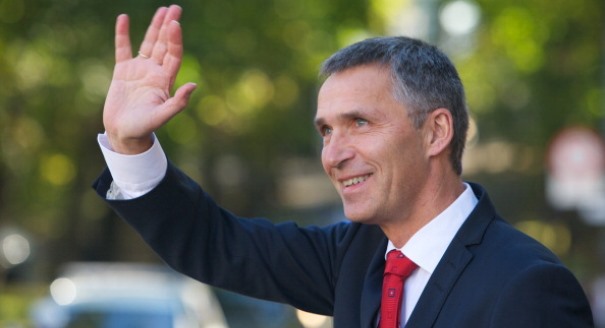
Source: Getty
NATO’s incoming secretary general, Jens Stoltenberg, will have many big issues on his to-do list. But some less obvious tasks deserve just as much attention—if not more.
As NATO heads toward an awkwardly timed summit in early September in South Wales, one former Norwegian prime minister is also getting ready for the big show. Behind the scenes, Jens Stoltenberg, who will become the alliance’s next secretary general on October 1, is slowly transitioning into his new job. This entails a busy schedule of meetings with leaders from NATO countries and the development of a game plan for his first months in office.
Much of Stoltenberg’s agenda will be determined by the outcome of the September meeting. And because of the Ukraine-Russia crisis, which has brought issues of territorial defense and reassurance to the fore, that agenda is partly writing itself. Other self-evident issues will include NATO’s future role in Afghanistan, burden sharing, capabilities (this time in the form of the Framework Nations concept, which aims to combine capabilities among allies), readiness, and partnerships with non-European countries.
As in EU foreign policy, the decisive European player for any future development in NATO is Berlin. Europe’s heartland is large, centrally located, economically strong, and militarily capable—but a notorious underperformer when it comes to defense. Still stricken by historical trauma, the country finds it hard to embrace a greater leadership role on military matters.
But there is now a momentous opening in the German defense debate that the alliance’s incoming secretary general could use smartly. Germany has begun a vibrant discussion of its role as a military player, a conversation that was triggered by insistent appeals from the country’s president, Joachim Gauck.
Germany has started a process of overhauling its legal procedures for troop deployments, a step that is being undertaken with the explicit aim of making the country a more reliable military ally for its partners. Berlin has also delivered on short-term reassurance in the Ukraine crisis in an unexpectedly forthcoming way.
But none of this is irreversible, and none of it can be guaranteed in the long term. Careful and politically sensitive external support from an innocuous new NATO secretary general (from Norway, land of the Nobel Peace Prize!) could do a great deal to support the difficult coming-of-age process that Germany’s political elites and public are undergoing.
It is true that NATO managed to survive for over sixty years without a universally shared threat perception. But a continuous debate about what dangers lie ahead for the alliance is a key element in the organization’s cohesion.
Contrary to common belief, Russia’s aggression in Ukraine has not really aligned NATO members’ assessments of what constitutes a threat. As a matter of fact, for the first time in the alliance’s history, there is a real danger of a security uncoupling across the Atlantic and even within Europe.
The new secretary general should turn his annual report into an annual threat assessment, sketching out what he sees as the defining risks for NATO as a whole. This will require some guts and resilience as member states will inevitably be unhappy about, or even disagree with, his assessment.
But a high-quality document, assembled by in-house experts and supported by independent security analysts from around the globe, might be just the kind of statement NATO needs. Backed by an aggressive public-relations and media strategy involving external multipliers, an annual threat assessment could have an invigorating effect on the debate about why defense matters.
The question of what role NATO should play in Asia has been much repeated in recent years. The emerging “Asian century” and America’s pivot to Asia have raised the issue of whether the world’s most successful military alliance will have any business in the world’s riskiest and strategically most important region.
With Washington eager to keep its cumbersome European allies away from an already-convoluted Asian playing field, the question is still pertinent. Even if NATO’s role in Asia might be confined to humanitarian tasks (and increased multilateral exchanges with bodies such as the Association of Southeast Asian Nations), the alliance must at least define its attitude toward forthcoming conflicts in that part of the globe. Because conflicts there will be, and Europeans will be deeply involved in them at least indirectly through their economic dependence on Asian markets.
What position will NATO take if the United States gets involved in military conflicts in the South China Sea, on the Korean peninsula, in the Indian Ocean, or off the coast of Japan? How can alliance cohesion be ensured once America needs help and China puts pressure on the Europeans to side with Beijing?
Asia is not NATO’s natural stomping ground, but the implications of its rise for the alliance are enormous and need to be studied more diligently than they have been so far. Contingency plans, at least for NATO diplomacy, need to be drawn up. A new secretary general could make his mark by giving these issues increased attention.
More issues could be mentioned, such as the alliance’s internal flexibility in times of coalitions of the willing, or how to ensure the rotating exercise on NATO’s Eastern flank can remain politically viable and militarily meaningful. In any case, Jens Stoltenberg’s silent agenda will be just as important as the alliance’s more obvious topics—if not more so.
Director, Europe Team, Eurasia Group
Techau is director with Eurasia Group's Europe team, covering Germany and European security from Berlin. Previously, he was director of Carnegie Europe.
Recent Work
Nathalie Tocci, Jan Techau
Jan Techau
Carnegie does not take institutional positions on public policy issues; the views represented herein are those of the author(s) and do not necessarily reflect the views of Carnegie, its staff, or its trustees.
Europe isn’t as weak in the new geopolitics of power as many would believe. But to leverage its assets and claim a sphere of influence, Brussels must stop undercutting itself.

Dimitar Bechev
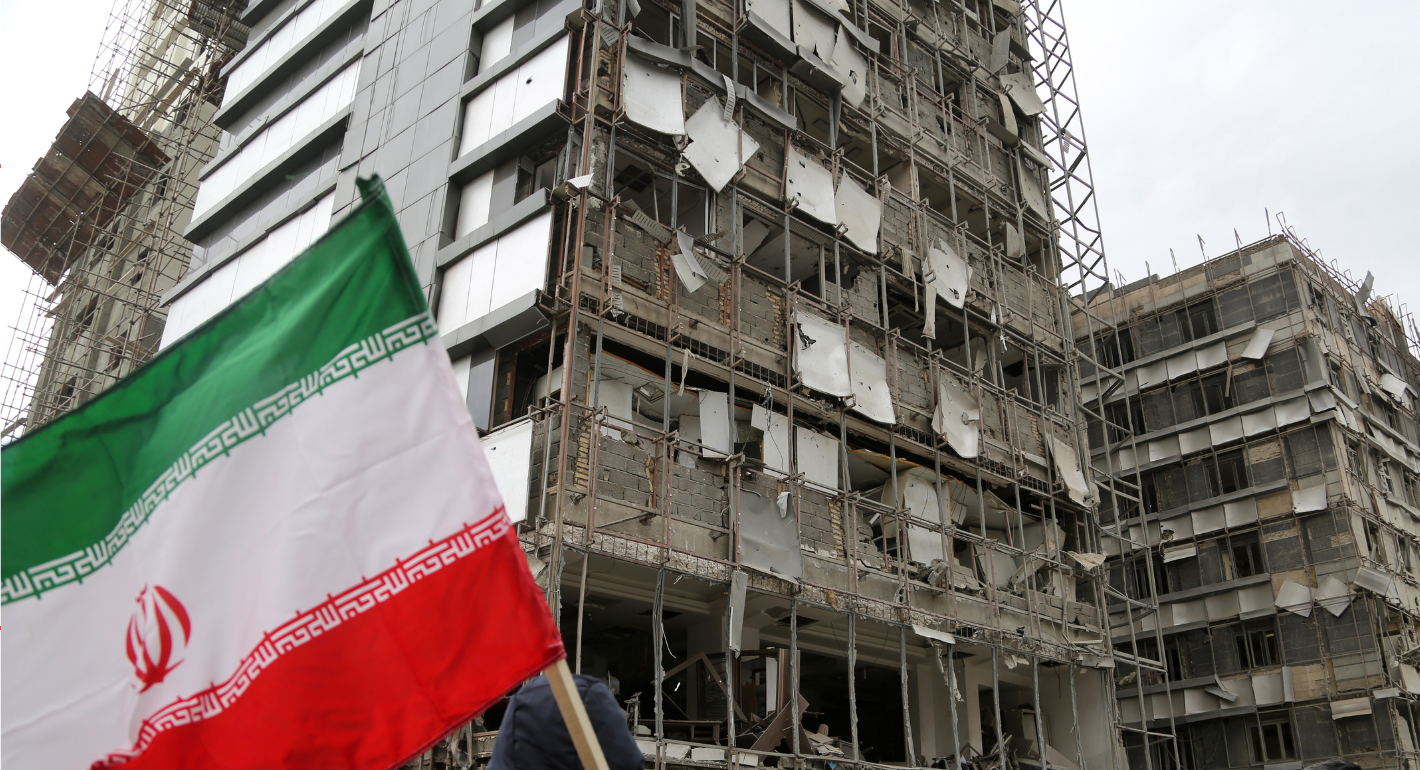
Europe’s reaction to the war in Iran has been disunited and meek, a far cry from its previously leading role in diplomacy with Tehran. To avoid being condemned to the sidelines while escalation continues, Brussels needs to stand up for international law.

Pierre Vimont
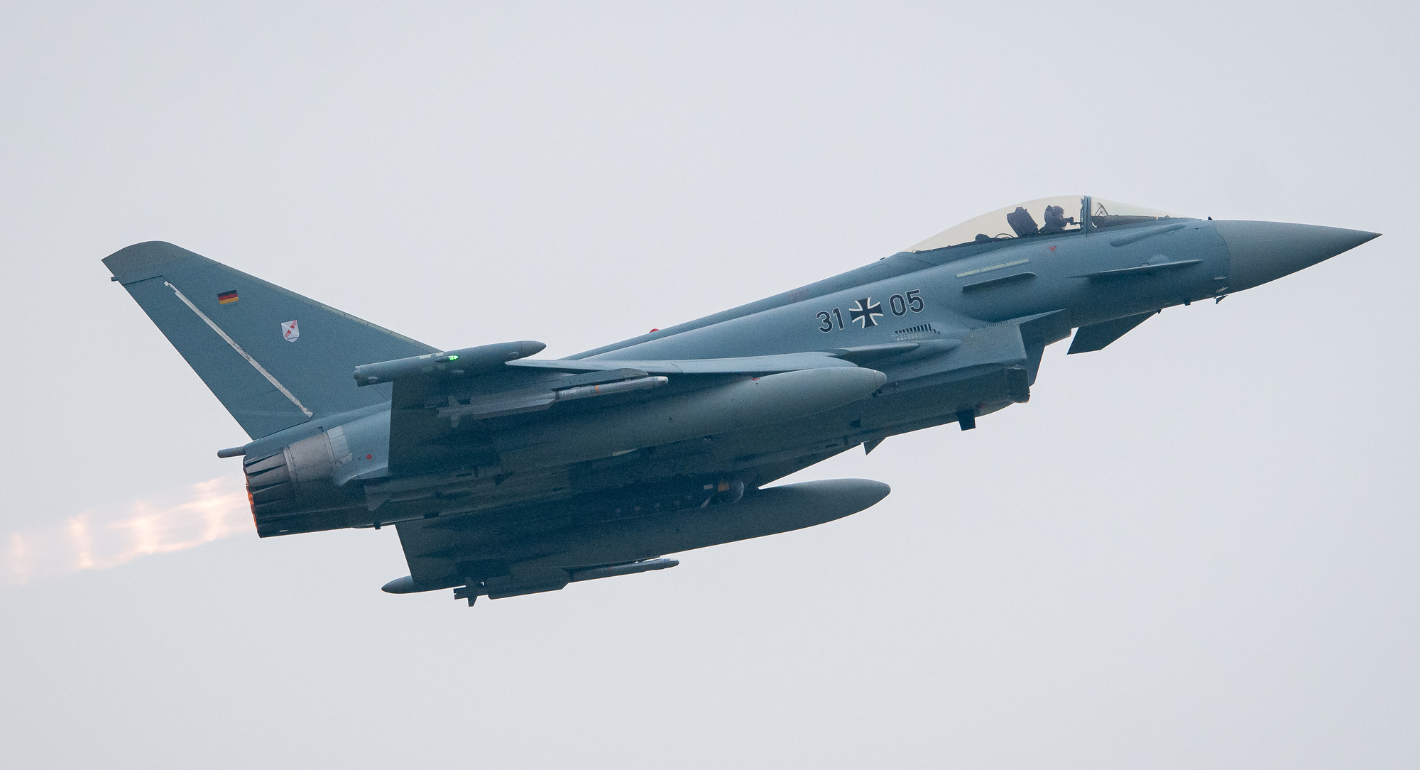
France and Germany’s failure to agree on the Future Combat Air System (FCAS) raises questions about European defense. Amid industrial rivalries and competing strategic cultures, what does the future of European military industrial projects look like?

Rym Momtaz, ed.
France has stopped clinging to notions of being a great power and is embracing the middle power moment. But Emmanuel Macron has his work cut out if he is to secure his country’s global standing before his term in office ends.
Rym Momtaz
Integrating AI into the workplace will increase job insecurity, fundamentally reshaping labor markets. To anticipate and manage this transition, the EU must build public trust, provide training infrastructures, and establish social protections.
Amanda Coakley