

Commentary
Gwendolyn Sasse
{
  "authors": [
    "Gwendolyn Sasse"
  ],
  "type": "commentary",
  "blog": "Strategic Europe",
  "centerAffiliationAll": "",
  "centers": [
    "Carnegie Endowment for International Peace",
    "Carnegie Europe"
  ],
  "collections": [
    "Europe’s Eastern Neighborhood"
  ],
  "englishNewsletterAll": "",
  "nonEnglishNewsletterAll": "",
  "primaryCenter": "Carnegie Europe",
  "programAffiliation": "",
  "programs": [],
  "projects": [],
  "regions": [
    "Europe",
    "Eastern Europe",
    "Ukraine"
  ],
  "topics": [
    "Political Reform",
    "Democracy",
    "EU"
  ]
}
Source: Getty
The pro-European result of Ukraine’s parliamentary election paves the way for structural reforms, but it does not point toward a resolution of the conflict with Russia.
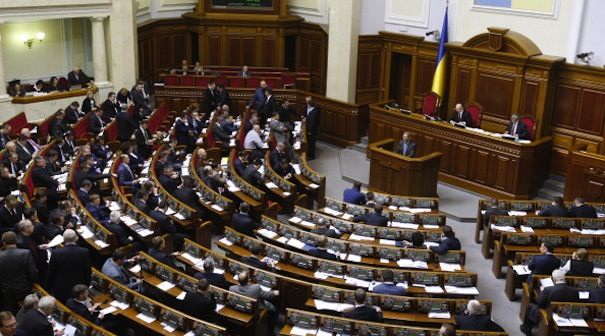
Elections in the aftermath of protests and a shaky ceasefire are different from votes held in peaceful times: the stakes are much higher. The parliamentary election that took place in Ukraine on October 26 was about the internal legitimacy of the Ukrainian state. The election was a necessary step toward achieving that, and its outcome provides some space for structural reforms. But the result does not point toward a resolution of the conflict with Russia.
Measured against the events of recent months, the election may, ironically, bring more continuity than change. The ballot has established a pro-European majority in Ukraine’s parliament. Arseniy Yatsenyuk, who is likely to stay in his post as prime minister, has suggested calling the coalition government that now needs to be formed the “European Ukraine coalition.”
With the vote count almost completed, the official results released by the Central Election Commission of Ukraine showed Yatsenyuk’s People’s Front to be the winner of the party-list vote, with just over 22 percent of the vote. That puts the party less than 1 percentage point ahead of the Petro Poroshenko Bloc, the president’s movement.
Self Help, the party of Andriy Sadovyi, the mayor of Lviv, came third, with about 11 percent. In fourth place was the Opposition Bloc, a successor to the discredited Party of Regions, with just over 9 percent, followed by the Radical Party, with about 7.5 percent, and former prime minister Yulia Tymoshenko’s Fatherland, with under 6 percent.
Preelection polling had predicted a clear-cut victory for the Petro Poroshenko Bloc. In the end, the newly created People’s Front has managed to set itself up as an equal partner to the president’s party, and the two groups look likely to form the basis of a new coalition. A further surprise was the electoral strength of Self Help, a regional party centered on Lviv that has managed to broaden its national appeal, in particular in Kiev.
#Ukraine's EU aspirations have never translated easily into concrete policies.Tweet This
With Tymoshenko’s party barely making the 5 percent threshold needed to enter the parliament, the right-wing parties Svoboda and Right Sector not entering the legislature via the party lists, and the Communist Party being absent for the first time since the country’s independence in 1991, Ukraine’s party scene has been shaken up.
For the moment, the majority of parties remain disparate umbrella organizations, and their capacity to govern in coalition and to implement reforms remains to be tested. Coalition talks may try to tie in all the elected parties apart from the Opposition Bloc. Under the current circumstances, when the former Party of Regions has only partly regrouped as the Opposition Bloc, the interests and identities in the country’s southeast do not neatly fit the newly emerging party structures.
The party lists account for only half of the seats in Ukraine’s parliament; the other half were elected through single-member constituencies. Commentary on the election has focused on the party lists, as they are easier to interpret. But while the party-list vote reveals important trends about the current political landscape in Ukraine, it only tells half the story.
Of the 198 seats contested in single-member constituencies, some 100 have been won by so-called “independent” candidates, based on 99 percent of the vote. Independents won seats across the whole country, but their highest concentration is in the eastern and southern regions of Luhansk, Donetsk, Kharkiv, and Odessa. In the eastern regions of Dnipropetrovsk and Zaporizhia, there is a relatively even split between independents and members of the Petro Poroshenko Bloc.
Among the independents are affiliates of the former Party of Regions who are trying to reposition themselves; tellingly, the vast majority of them avoided an official association with the Opposition Bloc. The group also includes other elites whose political profile will become clearer in the coming months.
The large number of independents is reminiscent of parliaments across the former Soviet Union in the immediate post-1991 period. These parliamentarians introduce an additional element of uncertainty into Ukrainian politics at a time when a broad consensus is needed on structural and, ideally, constitutional reforms.
A further source of uncertainty is the presence of members of parliament with a background in the military or in paramilitary and extremist groups. Engaging these political forces in the parliament via the main parties might be the only democratic way of reining them in after a period of mass protest and conflict—but the actual impact of these individuals on daily politics is as yet hard to predict.
In the meantime, the parts of the eastern regions of Donetsk and Luhansk that did not hold elections on October 26 because they are occupied by pro-Russian rebels will move ahead with a local poll on November 2. Kiev has warned against holding these elections, while Moscow has announced that it will recognize the results (after also recognizing the outcome of the parliamentary election). Against this backdrop, further violent clashes between the Ukrainian army and armed separatist forces are likely during and after the poll.
Rival polls cement Kiev's lack of control over parts of eastern #Ukraine.Tweet This
There is no way of verifying the results of this rival poll, but it further cements Kiev’s lack of control over parts of Ukraine. The vote could also undermine Kiev’s plan to hold elections in certain districts of Donetsk and Luhansk in early December in connection with a law on temporary regional autonomy passed in September.
Ukraine’s new “European” parliament and government now have the difficult task of striking an uncomfortable balance between internal reforms and engagement with Russia.

Nonresident Senior Fellow, Carnegie Europe
Gwendolyn Sasse is a nonresident senior fellow at Carnegie Europe. Her research focuses on Eastern Europe, with a particular focus on Ukrainian politics and society, EU enlargement, and comparative democratization.
Recent Work
Gwendolyn Sasse
Gwendolyn Sasse
Carnegie does not take institutional positions on public policy issues; the views represented herein are those of the author(s) and do not necessarily reflect the views of Carnegie, its staff, or its trustees.

Before the next wave of EU enlargement takes place, the union needs to grapple with thorny questions of how power is distributed among its members.


Emil Sondaj Hansen, Ditte Brasso Sørensen

A summer of escalation in the Black Sea has hurt Ukraine economically and is exacerbating world food security. A truce is needed—as is a broader reframing of Europe’s Ukraine strategy.

Thomas de Waal

Are Germany’s economic, industrial, and political struggles becoming a liability for the EU’s ability to rise to the geopolitical moment?

Rym Momtaz, ed.

European Commission President Ursula von der Leyen is about to give her annual address on the state of the EU. Here’s what she won’t—but should—say.
Rym Momtaz

The aftermath of the Ceuta crisis shows Europe has drawn the wrong lessons. Rather than doubling down on failed migration policies, the EU needs to address the underlying roots of such episodes.

Richard Youngs