

Commentary
Judy Dempsey
{
  "authors": [
    "Judy Dempsey"
  ],
  "type": "commentary",
  "blog": "Strategic Europe",
  "centerAffiliationAll": "",
  "centers": [
    "Carnegie Endowment for International Peace",
    "Carnegie Europe"
  ],
  "collections": [
    "Europe’s Eastern Neighborhood",
    "EU Integration and Enlargement"
  ],
  "englishNewsletterAll": "",
  "nonEnglishNewsletterAll": "",
  "primaryCenter": "Carnegie Europe",
  "programAffiliation": "",
  "programs": [],
  "projects": [],
  "regions": [
    "Europe",
    "Eastern Europe",
    "Western Europe"
  ],
  "topics": [
    "EU",
    "Civil Society"
  ]
}
Source: Getty
The tearing down of the Berlin Wall twenty-five years ago was only the beginning of Europe’s reunification, which is far from complete. The EU should continue to help that process.
The summer of 1989 was balmy. During those weeks, tens of thousands of East Germans headed south. Their goal was the West.
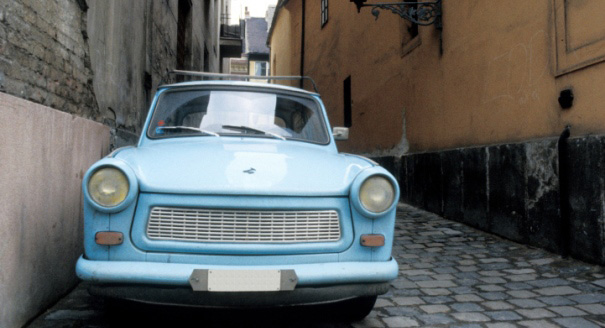
I won’t forget the cavalcades of spluttering East German Trabant cars that chugged through what was then Communist Czechoslovakia and Hungary.
On the outskirts of Budapest, young and old had set up camps. Many were simply waiting. Others moved on, making their way to Hungary’s border with Austria. The torrent of East Germans was unstoppable. They wanted to get out to the West.
It was people’s power that toppled the Communist systems across that part of Europe. The role of Mikhail Gorbachev, the last leader of the Soviet Union, was crucial too. He was not going to send troops from the Moscow-led Warsaw Pact to stem the exodus or squash demonstrations.
But above all, the people of Eastern Europe did not want to spend the rest of their lives under a system that completely disregarded human rights and that kept Europe divided. When their countries joined the EU, these citizens’ freedom was consummated.
It is hard to overestimate the attraction of the European Union for the “other” Europe, both then and now.
Yes, there is cynicism today about how the EU functions. There is increasing public skepticism about further enlargement. There are populist parties across Europe that believe that the EU should and can be turned into a new fortress—as if they had forgotten how the Iron Curtain created a special kind of prison in post-1945 Eastern Europe.
In 1989, the reunification of Europe began. Now, it has yet to be complete.Tweet This
But the people of the Western Balkans, Ukraine, Moldova, Georgia, and Belarus do not want new dividing lines to be drawn across Europe. Despite the consequences of the euro crisis and rising unemployment, they want to be part of the EU. Somehow, they believe the EU is the guarantor of their freedom and peace.
They are right to believe that.
The problem is that inside the EU, too many governments are indifferent about why freedom matters for those living in Europe’s East. This is despite the fact that so many people in Europe’s Eastern (and Southern) neighborhood only partly enjoy, or do not enjoy at all, basic human and civil rights.
Yet the power of civil society in Ukraine and in the countries of the Western Balkans shows that the status quo is not unassailable.
Ukraine’s parliamentary election on October 26 confirmed the determination of large swaths of the country’s population to opt for a Western direction. No doubt there are groups within the political parties led by Ukrainian President Petro Poroshenko and Prime Minister Arseniy Yatsenyuk who pay only lip service to reforms. After all, real reforms would undermine the political role played by Ukraine’s highly influential oligarchs.
But there are now genuine independent political players—though small in number—who can make a difference over time. Their success will require an enormous commitment by the EU and its member state governments.
That commitment is needed not only in Ukraine but also in the Western Balkans and Moldova, where political elites are adept at the rhetoric of reform but miserable at delivering it.
The small civil society movements across the region are frustrated with the slow pace of change and the increasing erosion of press freedom in their countries. But they are also marginalized by the political elites, which is why they try to look to the EU for support.
Civil society does not need the @EU_Commission's turgid progress reports.Tweet This
Civil society does not need the European Commission’s long and turgidly written annual progress reports on reforms. It needs something far more tangible. It needs practical, on-the-ground support across Eastern Europe and the Western Balkans.
This means that EU leaders must be highly visible during parliamentary sessions, hold town-hall meetings that involve local communities, and speak out against the intimidation of journalists. The EU should involve citizens and civil society groups in its meetings with national and local leaders and should make a point of visiting activists who are detained.
If the region’s political elites are not going to establish checks and balances, then EU delegations, European External Action Service diplomats, and the plethora of European foundations should step in.
Governments in Eastern Europe and the Western Balkans will surely balk at such visibility. But these activities are about supporting the values that Europeans should in any case believe in and support—and that define the EU.
It is the rule of law, press freedom, and the array of human and civil rights that underpin democracy. That is the freedom those Trabi drivers yearned for, and achieved, twenty-five years ago.

Nonresident Senior Fellow, Carnegie Europe
Judy Dempsey is a nonresident senior fellow at Carnegie Europe
Recent Work
Judy Dempsey
Judy Dempsey
Carnegie does not take institutional positions on public policy issues; the views represented herein are those of the author(s) and do not necessarily reflect the views of Carnegie, its staff, or its trustees.

Before the next wave of EU enlargement takes place, the union needs to grapple with thorny questions of how power is distributed among its members.


Emil Sondaj Hansen, Ditte Brasso Sørensen

A summer of escalation in the Black Sea has hurt Ukraine economically and is exacerbating world food security. A truce is needed—as is a broader reframing of Europe’s Ukraine strategy.

Thomas de Waal

Are Germany’s economic, industrial, and political struggles becoming a liability for the EU’s ability to rise to the geopolitical moment?

Rym Momtaz, ed.

European Commission President Ursula von der Leyen is about to give her annual address on the state of the EU. Here’s what she won’t—but should—say.
Rym Momtaz

The aftermath of the Ceuta crisis shows Europe has drawn the wrong lessons. Rather than doubling down on failed migration policies, the EU needs to address the underlying roots of such episodes.

Richard Youngs