

Commentary
Judy Dempsey
{
  "authors": [
    "Judy Dempsey"
  ],
  "type": "commentary",
  "blog": "Strategic Europe",
  "centerAffiliationAll": "",
  "centers": [
    "Carnegie Endowment for International Peace",
    "Carnegie Europe"
  ],
  "collections": [
    "Europe’s Eastern Neighborhood"
  ],
  "englishNewsletterAll": "",
  "nonEnglishNewsletterAll": "",
  "primaryCenter": "Carnegie Europe",
  "programAffiliation": "",
  "programs": [],
  "projects": [],
  "regions": [
    "Russia",
    "Eastern Europe",
    "Caucasus",
    "Azerbaijan"
  ],
  "topics": [
    "Democracy",
    "EU"
  ]
}
Source: Getty
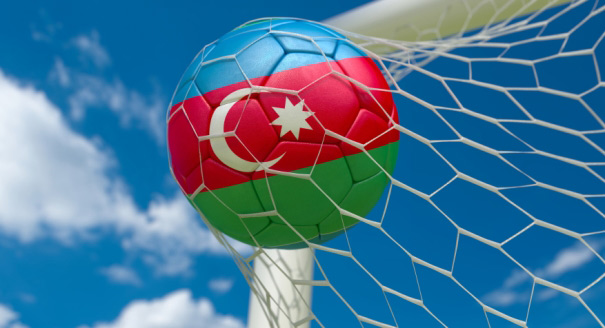
Azerbaijan opens the first ever European Games amid a sustained clampdown on human rights activists. Participating countries seem unwilling to take Baku to task.
From June 12 to 28, over 6,000 athletes will compete in the European Games, a new event on the sporting calendar modeled on the Olympic Games.
The host country, Azerbaijan, which has a population of 9.5 million and is located on the western shore of the Caspian Sea, has spared no expense. President Ilham Aliyev, in power since 2003, has spent over €8 billion ($10 billion) on the games, according to human rights organizations—a cost that cannot be verified because of a lack of transparency.
Regardless of the costs, which include state-of-the-art facilities and lucrative sponsorship contracts, it is Azerbaijan’s human rights record that has come under scrutiny—but not enough. The European Union should be in a much stronger position to challenge Baku’s miserable record, but it seems unwilling to risk a major confrontation.
Some have called for a boycott of the European Games. Others simply want more freedoms. Either way, Aliyev will not tolerate any civil society movements or individuals who might dent the hegemony of the ruling party’s power.
The games’ organizers, the European Olympic Committees, have—with few exceptions, such as the German Olympic Sports Confederation—preferred to remain silent rather than speak out against human rights violations in Azerbaijan.
Bill Sweeney, chief executive of the British Olympic Association, played down the human rights issue. “We always have a consistent policy. We are here purely for the sports reasons and not political reasons,” he said.
But can any sporting association in this day and age really separate sport from politics? Can big entertainment events—such as the Eurovision Song Contest, which Azerbaijan hosted in 2012, again after suppressing any form of dissent—escape the political dimension?
The recent scandal surrounding the resignation of Sepp Blatter, president of FIFA, finally exposed the depth of the corruption in football’s world governing body. The episode also showed the tight links between politics and sport.
The EU should be in a stronger position to challenge #Azerbaijan's record.Tweet This
Azerbaijan is no exception. Denis Krivosheev, deputy director for Europe and Central Asia at Amnesty International, spelled out what was at issue. “Far from advancing the goals of press freedom and human dignity enshrined in the Olympic charter, the legacy of these games will be to further encourage repressive authorities around the world to view major international sporting events as a ticket to international prestige and respectability,” he said.
Hardly surprisingly, Amnesty was prevented from entering Azerbaijan. Baku’s embassy in London stated that it was “not in a position to welcome the Amnesty mission to Baku at the present time.” Maybe it could do so after the European Games.
Azerbaijan has been able to deflect condemnation of its human rights record because of the way it can bypass its critics by winning over supporters. The Council of Europe is a depressing case in point. Once regarded as the showcase of an intergovernmental human rights institution, according to Gerald Knaus, president of the European Stability Initiative think tank, the council has been hijacked by Azerbaijan and its allies.
By offering free trips, caviar, and other gifts to Western decisionmakers, and by paying Western consultancies to lobby on their behalf, the Azerbaijani regime has been able to buy sufficient support inside the Council of Europe to prevent any serious censure of Baku’s human rights violations.
“By capturing the Council of Europe, the Azerbaijani government managed to neutralize the core strategy of the international human-rights movement,” wrote Knaus in the latest issue of Journal of Democracy.
It is extraordinary that so many members of the Council of Europe—and the EU—have shamefully helped legitimate Aliyev’s policies. More extraordinary is that there was little uproar when the council’s human rights rapporteur, Christoph Strässer, now the German government’s special envoy for human rights, was prevented from traveling to Azerbaijan to investigate the fate of political prisoners there.
It ended up being a catch-22 for Strässer. Azerbaijan’s supporters in the Council of Europe, including Turkey and Russia but also representatives from Britain and Spain, said he was not competent to produce a report because he had not visited Azerbaijan.
The West’s lack of commitment to human rights in Azerbaijan may stem from realpolitik, or just plain interests. This is because the EU and individual member states look to Azerbaijan as a source of energy that could offer an alternative to Russian supplies. But such realpolitik carries a high price.
It’s all very well—and commendable—that the Aliyev regime has managed to maintain stability by distributing some of the wealth from Azerbaijan’s oil and gas revenues. In a new report on the country’s economy, the World Bank praised the regime for tackling poverty. The bank reckoned that the share of the population living below the poverty line had declined from nearly 50 percent in 2001 to less than 16 percent in 2008.
Yet even as the government improves the country’s living standards, it is garnering support at the expense of pro-democracy activists.
The idea of #Azerbaijan opening up to democracy soon is not in the cards.Tweet This
As if to confirm this, in 2014 the Azerbaijani regime adopted policies similar to those announced by the Kremlin. Nongovernmental organizations supported by Western donors have been accused of being foreign agents. Access to funding for such groups has been severely restricted. Instead, the regime has expanded the number of GONGOs, or government-organized nongovernmental organizations.
Certainly, the Aliyev regime can continue to quash dissent with impunity. Baku has seen the impact of pro-democracy civil society movements and individuals in Ukraine, not to mention in neighboring Georgia. The idea of Azerbaijan opening up to democracy in the foreseeable future is not in the cards—however much Aliyev and his supporters believe stability without democracy is sustainable.

Nonresident Senior Fellow, Carnegie Europe
Judy Dempsey is a nonresident senior fellow at Carnegie Europe
Recent Work
Judy Dempsey
Judy Dempsey
Carnegie does not take institutional positions on public policy issues; the views represented herein are those of the author(s) and do not necessarily reflect the views of Carnegie, its staff, or its trustees.

Are Germany’s economic, industrial, and political struggles becoming a liability for the EU’s ability to rise to the geopolitical moment?

Rym Momtaz, ed.

European Commission President Ursula von der Leyen is about to give her annual address on the state of the EU. Here’s what she won’t—but should—say.
Rym Momtaz

The aftermath of the Ceuta crisis shows Europe has drawn the wrong lessons. Rather than doubling down on failed migration policies, the EU needs to address the underlying roots of such episodes.

Richard Youngs
An overwhelming victory by a far-right-wing party in a small state in eastern Germany will have major repercussions for Chancellor Friedrich Merz’s coalition.
Judy Dempsey

Canadian Prime Minister Mark Carney has twice inspired praise for standing up to U.S. President Donald Trump: at the 2026 World Economic Forum in Davos and on Canada-U.S. trade negotiations. Is Carney showing a third way better than the EU has in dealing with the Trump administration?
Rym Momtaz, ed.