

Commentary
As we close out another season of Strategic Europe, it is worth taking stock of the deep shifts underway.
Rym Momtaz
{
  "authors": [
    "Emin Milli"
  ],
  "type": "commentary",
  "blog": "Strategic Europe",
  "centerAffiliationAll": "",
  "centers": [
    "Carnegie Endowment for International Peace",
    "Carnegie Europe"
  ],
  "collections": [
    "Europe’s Eastern Neighborhood"
  ],
  "englishNewsletterAll": "",
  "nonEnglishNewsletterAll": "",
  "primaryCenter": "Carnegie Europe",
  "programAffiliation": "",
  "programs": [],
  "projects": [],
  "regions": [
    "Russia",
    "Eastern Europe",
    "Caucasus",
    "Azerbaijan"
  ],
  "topics": [
    "Foreign Policy",
    "EU"
  ]
}
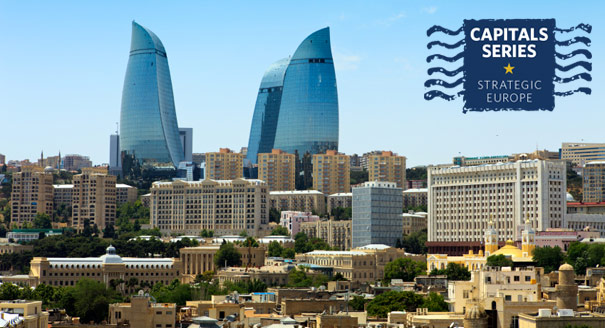
Source: Getty
The EU’s problem in Azerbaijan is that it lacks leverage. Smart and targeted sanctions against certain government figures would help.
Strategic Europe continues the second phase of its Capitals Series exploring how EU foreign policy is viewed by six countries in Europe’s Eastern neighborhood. We have asked our contributors from each capital to give a candid assessment of the EU’s policies toward their country, with a ranking on a scale from “miserable” to “excellent.” This week, the spotlight is on Azerbaijan.
*
The current discourse on human rights and democracy in Europe’s periphery is dominated by pessimism. Yet the struggles with democracy on the EU’s borders are not inevitable, and the EU has various tools at its disposal to effectively promote economic development, democratization, human rights, good governance, and the rule of law. The former Eastern bloc states that have joined the EU and NATO have in the last twenty-five years experienced an increase in peace, security, and wealth unprecedented in the region’s history.

Azerbaijan’s Dutch disease—the economic phenomenon by which increased development in one sector leads to a decline in others—has extended to the political arena, empowering the regime founded by authoritarian former KGB general and ex-president Heydar Aliyev to the detriment of other political forces.
EU and U.S. policies in the region have supported the status quo, which has in turn permitted the consolidation of an authoritarian kleptocracy. Some structural conditions have also been important factors in helping prop up the autocracy under Heydar Aliyev and his son Ilham, president since 2003: an abundance of oil, which has led to a resource curse; a war with Armenia, which was supported by Russia; and a lack of effective opposition leaders or significant split in the elite.

European countries allowed Azerbaijan to chair the Council of Europe in 2014 while back home the authorities shut down the country’s few remaining independent NGOs and jailed many of their leaders as well as various journalists, politicians, activists, and human rights defenders.
Instead of human rights and democracy, European politicians now speak vaguely of economic engagement. Vaguely, because Azerbaijan is only a minimal and declining player in Europe’s oil market, providing just 4 percent of Europe’s oil consumption. Azerbaijani gas will not reach European markets before 2020, and when it does, it will hardly balance Russian influence: Russia provided around 30 percent of the EU’s gas demand in 2014, while Azerbaijan, with gas from Central Asia via the Trans-Caspian pipeline, can meet at most 2–4 percent of Europe’s natural gas needs.
Little has changed in #Azerbaijan since the rough-and-tumble 1990s.Tweet This
Oil prices are likely to stay below the $60 per barrel that, according to the IMF, the government in Baku needs to break even. Azerbaijan’s 2016 budget envisions a 23 percent cut in expenditures compared with this year. The national currency, the manat, lost around 34 percent of its value against the dollar in a devaluation in February 2015. In the coming year, the government will have to choose between allowing a freely floating manat, whose value is currently tied to those of the dollar and the euro, and completely exhausting Azerbaijan’s foreign currency reserves.
The country’s political elite is already feeling the heat, as more than twenty high-ranking members of Azerbaijan’s security and communications services were arrested in an ostensible anticorruption probe in mid-November.
In short, Azerbaijan is entering a crisis, and a crisis is an opportunity for change. So what can the EU do to reel in the excesses of an unruly dictator?
The most pertinent comparison is with Belarus, where targeted individual sanctions, combined with unease in Minsk over Russia’s invasion of parts of Ukraine, have led to the release of some of the country’s political prisoners and the easing of personal sanctions against Belarusian President Alexander Lukashenko.
The goal of those sanctions was to give the EU leverage in its negotiations with Lukashenko, not to punish the people of Belarus as a whole. In this, the measures have succeeded: trade between Belarus and the EU has increased tenfold in the last ten years despite the sanctions in place.
The EU's problem in #Azerbaijan is that it lacks leverage.Tweet This
The EU’s problem in Azerbaijan is that it lacks leverage: the West tolerates all sorts of horrific human rights abuses in oil- and gas-producing countries, and Azerbaijan is a far cry from the West’s longtime ally Saudi Arabia. The case of Belarus shows that applying targeted sanctions can create the leverage that the EU claims it lacks in its relationship with Azerbaijan. It is a lack of will, not of means.
Nearly a century ago, the classic Azerbaijani novel Ali and Nino asked whether Azerbaijan needed Europe more than Europe needed Azerbaijan. The authorities in Baku and their army of Western lobbyists have long been allowed to manipulate the answer to this question. At times, their rhetoric is so belligerent and bellicose one wonders if they can possibly believe their own words. The truth is that Azerbaijan will always need Europe more than vice versa.
If smart and targeted sanctions are applied to some (not all) key figures in the Azerbaijani government, then Azerbaijan will start taking the statements of concern issued by EU officials much more seriously. And the EU will finally have the leverage it needs to convince its partner that the EU’s beliefs in democratic values, the respect for human rights, and the rule of law are more than just words on paper.
Emin Milli is the executive director of Meydan TV, an independent Azerbaijani news outlet.
Emin Milli
Meydan TV
Carnegie does not take institutional positions on public policy issues; the views represented herein are those of the author(s) and do not necessarily reflect the views of Carnegie, its staff, or its trustees.

As we close out another season of Strategic Europe, it is worth taking stock of the deep shifts underway.

Rym Momtaz
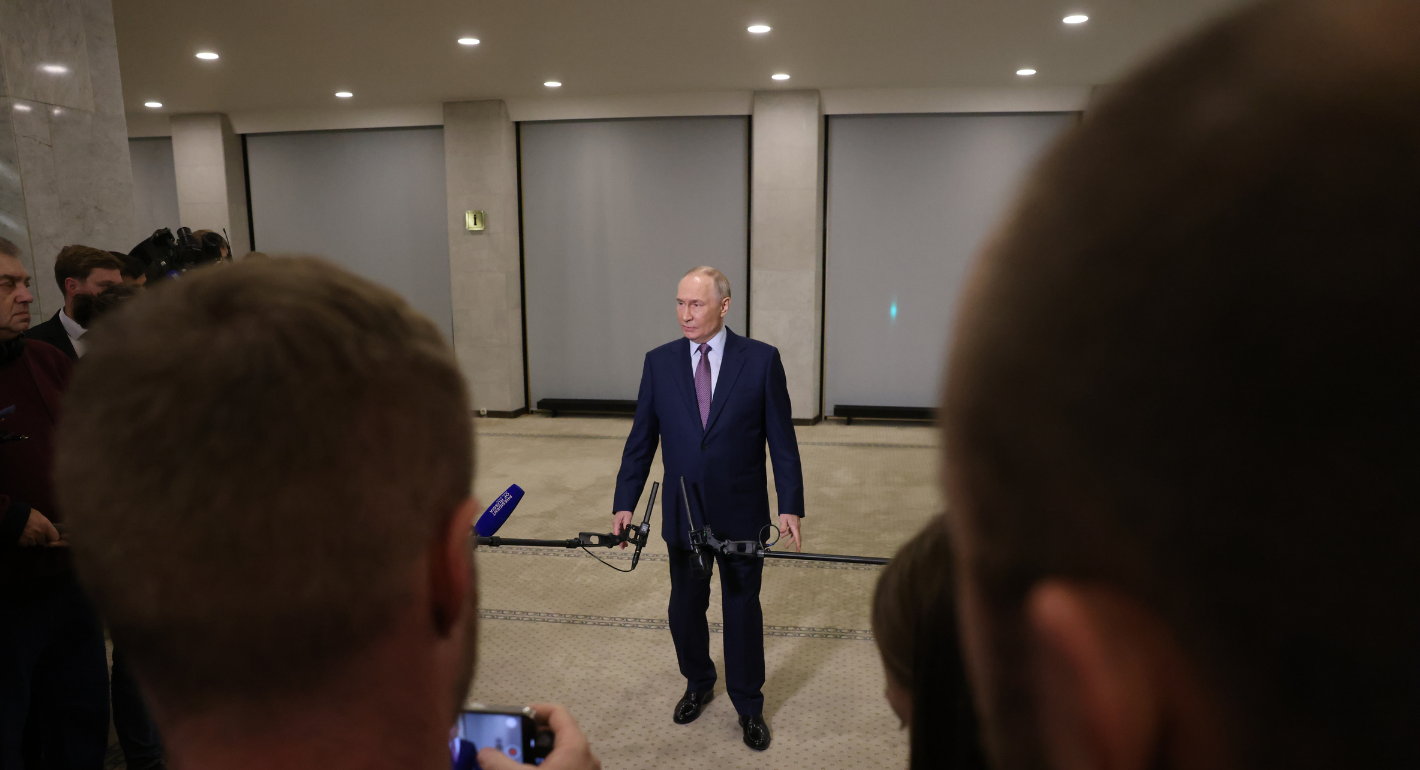
The EU had to compromise to adopt a twenty-first sanctions package against Russia, exposing growing cracks in the union’s resolve. Is this latest, weaker round worth it to keep pressure on Moscow?
Rym Momtaz, ed.
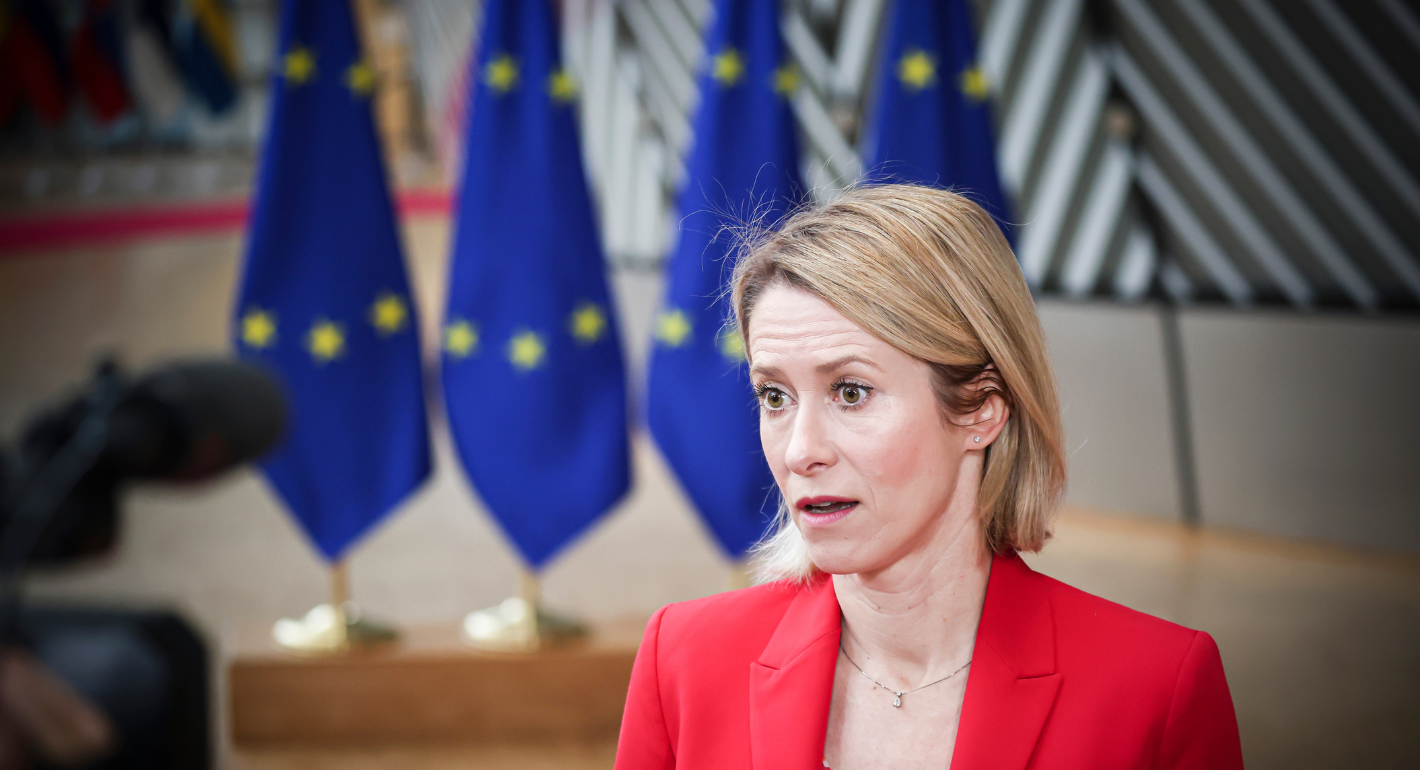
Trump is distracted and Ukraine wants Europe to step up. The continent’s leaders must find their voice and assert it in talks with Russia.

Alissa de Carbonnel

Mounting economic strain and battlefield losses will not necessarily make the Kremlin less dangerous. They could instead push Moscow toward a more aggressive hybrid campaign designed to test NATO’s Eastern flank, exploit allied hesitation, and fracture European resolve.

Maksym Beznosiuk

Over the past ten years, NATO has held almost as many summits as it did during the entirety of the Cold War. Are they still useful, or is it time to stop holding annual meetings?
Rym Momtaz, ed.