

Article
Dalia Ghanem
{
  "authors": [
    "Dalia Ghanem"
  ],
  "type": "commentary",
  "blog": "Strategic Europe",
  "centerAffiliationAll": "",
  "centers": [
    "Carnegie Endowment for International Peace",
    "Carnegie Europe",
    "Malcolm H. Kerr Carnegie Middle East Center"
  ],
  "collections": [
    "Europe’s Southern Neighborhood"
  ],
  "englishNewsletterAll": "",
  "nonEnglishNewsletterAll": "",
  "primaryCenter": "Malcolm H. Kerr Carnegie Middle East Center",
  "programAffiliation": "",
  "programs": [],
  "projects": [],
  "regions": [
    "North Africa",
    "Algeria",
    "Middle East"
  ],
  "topics": [
    "Foreign Policy",
    "EU"
  ]
}

Source: Getty
Algerians want Europe to be far more involved in promoting democracy, freedom of the media, independent civil society, and migration issues.
Strategic Europe continues its Capitals Series exploring how EU foreign policy is viewed by ten countries in Europe’s Southern neighborhood. We have asked our contributors from each capital to give a candid assessment of the EU’s approach toward their country, with a ranking on a scale from “irrelevant” to “helpful.” This week, the spotlight is on Algeria.
*
Historically, Algeria has had a special relationship with Europe, particularly France, due to Algeria’s long history of colonization. Since its independence in 1962, Algeria has shared economic, political, and cultural ties with some European countries. According to the Migration Policy Center, 91.2 percent of Algerian emigrants in 2012 were located in the European Union; of these, 75.0 percent were in France, 6.3 percent in Spain, and 2.4 percent in Italy.

According to a recent opinion polling and research project based on 80 interviews with Algerian opinion leaders and a poll of 400 members of the public, 83 percent of opinion leaders and no less than 87 percent of the general public think that their country has good relations with the EU and recognize the union’s capacity to finance development projects. As for EU policies toward Algeria, both opinion leaders and the public want the EU to be more involved in the country in terms of democracy promotion, freedom of the press, and migration.
But so far, the EU’s approach toward Algeria has been confused. The union has not properly addressed the issues of democracy, fundamental freedoms, human rights, migrants’ rights, and reforms but rather avoids these types of considerations. For instance, the Association Agreement contains only three articles on political dialogue, while there are ten articles on cooperation in the judicial area. This emphasis on the judiciary demonstrates a lack of European interest in fostering political reforms. Similarly, EU funding focuses on economic growth and jobs, improvement of public services, and reform of the judicial system.

The EU’s Southern countries in particular—France, Italy, and Spain—prefer to keep the status quo in Algeria and promote economic cooperation than to encourage democratization, so they can safeguard their economic interests.
This feeling of vulnerability among EU member states has endured since the 2006 Ukrainian gas dispute with Russia. That episode made some EU countries that were highly dependent on Russian energy imports acknowledge Algeria’s strategic position as an energy trading partner. As it is, 72 percent of Algerian oil exports went to Europe in 2013. Around 90 percent of the country’s natural gas exports were to Europe, which made Algeria Europe’s second-largest natural gas supplier. And 90 percent of Algeria’s exported liquefied natural gas was also sent to Europe, principally to Spain, Italy, and France.
France’s priority in Algeria—modernization of the public sector—reflects French fears of the fallout of an uncertain democratization process that might lead to a radical Islamist regime, another refugee crisis, and the spillover of terrorism into Europe. For these reasons, France and by extension Europe favor a policy of economic and political stability over democracy. In light of the latest jihadist attacks on European soil, notably in France, it is likely that EU pressure (if any exists) and assistance to Algeria in terms of democratization will shrink considerably. The EU’s prioritization of security over democracy makes EU policy illegitimate and easily dismissible by the regime in Algiers.
The complex and tumultuous love-hate relationship that France has with its former colony greatly shapes Algeria’s relationship with the EU. There is inherent skepticism in Algeria toward EU policy, especially when initiated by France. The Union for the Mediterranean, launched in 2008 as a new phase of the Euro-Mediterranean Partnership, is case in point. Algeria rejected the initiative for several reasons, among them the perception that it was yet another indication of French paternalism.
In the broader EU context, Algeria often sees EU policy as too interventionist and based on a one-size-fits-all approach incapable of understanding Algerian specificities. As a result, the country embarked on non-European partnerships with countries such as Brazil, China, Japan, and Russia.
Nonetheless, Algeria has been very active and committed, although selective, in its partnership with Europe since the end of the so-called black decade—the bitter 1991–2002 civil war between the state and an Islamist insurgency that caused up to 150,000 casualties. Due to its relative political stability and financial ease, with the world’s eighth-largest foreign currency reserve, Algeria has been able to rebalance its relationship with Europe and shift to a more ambitious and assertive foreign policy.
On the political level, Algiers’s constant insistence on sovereign democracy and its rejection of the European Neighborhood Policy because it does not meet the country’s strategic ambitions is proof of Algeria’s selective relationship with Europe. On the economic level, Algeria capitalizes on oil and gas and uses them as leverage, as shown by Algeria’s 2007 increase in gas prices in response to Spain’s support for a Moroccan plan for the autonomy of Western Sahara.
Overall, for Algerians, Europe is capricious. While the EU advocates the transfer to Algeria of values and principles such as democracy, individual freedoms, human rights, and the free movement of people, it totally dismisses the human dimension of the relationship. Indeed, EU rhetoric encourages Algerians to be like Europeans but not to come and live alongside them in Europe.
The word “neighbor,” which the EU constantly uses in its relations with nearby countries, is very enlightening in that regard, because it draws a sharp line between the European homeland and the neighboring Other. As the former secretary general of the Arab-Maghreb Union Habib Boularès once said, “Maghreb countries will only ever be neighbors [for Europe], a tough suburb of a prosperous metropolis.”
Dalia Ghanem-Yazbeck is a research analyst at the Carnegie Middle East Center. She is a political scientist with expertise in jihadism, political violence, extremist violence, and terrorism, with a focus on Algeria.
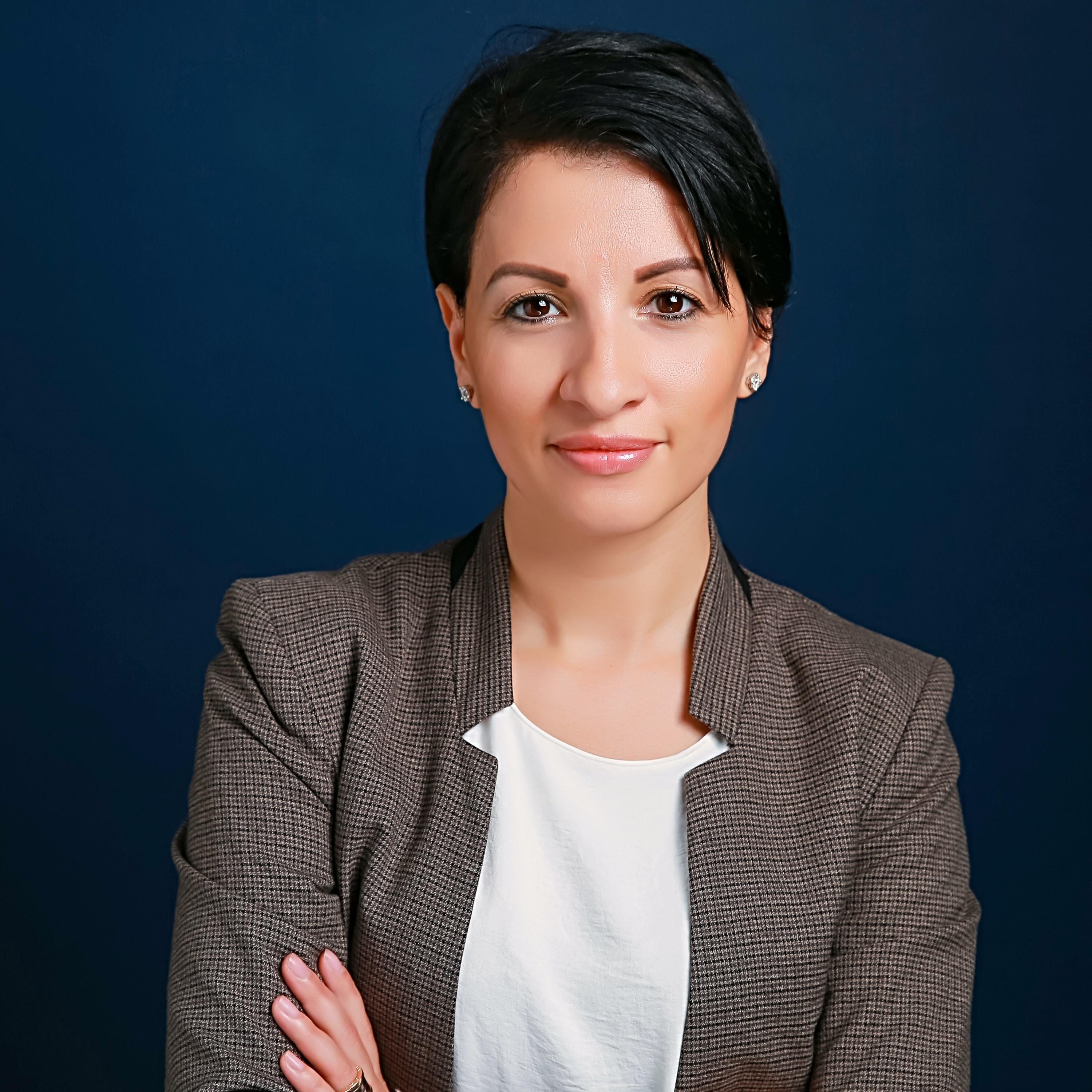
Former Senior Resident Scholar, Malcolm H. Kerr Carnegie Middle East Center
Dalia Ghanem was a senior resident scholar at the Malcolm H. Kerr Carnegie Middle East Center in Beirut, where her research focuses on Algeria’s political, economic, social, and security developments. Her research also examines political violence, radicalization, civil-military relationships, transborder dynamics, and gender.
Recent Work
Dalia Ghanem


Frances Z. Brown, Judy Dempsey, Dalia Ghanem, …
Carnegie does not take institutional positions on public policy issues; the views represented herein are those of the author(s) and do not necessarily reflect the views of Carnegie, its staff, or its trustees.

Russia is testing the waters of NATO’s mutual defense clause. What do strikes in Romanian territorial waters mean for the alliance’s posture toward Moscow?

Dimitar Bechev

With its public finances in shambles, the far right polling at 35 percent ahead of the 2027 presidential election, and a growing protest movement, is France’s crisis a threat to the EU’s geopolitical awakening?

Rym Momtaz, ed.

Ahead of a tough winter for Ukraine, Donald Trump’s swing back toward Russia bodes ill. But instead of panicking, Kyiv’s European allies are focusing on action.
Rym Momtaz

While the EU and European governments are embracing the much-lauded middle-power moment, this entails three difficult conundrums.

Richard Youngs

Much has been said of the changes Brussels is trying to make to the EU enlargement process. Here’s why gradual integration might—or might not—be the answer.
Dimitar Bechev