

Commentary
Over the past ten years, NATO has held almost as many summits as it did during the entirety of the Cold War. Are they still useful, or is it time to stop holding annual meetings?
Rym Momtaz, ed.
{
  "authors": [
    "Pauline Massart"
  ],
  "type": "commentary",
  "blog": "Strategic Europe",
  "centerAffiliationAll": "",
  "centers": [
    "Carnegie Endowment for International Peace",
    "Carnegie Europe"
  ],
  "collections": [],
  "englishNewsletterAll": "",
  "nonEnglishNewsletterAll": "",
  "primaryCenter": "Carnegie Europe",
  "programAffiliation": "",
  "programs": [],
  "projects": [],
  "regions": [
    "Europe",
    "Western Europe"
  ],
  "topics": [
    "Security"
  ]
}
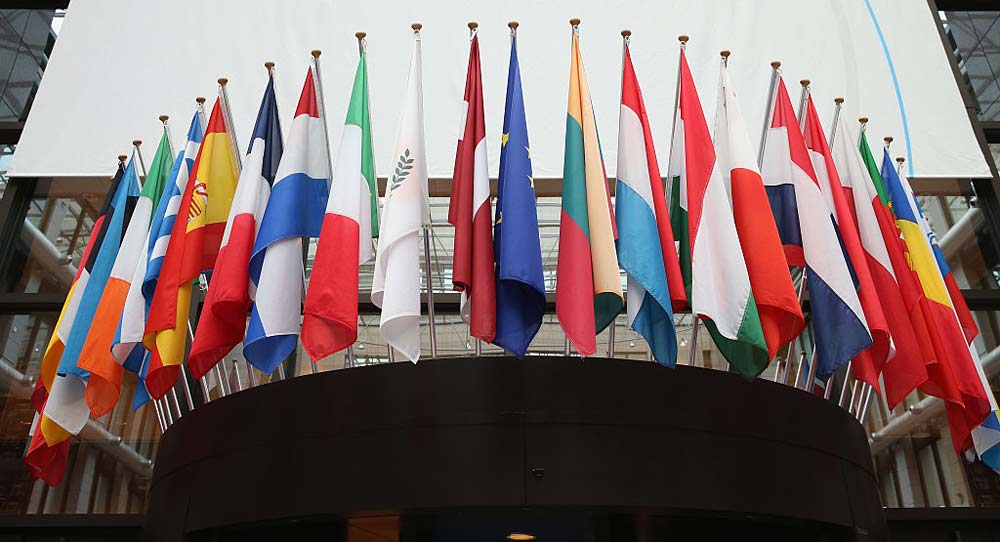
Source: Getty
A European Security Council based on the U.S. model could do wonders for the development of a European strategic community beyond the policy wonks in the Brussels bubble.
The European Union has a unique set of foreign and security policy tools, including development, trade, and military elements. In theory, this toolbox allows for a comprehensive approach to conflict prevention and resolution as well as sustainable postconflict stabilization. But the EU has not been very good at employing this toolbox coherently. This is due in part to a lack of political will, and in part to a lack of strategic foresight.
To address the relative paucity of long-term strategic thinking, the EU needs a European Security Council. Based on the U.S. National Security Council (NSC), such a body could underpin the development of the EU’s foreign and security policies. The council’s principal remit would be medium- to long-term strategic forecasting and the formulation of concrete policy recommendations. Mainly advising the EU’s high representative for foreign affairs and security policy, the council would leverage the collective brainpower of the best and the brightest in the EU to develop policy options and advice for the benefit of sustainable common action.
EU institutions and member states were severely criticized for not anticipating the migration crisis that hit Europe’s shores in 2015 and fed much of the populist outrage that now threatens Europe’s democracies. A European Security Council, removed from the daily grind, would be free to take the long view to identify the signs of impending conflicts or crises, zero in on flash points, and sound the alarm early enough for the EU to do something about it.
The recent wave of terrorist attacks in Europe has highlighted the EU’s shortcomings in information sharing. Member states have made progress in police cooperation since the November 2015 Paris attacks, although much remains to be done. But the nature of intelligence, which is closely connected to national sovereignty, makes sharing it contrary to the culture of intelligence services. There is also a high degree of mistrust both among EU member states and among different security services within countries.
A European Security Council should advise not only the EU foreign policy chief but also the chairman of the EU Military Committee, the director general of the EU Military Staff, the presidents of the European Council, European Commission, and European Parliament, relevant European commissioners (in charge of energy, budget, and other areas), the director of the EU Intelligence and Situation Center, and possibly other bodies such as the EU border agency Frontex, the EU Agency for Network and Information Security (ENISA), or the European Defense Agency (EDA). All of these players are full-fledged actors in European security that would benefit from advice while offering highly relevant sources of input to the council’s work.
Because of the EU’s institutional constraints and political sensitivities surrounding foreign and security policy, a European Security Council should consist of a mix of stakeholders: think tankers and researchers, retired senior military and foreign affairs officials, representatives of major NGOs, and business leaders. This group of dedicated Europeans, committed to EU security and a whole-of-society approach, would be free from institutional restrictions to give sharp advice on who should tackle which problem in what way.
A key element of such a council should be diversity, to generate fresh thinking on old and new issues alike. This body should not be a collection of old white men from similar backgrounds in agreement on everything. Rather, it should bring together young and old, men and women, representatives of various member states (with North-South and East-West balances) and of political parties, and Europeans of non-European descent. Discussions in the council should be strictly off the record to allow its members to express their thoughts on often controversial topics in a safe environment, but the council should have the power to make its recommendations public at its discretion.
Unlike most key EU positions, members of a European Security Council should not be appointed by member states but selected by a committee of their peers, to avoid political meddling. Their mandates should be short—two to four years at most—to allow for a constant influx of new perspectives and ensure the development of novel ideas. Former members of the council would be invited to sit on the selection committee, to apply lessons learned and continuously improve the council’s output.
The European Security Council should base its recommendations on a mix of classified and open-source information, as well as alternative sources such as business intelligence and informal networks, to guarantee a comprehensive set of inputs. The council should have the power to regularly invite other experts, including national representatives, to advise on ad hoc issues, and it should be able to call on the EU’s official network of representatives around the world for regular input. A European Security Council structured in this way would ensure that a variety of views are represented, rather than just one perspective with one particular national interest as a framework, as is currently the case in setting foreign policy.
Such a council could do wonders for the development of an EU foreign policy identity and a European strategic community beyond the policy wonks in the Brussels bubble. As was seen with the appointment of White House Chief Strategist Steve Bannon to the U.S. NSC, a security council can be a highly political creature. But a European version would benefit from the bipartisan, almost apolitical nature of much of the European debate on foreign policy.
It’ll be tough to harness political support for a European Security Council. Yet at a time of unprecedented global uncertainty and a severely volatile neighborhood, Europe can no longer afford not to take the long view. Strategic foresight is the cornerstone of foreign and security policy. If the EU is serious about its global action, it needs a security council—and soon.
Pauline Massart is deputy director for security and geopolitics at Friends of Europe and vice president for outreach and operations at Women in International Security (WIIS) Brussels.
Pauline Massart
Carnegie does not take institutional positions on public policy issues; the views represented herein are those of the author(s) and do not necessarily reflect the views of Carnegie, its staff, or its trustees.

Over the past ten years, NATO has held almost as many summits as it did during the entirety of the Cold War. Are they still useful, or is it time to stop holding annual meetings?

Rym Momtaz, ed.
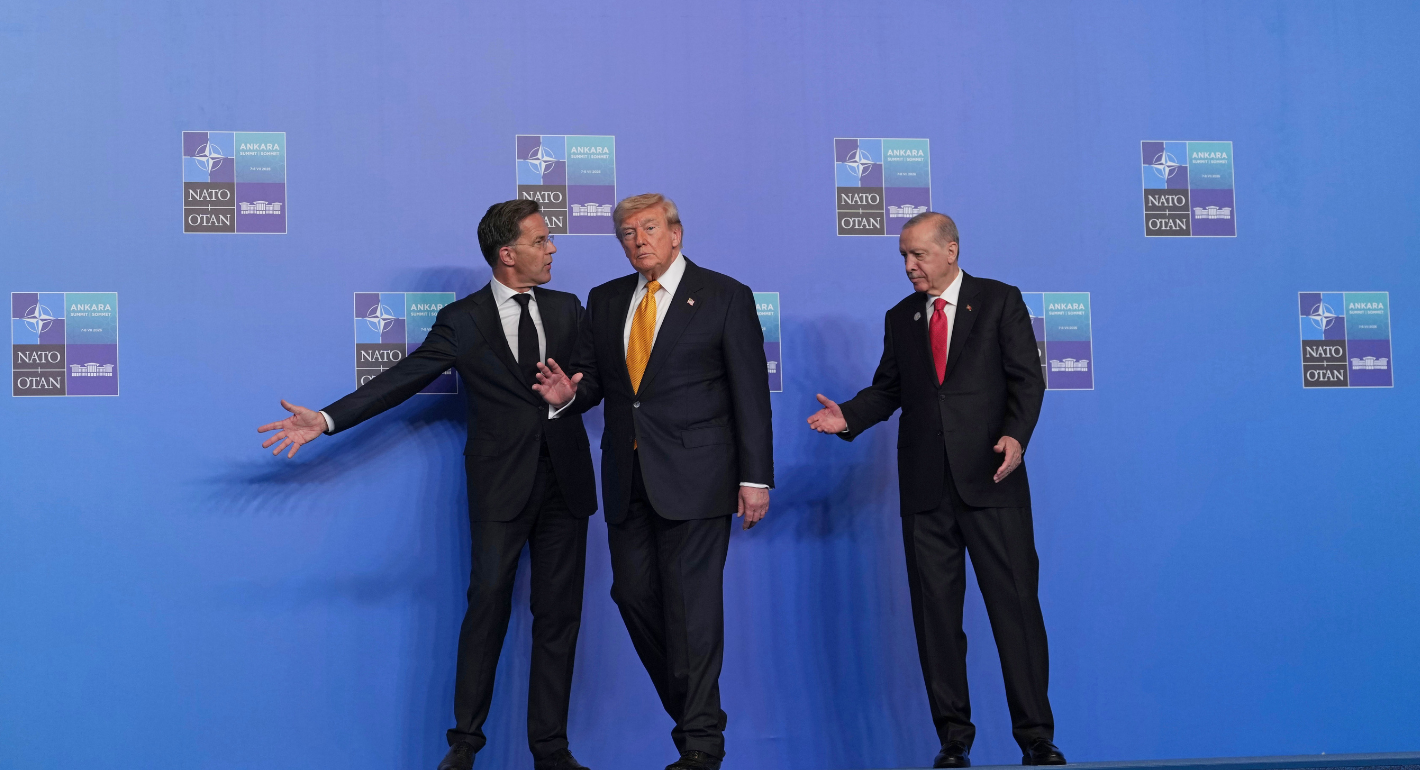
Nearly a year and a half after Europeans leaned into sucking up to Trump, the strategy has produced some benefits when it comes to Ukraine.
Rym Momtaz
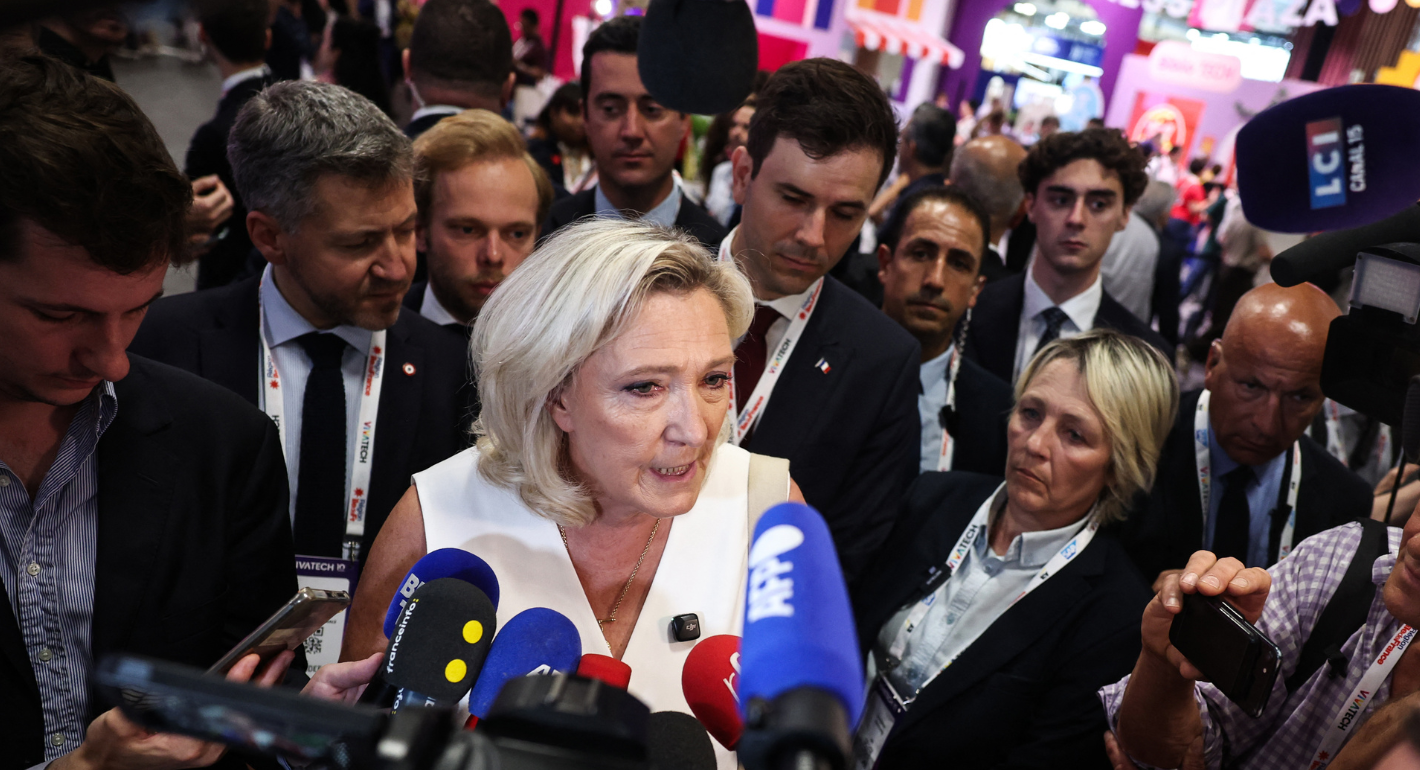
Far-right leader Marine Le Pen can—and will—run in France’s next presidential election. What does the outcome of her appeal against a 2025 embezzlement conviction mean for the country’s political future?
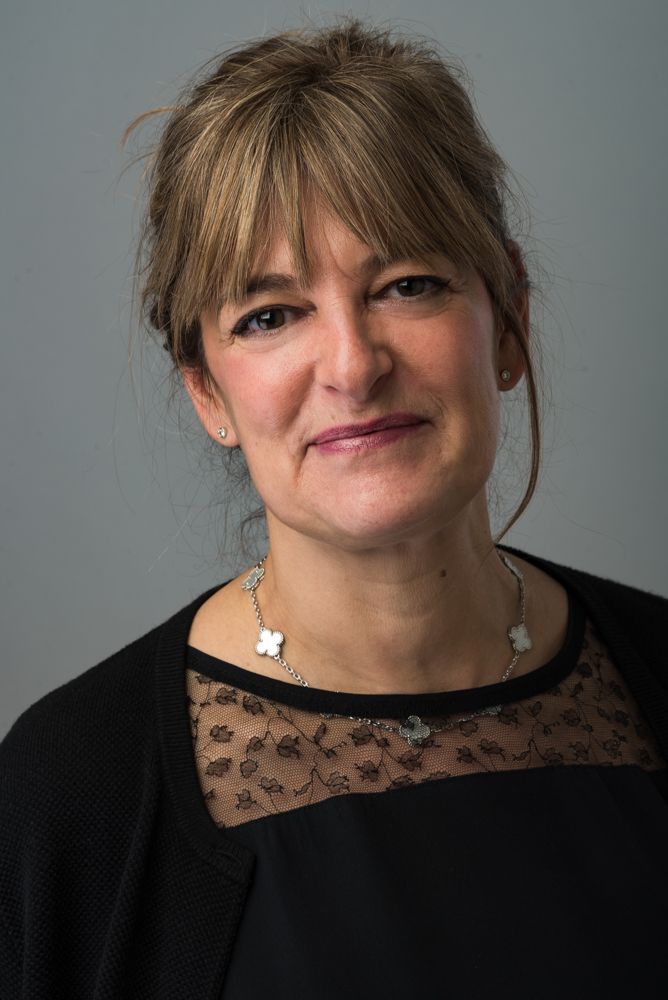
Catherine Fieschi
While Russia is not ready to sue for peace on Europe’s terms, it could still either seek a ceasefire in Ukraine or try escalation. Brussels needs to prepare for both and prioritize that preparation over normative discussions.
Kadri Liik
When Giorgia Meloni very publicly rebuked Donald Trump’s disparaging remarks about her, it surprised many who saw her as a European extension of Trumpism. Is the spat a sign of trouble in the radical right’s transatlantic axis?
Rym Momtaz, ed.