

Commentary
Peter Kellner
{
  "authors": [
    "Peter Kellner"
  ],
  "type": "commentary",
  "blog": "Strategic Europe",
  "centerAffiliationAll": "",
  "centers": [
    "Carnegie Endowment for International Peace",
    "Carnegie Europe"
  ],
  "collections": [
    "EU Integration and Enlargement",
    "Brexit and UK Politics"
  ],
  "englishNewsletterAll": "",
  "nonEnglishNewsletterAll": "",
  "primaryCenter": "Carnegie Europe",
  "programAffiliation": "",
  "programs": [],
  "projects": [],
  "regions": [
    "Europe",
    "Western Europe",
    "United Kingdom"
  ],
  "topics": [
    "EU",
    "Political Reform"
  ]
}
Source: Getty
UK Prime Minister Theresa May’s accusation of election interference by EU officials takes the mutual hostility between London and Brussels to a new level.
Harold Wilson, the UK’s Labour prime minister in the 1960s and 1970s, famously said that a week is a long time in politics. Seldom has that been more true than in the latest Brexit drama. On April 26, UK Prime Minister Theresa May met Jean-Claude Juncker, president of the European Commission, and Michel Barnier, the European Commission’s chief negotiator, for dinner in London. In their public statements afterward, both sides described the meeting as “constructive,” with May looking forward to a “deep and special relationship” with the EU.
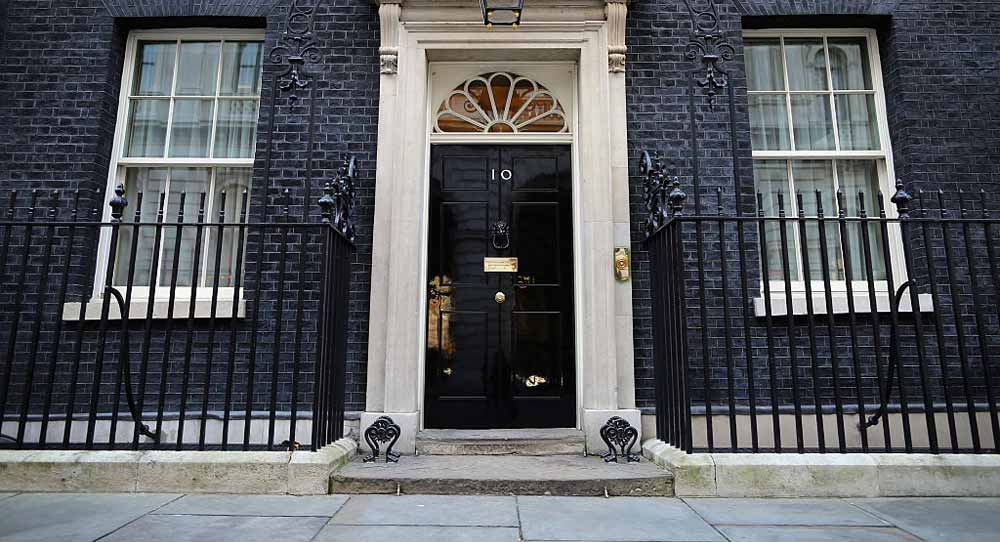
Within days, that picture of friendly cooperation had disintegrated. The Frankfurter Allgemeine Sonntagszeitung published a detailed account of the meeting. The report carried the hallmarks of an in-depth briefing by someone familiar with what had happened in Downing Street, the UK prime minister’s London residence. It described the meeting not as constructive but “disastrous.” Juncker was quoted as saying, “I leave Downing Street 10 times more skeptical than I was before.”
At first, May’s office dismissed these reports and held to the description that the meeting was constructive. But then, German Chancellor Angela Merkel publicly warned against May harboring “illusions” about the Brexit negotiations. A few days later, Barnier presented tough new conditions that he hoped to impose on the UK in the talks. Separately, EU officials indicated that the amount the UK would have to pay to settle its accounts on leaving the bloc would be €100 billion ($110 billion)—far higher than the previously suggested sum of €60 billion ($66 billion).
Following these onslaughts, May changed her tune. Announcing the start of her general election campaign on May 3, she made a remarkable allegation: “The European commission’s negotiating stance has hardened. Threats against Britain have been issued by European politicians and officials. All of these acts have been deliberately timed to affect the result of the general election which will take place on 8 June.”
The British media have accused Juncker and his colleagues of many things; but never before has he been accused of Putin-style behavior to rig another nation’s democracy.
There is an obvious short-term explanation for May’s decision to raise the stakes, just seven days after she had described her talks with Juncker and Barnier as constructive. She was stung by the barrage of leaks and speeches from EU officials and politicians. And it can be assumed that private polling and focus-group research for the Conservatives found that painting “Brussels” (the British media’s useful shorthand for anything to do with the EU) in a lurid light goes down well with their target voters—especially the nearly 4 million people who voted for the Euroskeptic UK Independence Party (UKIP) at the last general election in 2015. Results from the UK’s local elections on May 4 suggested that this strategy is working: UKIP’s support has indeed collapsed.
However, May is no fool. She knows that once the UK’s election is over, the Brexit negotiations will have to begin. They will do so in a hostile atmosphere. To some extent, May can blame this on the people who leaked the details of the talks on April 26. But her accusation of election interference takes the mutual hostility to a new level.
In the medium term—that is, the eighteen months or so of Brexit negotiations to come—two outcomes are possible. The first is that relations between London and Brussels cannot be repaired; the gulf between the two, and the mutual distrust, will prevent a compromise deal from being struck. The UK will leave the EU with no new agreement on such things as free trade or the rights of EU citizens living in Britain. As for the UK’s exit bill, this could be the subject of a bitter court battle—with the possibility that the UK will refuse to comply with any ruling, should the legal forum be the European Court of Justice.
The alternative outcome is that both sides will gradually return to civil negotiations over practical issues, in search of compromises that both sides can accept. This more optimistic view implies that what has been witnessed in recent days is the calculated rattling of sabers for short-term tactical purposes, not a genuine declaration of diplomatic war.
Indeed, it is conceivable that May hopes and expects to strike a compromise deal but knows that this will not satisfy all of her Conservative members of parliament. She will want to keep any future party rebellion as small as possible. She will find it easier to do this if she can persuade them today, before the negotiations begin, that she is genuinely on their side. (In the 2016 referendum on Britain’s EU membership, when May was home secretary, she supported the Remain campaign, albeit half-heartedly.)
More than forty years ago, it was far easier for Richard Nixon, a fiercely anti-Communist Republican U.S. president, to recognize Communist China than it would have been for any liberal-inclined Democrat. By the same token, maybe today it will take a UK prime minister who talks tough to persuade her party and the wider public to accept a compromise deal that costs the UK a significant sum and fails to make a big difference to immigration figures, one of May’s stated aims for the Brexit talks.
Either way, the wisest course might be to discount anything said in the next few weeks, ahead of the UK’s vote on June 8, and wait for the dust to settle afterward.
Peter Kellner is a journalist, political commentator, and former president of YouGov.

Former Nonresident Scholar, Carnegie Europe
Kellner was a nonresident scholar at Carnegie Europe, where his research focused on Brexit, populism, and electoral democracy.
Recent Work
Peter Kellner
Peter Kellner
Carnegie does not take institutional positions on public policy issues; the views represented herein are those of the author(s) and do not necessarily reflect the views of Carnegie, its staff, or its trustees.

Are Germany’s economic, industrial, and political struggles becoming a liability for the EU’s ability to rise to the geopolitical moment?

Rym Momtaz, ed.

European Commission President Ursula von der Leyen is about to give her annual address on the state of the EU. Here’s what she won’t—but should—say.
Rym Momtaz

The aftermath of the Ceuta crisis shows Europe has drawn the wrong lessons. Rather than doubling down on failed migration policies, the EU needs to address the underlying roots of such episodes.

Richard Youngs

An overwhelming victory by a far-right-wing party in a small state in eastern Germany will have major repercussions for Chancellor Friedrich Merz’s coalition.

Judy Dempsey

Canadian Prime Minister Mark Carney has twice inspired praise for standing up to U.S. President Donald Trump: at the 2026 World Economic Forum in Davos and on Canada-U.S. trade negotiations. Is Carney showing a third way better than the EU has in dealing with the Trump administration?
Rym Momtaz, ed.