

Commentary
Are Germany’s economic, industrial, and political struggles becoming a liability for the EU’s ability to rise to the geopolitical moment?
Rym Momtaz, ed.
{
  "authors": [
    "Judy Dempsey",
    "Tomáš Valášek"
  ],
  "type": "commentary",
  "blog": "Strategic Europe",
  "centerAffiliationAll": "",
  "centers": [
    "Carnegie Endowment for International Peace",
    "Carnegie Europe"
  ],
  "collections": [
    "Transatlantic Cooperation",
    "European Defense in a New Transatlantic Context"
  ],
  "englishNewsletterAll": "",
  "nonEnglishNewsletterAll": "",
  "primaryCenter": "Carnegie Europe",
  "programAffiliation": "",
  "programs": [],
  "projects": [],
  "regions": [
    "Europe",
    "North America"
  ],
  "topics": [
    "Security"
  ]
}
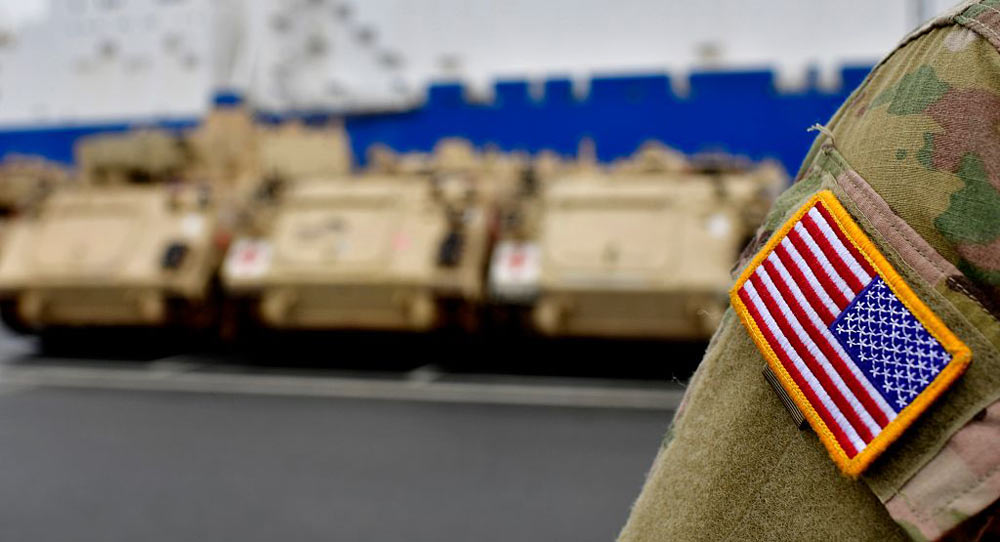
Source: Getty
The U.S. president has a very narrow view of American security policy—one that NATO does not necessarily fit into.
Carnegie Europe is on the ground at the 2018 NATO summit in Brussels, offering readers exclusive access to the high-level discussions as they unfold.
**
For the first time in NATO's history, the president of the United States doesn’t just seem to disagree with the Europeans on substance—he actually appears be willing to walk away from the alliance. Judy Dempsey sat down with Tomas Valášek, director of Carnegie Europe and a former ambassador to NATO, to discuss Donald Trump’s businesslike approach to foreign policy and where the West fits into the U.S. president’s worldview.

Nonresident Senior Fellow, Carnegie Europe
Judy Dempsey is a nonresident senior fellow at Carnegie Europe
Former Director, Carnegie Europe
Valášek was director of Carnegie Europe and a senior fellow, where his research focused on security and defense, transatlantic relations, and Europe’s Eastern neighborhood.
Carnegie does not take institutional positions on public policy issues; the views represented herein are those of the author(s) and do not necessarily reflect the views of Carnegie, its staff, or its trustees.

Are Germany’s economic, industrial, and political struggles becoming a liability for the EU’s ability to rise to the geopolitical moment?

Rym Momtaz, ed.

European Commission President Ursula von der Leyen is about to give her annual address on the state of the EU. Here’s what she won’t—but should—say.
Rym Momtaz

The aftermath of the Ceuta crisis shows Europe has drawn the wrong lessons. Rather than doubling down on failed migration policies, the EU needs to address the underlying roots of such episodes.

Richard Youngs

An overwhelming victory by a far-right-wing party in a small state in eastern Germany will have major repercussions for Chancellor Friedrich Merz’s coalition.
Judy Dempsey

Canadian Prime Minister Mark Carney has twice inspired praise for standing up to U.S. President Donald Trump: at the 2026 World Economic Forum in Davos and on Canada-U.S. trade negotiations. Is Carney showing a third way better than the EU has in dealing with the Trump administration?
Rym Momtaz, ed.