

Commentary
The European Commissioner for Trade is headed to China. But after President Xi’s bridge-building visit to Washington, can a more isolated EU overcome Beijing’s stranglehold on critical raw materials? Who will blink first?
Rym Momtaz, ed.
{
  "authors": [
    "Murat Laumulin"
  ],
  "type": "commentary",
  "blog": "Strategic Europe",
  "centerAffiliationAll": "",
  "centers": [
    "Carnegie Endowment for International Peace",
    "Carnegie Europe"
  ],
  "collections": [],
  "englishNewsletterAll": "",
  "nonEnglishNewsletterAll": "",
  "primaryCenter": "Carnegie Europe",
  "programAffiliation": "",
  "programs": [],
  "projects": [],
  "regions": [
    "Asia",
    "Central Asia",
    "Kazakhstan",
    "Kyrgyz Republic",
    "Tajikistan",
    "Turkmenistan",
    "Uzbekistan",
    "Western Europe"
  ],
  "topics": [
    "Foreign Policy",
    "EU"
  ]
}
Source: Getty
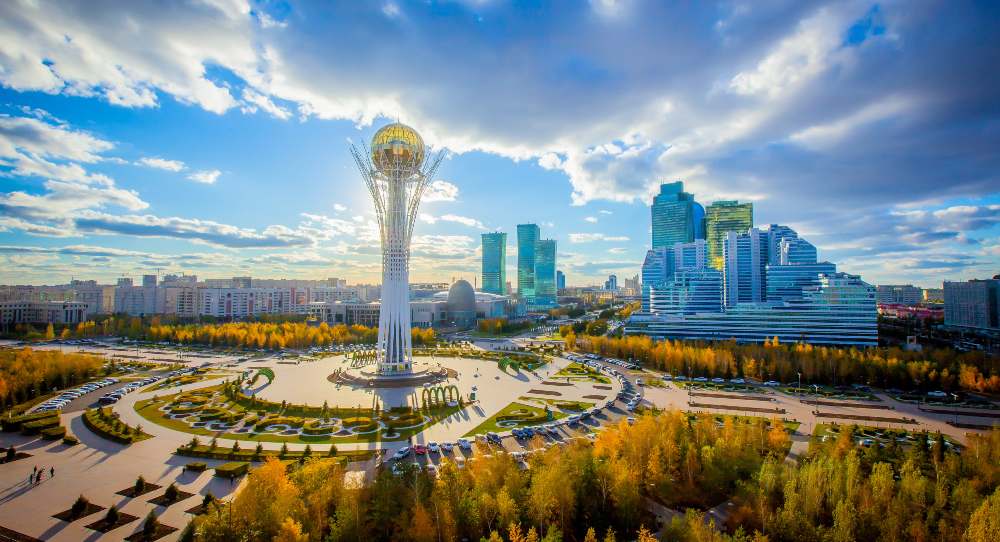
The EU will need to increase its visibility in Central Asia if it wants to have influence in a region facing immense challenges from China and India, but also from Afghanistan and threats of terrorism.
In July 2019, the European Union presented in Bishkek, the capital of Kyrgyzstan, its long-awaited new strategy toward Central Asia.
The strategy, on paper at least, revises the EU’s policy toward the region and how it cooperates with its organizations.
It sets out how the EU and the countries of Central Asia—Kazakhstan, Kyrgyzstan, Tajikistan, Turkmenistan, and Uzbekistan—can work much more closely on issues such as resilience, prosperity, and regional cooperation.
The strategy’s text outlined in the conclusions of the Foreign Affairs Council of June 17 also includes a multitude of other topics, from human rights and working with civil society to a greater focus on security, the environment, and good governance. While the EU has often been criticized for taking too general an approach to the region, the new strategy at least asserts the need to “differentiate between specific countries.”
But is the regional dimension of the EU Central Asia strategy adequately conceived or appropriate for the twenty-first century? This question is particularly relevant given the growing regional role of China and India.
The majority of Central Asian elites share many common views about the EU. They feel that the EU is barely visible in Central Asia, that it is unknown to the general public, that it has complex bureaucratic procedures, and finally, that it has ambitions greater than its actual leverage and ability to deliver.
In short, the EU will need to increase its visibility if it wants to have influence in a region facing immense challenges not only from China and India, but also from Afghanistan and the threats of terrorism.
It is good news that the EU has increased its diplomatic presence in the region, but this needs to be done decisively, with adequately staffed EU delegations in all five states. And the EU needs a different approach in several areas.
For starters, the EU could be much more focused when it comes to development assistance. It could concentrate, for example, on those areas in which the EU most excels and for which it is most admired: culture, education, and regional cooperation. In a nutshell, the new strategy cannot remain a declaration of intent, a criticism of the previous strategy. It must be implemented concretely in the uneasy geopolitical and geoeconomic context of the region.
With the rise of China, Russia’s attempts to regain influence if not control in the region, and the waning of U.S. interest, it is not clear to what extent and how the EU will exert its geopolitical influence. This is because the EU is missing an overarching Eurasian dimension. This would mean identifying cooperative ventures reaching across several regions into the wider Eurasian area. As it is, the prospects for regional cooperation are somewhat bleak.
What is needed is a more assertive strategy. This would entail shifting from a simple, general dialogue with the target country, based on ideas and principles, to a more meaningful dialogue based on explicit criteria for implementing those ideas and principles.
The strategy could also be made more flexible in terms of the projects and mandates that specific EU institutions in the recipient countries are authorized to accomplish.
Furthermore, a more dynamic consultancy mechanism could be established in the EU delegations of the recipient countries, such as an operational monitoring system and the recruitment of highly qualified and independent national professionals for these offices.
The strategy should also focus on regular interactions between EU representatives, the state authorities, civil society activists, and experts and analysts. This is about pooling such potential to achieve joint inputs and outputs.
As for the EU, Central Asia, and other powers—including the United States, Russia, China, and India—working together, several areas could be considered.
One would be cooperation to combat the common security threats coming from Afghanistan and Pakistan, in particular drug trafficking and radical Islamic terrorism.
Another is the regional water-hydropower nexus. Solutions need international consortia with all major players present.
There is also a crucial need to improve transcontinental transport routes for trade. This could include the full opening of the transport corridor through the Caucasus and to facilitate its use by simplifying access through the Kazakhstani port of Aktau and Turkmenistan’s new port at Turkmenbashi.
The Central Asian transit countries also have much to gain from this project, including new hard infrastructure developments—manufacturing plants, bridges, transportation, and communications networks—and soft infrastructure such as the creation of jobs and efficient outlets for local products. As for organizational initiatives, for some issues, EU meetings with the five Central Asian states could include Afghanistan, Pakistan, and India.
That’s the regional picture. What about the strategy’s impact on Kazakhstan?
Kazakhstan is the only Central Asian country to have an Enhanced Partnership and Cooperation Agreement (EPCA) with the EU. The EPCA is designed to be a “new generation” agreement “that will remain a cornerstone of EU engagement with Central Asia.” It seems to bundle everything into one big basket: from strengthening democracy, human rights, and rule of law to the diversification of the economy and supporting the private sector and a market economy. Still, the EU should be lauded for successfully negotiating the agreement. What’s needed now by Brussels and Nur-Sultan is implementing it.
But the EU should be prepared to look beyond the EPCA, especially in light of the changes taking place in the Eastern Partnership (EaP), which is focused on Armenia, Azerbaijan, Belarus, Georgia, Moldova, and Ukraine.
Now that the EaP is no longer synonymous with Association Agreements and Deep and Comprehensive Free Trade Agreements and instead is more focused on state building, good governance, and economic reforms, the EU should consider the merits of Kazakhstan at a future date joining the EaP. It may be unrealistic at the moment but worth mulling over.
On the security front, the EU has some clear security concerns with respect to Central Asia: energy supply security through diversification of sources and linkages with Afghanistan. The European Commission has regrouped Central Asia with South Asia, rather than in a group of post-Soviet states, as part of the multi-regional dimension of its development assistance policy.
In reality, however, the EU is likely to lose the game to Russia and China as long as the geopolitical agent per se remains physically stronger than the normative one in the international system. This game could be made more sophisticated by turning soft power—where Europe is stronger—into a geopolitical asset. That means EU involvement into pan-Eurasian projects (Russian or Chinese) of any form.
Hence the question asked at the beginning of this analysis: Is the EU’s strategy for Central Asia fit for the challenges of the twenty-first century?
It’s incomplete.
Murat Laumulin is a chief researcher at the Kazakhstan Institute for Strategic Studies.
Murat Laumulin
Carnegie does not take institutional positions on public policy issues; the views represented herein are those of the author(s) and do not necessarily reflect the views of Carnegie, its staff, or its trustees.

The European Commissioner for Trade is headed to China. But after President Xi’s bridge-building visit to Washington, can a more isolated EU overcome Beijing’s stranglehold on critical raw materials? Who will blink first?

Rym Momtaz, ed.

The domestic impacts of how long it is taking to end the war in Ukraine have pushed the French electorate to the political extremes and compromised the country’s diplomatic capacity.
Rym Momtaz

Before the next wave of EU enlargement takes place, the union needs to grapple with thorny questions of how power is distributed among its members.


Emil Sondaj Hansen, Ditte Brasso Sørensen

A summer of escalation in the Black Sea has hurt Ukraine economically and is exacerbating world food security. A truce is needed—as is a broader reframing of Europe’s Ukraine strategy.

Thomas de Waal

Are Germany’s economic, industrial, and political struggles becoming a liability for the EU’s ability to rise to the geopolitical moment?
Rym Momtaz, ed.