

Article
Stefan Lehne
{
  "authors": [
    "Stefan Lehne"
  ],
  "type": "commentary",
  "blog": "Strategic Europe",
  "centerAffiliationAll": "",
  "centers": [
    "Carnegie Endowment for International Peace",
    "Carnegie Europe"
  ],
  "collections": [
    "Coronavirus"
  ],
  "englishNewsletterAll": "",
  "nonEnglishNewsletterAll": "",
  "primaryCenter": "Carnegie Europe",
  "programAffiliation": "",
  "programs": [],
  "projects": [],
  "regions": [
    "Europe",
    "Western Europe"
  ],
  "topics": [
    "EU"
  ]
}
Source: Getty
After the undignified scramble for protective equipment in the pandemic’s early stages, the EU’s collective approach to coronavirus vaccines was the right strategy—even if avoidable mistakes were made.
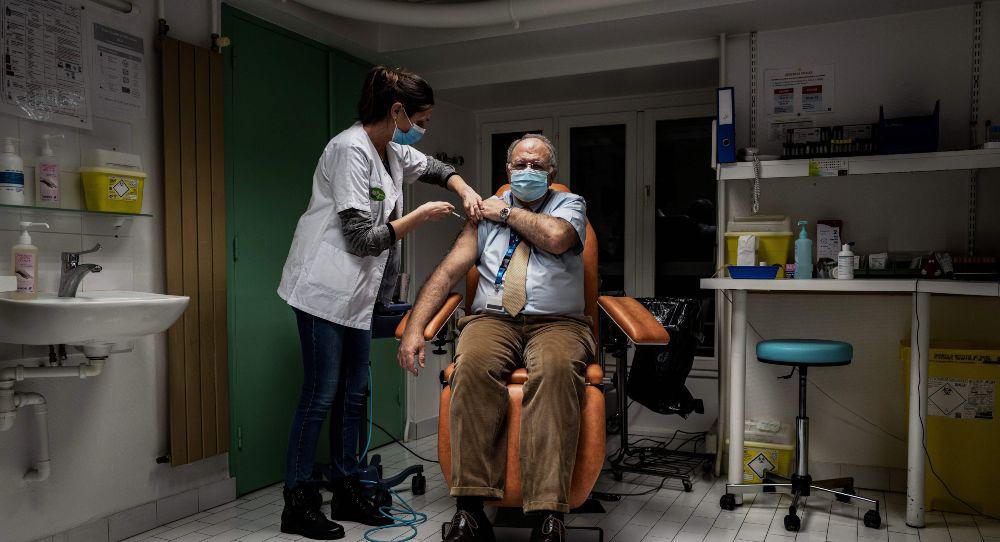
Over the past months, vaccines have emerged as the silver bullet for the coronavirus crisis. One, or rather two, shots in the arms of Europeans are expected to save lives, restart the economy, and boost the mental health of millions worn out by endless lockdowns.
Rarely was a product as eagerly awaited. The pharmaceutical companies engaged in the race to develop and distribute vaccines have become household names and trial results breaking news, and the first-vaccinated senior citizens were celebrated like national heroes.
No wonder that news in January 2021 about delays in the rollout of vaccines then led to bitter disappointment in Europe and a vicious blame game involving governments, the pharmaceutical companies concerned, and the EU—for whom the stakes are particularly high.The EU’s coronavirus vaccination program had been hailed as one of the great breakthroughs of 2020. Now, it risks turning into a gigantic political boomerang.
Following the undignified scramble for protective equipment such as masks in the pandemic’s early stages in spring 2020—when EU members adopted national export bans and tried to outbid each other in global markets—the European Commission pushed hard for adopting a radically different approach on vaccine procurement.
The twenty-seven would act together from the start, supporting the development and production of the vaccines that would then be bought collectively and distributed among member states according to population size.
Eventually, all member states were persuaded to come on board, including those that had already initiated their own procurement processes. Over several months, the commission negotiated contracts with six pharmaceutical companies and assembled a portfolio of 2.3 billion doses. As far as one can tell—since most of the contracts remain secret—it used the market power of the EU to secure favorable conditions on pricing and liability.
However, there was a price to pay for the collective approach: speed. The commission had never done pharmaceutical procurement at this scale. The health authorities of the twenty-seven had to be closely involved, because national governments retain primary responsibility in this area. Inevitably, Brussels did not move at the same speed as Washington, London, or Jerusalem.
In hindsight, the EU should probably have invested more in ramping up production capacity at an early stage—but the process involved a lot of uncertainty, because nobody knew which vaccine would be effective in the end.
Also, in order to reassure a partly vaccine-sceptic European public, the EU—unlike the UK—did not resort to emergency procedures but insisted on full certification of the vaccines through the European Medicines Agency.
Based only on these constraints, the EU would already have fallen behind in vaccination rates compared to Israel, the UK, and the United States. But production shortfalls in January for vaccine producers Pfizer-BioNTech and AstraZeneca forced member states to drastically revise their vaccination plans, putting the EU even further behind.
Under heavy criticism from member states, the commission accused AstraZeneca of not fulfilling its contract and announced the imposition of export controls for vaccines produced inside the EU. Initially, this was to involve controls also on the border between Ireland and Northern Ireland, a major blunder that was quickly corrected but demonstrated the extreme stress levels at the top of the commission.
In all likelihood, the shortage of coronavirus vaccines on the continent will continue for a number of months. The EU’s goal of having 70 percent of the population vaccinated by summer 2021 will be difficult to reach. Inevitably, the question arises: Would it have been better to leave vaccine procurement to national authorities?
Nobody can answer this question conclusively, but it seems likely that—for the EU as a whole—the collective approach will pay off in the end. Without it, the pharmaceutical companies would have been in a stronger negotiating position vis-à-vis individual member states. Vaccines would have been more expensive and supply more uncertain, particularly for the smaller and poorer member states.
It is true that some of the strongest players, such as Germany or France, would probably be in a better position today had they run their own procurement program. But one must also consider the political fallout of another bout of medical nationalism: a survival-of-the-fittest-and-fastest approach to such a life-and-death issue would have fundamentally undermined the solidarity that is at the heart of the European project.
Acting together on vaccines was the right choice for the EU, although avoidable mistakes were made. Rather than engaging in a blame game, the EU, the member states, and the pharmaceutical companies now need to work together to ramp up production as rapidly as possible.
Rather than being discouraged by the mishaps, we should draw encouragement from the fact that—thanks to unprecedented cooperation between science, business, and government—we now have a weapon to defeat the coronavirus pandemic. That same cooperation will help us wield it effectively.

Senior Fellow, Carnegie Europe
Stefan Lehne is a senior fellow at Carnegie Europe in Brussels, where his research focuses on the post–Lisbon Treaty development of the European Union’s foreign policy, with a specific focus on relations between the EU and member states.
Recent Work
Stefan Lehne
Stefan Lehne
Carnegie does not take institutional positions on public policy issues; the views represented herein are those of the author(s) and do not necessarily reflect the views of Carnegie, its staff, or its trustees.

The EU can impose sanctions but struggles to enforce them without the United States. With Washington increasingly disinterested in backing European interests, the bloc must now fend for itself.


Nicu Popescu, Tiago Antunes

Russia is testing the waters of NATO’s mutual defense clause. What do strikes in Romanian territorial waters mean for the alliance’s posture toward Moscow?

Dimitar Bechev

With its public finances in shambles, the far right polling at 35 percent ahead of the 2027 presidential election, and a growing protest movement, is France’s crisis a threat to the EU’s geopolitical awakening?

Rym Momtaz, ed.

Ahead of a tough winter for Ukraine, Donald Trump’s swing back toward Russia bodes ill. But instead of panicking, Kyiv’s European allies are focusing on action.
Rym Momtaz

While the EU and European governments are embracing the much-lauded middle-power moment, this entails three difficult conundrums.

Richard Youngs