

Commentary
While the EU and European governments are embracing the much-lauded middle-power moment, this entails three difficult conundrums.
Richard Youngs
{
  "authors": [
    "Keith Harrington"
  ],
  "type": "commentary",
  "blog": "Strategic Europe",
  "centerAffiliationAll": "",
  "centers": [
    "Carnegie Endowment for International Peace",
    "Carnegie Europe"
  ],
  "collections": [
    "Europe’s Eastern Neighborhood",
    "EU Integration and Enlargement"
  ],
  "englishNewsletterAll": "",
  "nonEnglishNewsletterAll": "",
  "primaryCenter": "Carnegie Europe",
  "programAffiliation": "",
  "programs": [],
  "projects": [],
  "regions": [
    "Russia",
    "Europe",
    "Eastern Europe",
    "Moldova"
  ],
  "topics": [
    "Political Reform",
    "EU",
    "Security",
    "Democracy"
  ]
}
Source: Getty
The citizens of Gagauzia are preparing to elect their next governor. A victory of one of the many pro-Russian candidates could destabilize Moldova and derail its EU aspirations.
A new governor will be elected on April 30 in Gagauzia, a traditionally pro-Russian autonomous region in southern Moldova. The outcome of this election could be crucial, as it may offer Russia a fresh opportunity to create instability in Moldova.
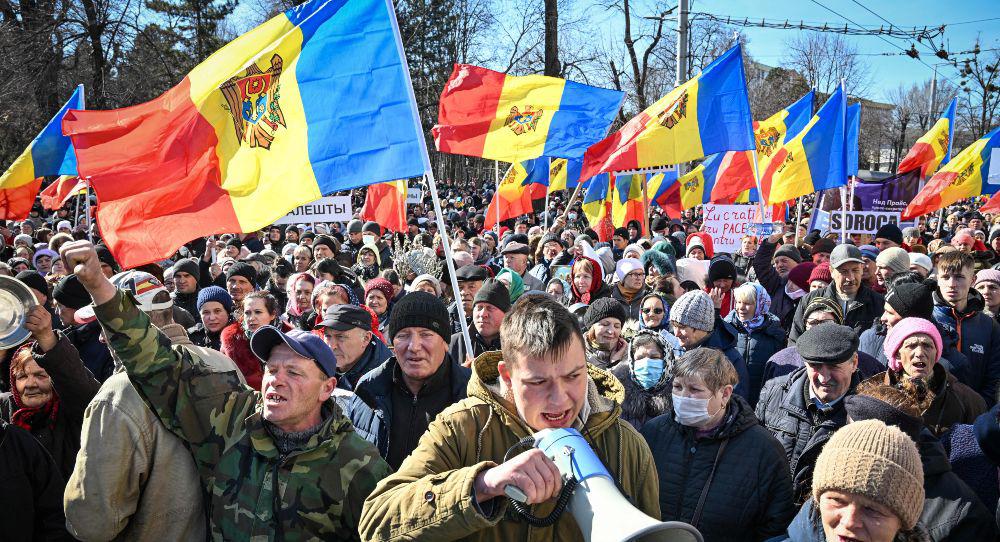
In the last year, Moldova has faced an aggressive hybrid warfare campaign from Russia. The pro-European government’s decision to align with the West and denounce Russia’s invasion of Ukraine has caused outrage in Moscow.
The Kremlin has responded to what it views as Moldova’s insolence by hiking gas prices, sponsoring mass anti-government protests, and even supposedly colluding with the controversial Shor Party to organize a coup.
Moldova’s government has been limiting Russian influence and moving toward the West.
In June 2022, Moldova was granted EU candidacy. In response to Russia’s hybrid warfare campaign, the government passed laws prohibiting Russian TV channels and symbols associated with the war, denied entry to Russian officials, and expelled diplomats.
The rapid deterioration of relations between Chișinău and Moscow has irritated Moldova’s Gagauz minority. Any semblance of pro-European sentiment from Chișinău typically elicits a negative response from the Gagauz. In 2014, the signing of an association agreement between the EU and Moldova prompted the Gagauz to organize an illegal referendum, which saw most participants reject EU integration in favor of closer ties with the Russian-led Eurasian Economic Union (EEU).
Rising inflation and energy bills have made life increasingly unbearable in this already impoverished region, and recent protests suggest many people blame their hardship squarely on Chișinău. As tensions rise, several candidates have made restoring relations with Russia, and preventing European integration, a central part of their election campaign.
Take for example, Grigory Uzun, an independent candidate supported by the pro-Russian Party of Socialists of the Republic of Moldova (PSRM). Moldova’s controversial ex-president, Igor Dodon, attended Uzun’s campaign launch, and encouraged voters to support Uzun because he would “resist European integration.”
Sharing these sentiments is Viktor Petrov, another independent candidate, who might be the most active and vocal advocate for restoring relations. Petrov is currently the chairman of People’s Union of Gagauzia, a pro-Russian populist group he founded in June 2022 to increase his visibility in the lead-up to this weekend’s elections.
Petrov’s group argues that the region’s current hardships are solely down to the current government’s pro-European policy and has presented the restoration of ties with Russia as the only answer to Gagauzia’s problems. Over the past year, the group has organized several rallies and issued multiple statements calling for the cancellation of negotiations with the EU, and for Moldova’s integration into the Russian-led Commonwealth of Independent States and the Eurasian Economic Community—the EEU’s executive body. Petrov has gone as far as to condemn the Ukrainian army for supposedly planning armed incursions into Moldova and has even questioned whether the Bucha massacre was staged.
The controversial Shor Party has also fielded a candidate in the upcoming election, Yevgenia Gutsul. The Shor Party is accused of receiving illicit funding from the Kremlin to organize mass anti-government protests in the capital, and its leader, Ilan Shor, was recently sentenced to fifteen years in absentia for his part in the theft of $1 billion from several Moldovan banks.
Shor has promised that if Gutsul is elected, his party will invest €500 million ($552 million) in the region, create 7,000 new jobs, and increase salaries by 30 percent. Restoring ties with Russia is also an important part of Hutsul’s campaign, as she has promised to open a representative office in Moscow.
Despite the fact that the European Union invests heavily in the region, there are no overtly pro-European candidates in the race. Even the most moderate candidate, Dmitrii Croitor, has refrained from presenting the EU as a viable partner that could help tackle Gagauzia’s problems.
Keeping all this mind, these elections could upset the delicate balance in Gagauzia.
Currently, the contingent of pro-Russian deputies in the Gagauz People’s Assembly, the region’s legislature, are constrained by their more moderate colleagues, and the incumbent governor, Irina Vlah. Despite Vlah’s own personal problems with Moldova’s incumbent president, Maia Sandu, she has welcomed EU assistance, and refused to openly endorse Russia’s invasion of Ukraine.
The pro-EU ruling party and the EU have been scapegoated by pro-Russian populists in the lead-up to the election due to their failure to improve their image in the region. The union invests heavily in Gagauzia, but it has done little to counter the anti-European propaganda spread by the Kremlin.
Similarly, Moldova’s present pro-European administration has embraced a pessimistic approach toward Gagauzia, asserting that their lack of engagement in the region is due to their inability to counteract three decades of Russian propaganda.
With only one popular moderate candidate, the outcome of this local election could either be a close call for Moldova’s stability or the beginning of the worst-case scenario. If one of these many pro-Russian candidates win, not only would this intensify tensions with Chișinău; it could also jeopardize the country’s efforts to achieve closer integration with the European Union, while presenting Moscow with a fresh opportunity to destabilize the nation.
Keith Harrington is a lecturer in modern European history and nationalism studies at Dublin City University’s School of History and Geography.
Keith Harrington
Dublin City University
Keith Harrington is a lecturer in modern European history and nationalism studies at Dublin City University’s School of History and Geography.
Carnegie does not take institutional positions on public policy issues; the views represented herein are those of the author(s) and do not necessarily reflect the views of Carnegie, its staff, or its trustees.

While the EU and European governments are embracing the much-lauded middle-power moment, this entails three difficult conundrums.

Richard Youngs

Much has been said of the changes Brussels is trying to make to the EU enlargement process. Here’s why gradual integration might—or might not—be the answer.

Dimitar Bechev

The European Commissioner for Trade is headed to China. But after President Xi’s bridge-building visit to Washington, can a more isolated EU overcome Beijing’s stranglehold on critical raw materials? Who will blink first?

Rym Momtaz, ed.

The domestic impacts of how long it is taking to end the war in Ukraine have pushed the French electorate to the political extremes and compromised the country’s diplomatic capacity.
Rym Momtaz

Before the next wave of EU enlargement takes place, the union needs to grapple with thorny questions of how power is distributed among its members.


Emil Sondaj Hansen, Ditte Brasso Sørensen