

Commentary
Before the next wave of EU enlargement takes place, the union needs to grapple with thorny questions of how power is distributed among its members.
Emil Sondaj Hansen, Ditte Brasso Sørensen
{
  "authors": [
    "Sten Rynning"
  ],
  "type": "commentary",
  "blog": "Strategic Europe",
  "centerAffiliationAll": "",
  "centers": [
    "Carnegie Endowment for International Peace",
    "Carnegie Europe"
  ],
  "collections": [
    "Transatlantic Cooperation"
  ],
  "englishNewsletterAll": "",
  "nonEnglishNewsletterAll": "",
  "primaryCenter": "Carnegie Europe",
  "programAffiliation": "",
  "programs": [],
  "projects": [],
  "regions": [
    "Russia",
    "Europe",
    "Western Europe",
    "North America"
  ],
  "topics": [
    "NATO"
  ]
}
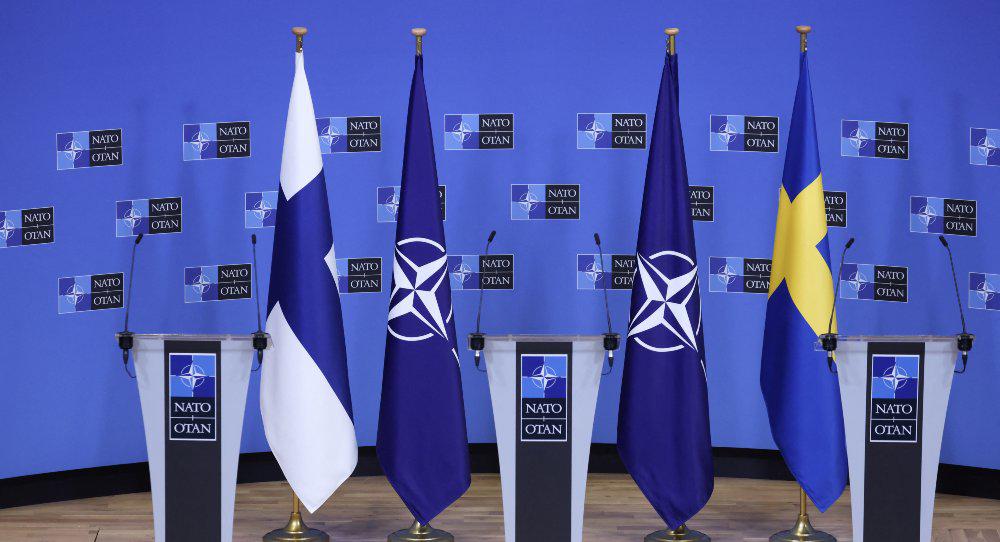
Source: Getty
In a bigger NATO with waning leadership, new members could bolster a political appetite for dialogue with Russia. The alliance must prepare all members to reinforce a collective defense vision.
“There is nothing wrong with change,” Winston Churchill once wrote, “if it is in the right direction.”
And judging from Western punditry, the direction is indeed right when it comes to Sweden and Finland in NATO. They add political solidarity, geographical depth, and military muscle to an alliance confronted with an aggressive Russia. So, what could possibly go wrong?
Political diversity is the answer, and more specifically the risk that new allies might make it harder for NATO to get its balance between collective defense and continental dialogue with Russia right. This is no particular fault of the new allies but rather of an altogether anxious alliance. With enlargement, it is high time for NATO to revive its consensus on continental defense.
NATO is no ordinary alliance. As I lay out in my book on NATO’s history, the alliance from the outset set the bar high, aiming to build a peace that could not be denied. Though NATO also balanced Soviet power, NATO’s primary purpose was to offer American protection for a community in Europe that once and for all would lift its countries beyond the destructive pettiness of balance-of-power politics.
NATO allies have come to doubt this demanding aspiration twice. The first systemic crisis took place in the 1960s, as national rivalry among the great allies exhausted just about everyone. Allies were tempted to go it alone in search of East-West détente, but they stepped back from the brink and agreed in 1967—in what became the Harmel doctrine—that, come what may, NATO will do defense first, and then continental dialogue.
The second crisis came with the end of the Cold War. It was shorter but equally serious. In some NATO quarters the idea flourished that Harmel could be reversed: that dialogue with Russia must come first, to be followed perhaps by a measure of defense. However, the United States insisted on NATO as a foundation for Europe “whole and free.” The result was not Harmel reversed but Harmel renewed.
Why should two new allies upset this apparently strong outlook—and since 2022 written into NATO’s Strategic Concept?
First of all because the allies are in doubt once again. And worryingly, unlike in past crises, time is not on NATO’s side. China and the Global South are growing, and Russia is on a war footing. The United States is wavering; Germany lacks a geopolitical compass; France talks of Europe but delivers more words than action; and Eastern European allies know that “Europe” cannot extend deterrence to protect them.
Under these conditions, it is not a given that NATO will remain committed to an aspirational and exacting “defense first” policy. Sooner or later, some allies will be tempted to open a dialogue with Russia—to take the pressure off and buy Europe time, and to bow to the reality that without the United States, Europe must recognize limits to its community. Such a dash for dialogue would be both a reversal of NATO’s Harmel legacy and a dire sign of waning political will.
The question is whether these new allies, for all their political commitment and defense capabilities, carry luggage that could corrode NATO’s legacy of “defense first.” Is there in their political makeup an inner drive, perhaps contested but visibly there, to go for a “dialogue first” policy in the name of a framework of continental stability and solidarity?
Sweden’s luggage is perhaps the most intriguing.
The country has a distinct two-hundred-year tradition of roaming freely as a nonaligned country of a certain rank. Sweden did abandon neutrality when joining the EU in 1995, but it then drew on the EU’s “soft power” pretension to build a narrative of nonalignment. It involves also strong defense industrial interests, which of course is promising, but which may hamper defense cooperation in the Nordic region because Sweden’s partners prefer to fly the American F-35 fighter jets. Finally, Sweden has learned to play by NATO’s tune of nuclear deterrence, but the appeal of nuclear abolition remains deeply embedded in its politics.
Moreover, the fact of the matter is that on NATO, Sweden’s political leadership followed that of Finland—and, also quite unusually, the lead of Sweden’s public opinion. Sweden’s winding road into NATO has also left political scars. Portions of the Social Democratic party along with the political left wing regret the ability of Turkey to extract concessions on Kurdish political activism. To this political flank, NATO membership came at the cost of international solidarity.
Sweden and Finland should be welcomed into NATO for many reasons, and they can both be expected to work hard to fit the bill.
However, they carry distinct political traditions that highlight the fragility of NATO’s vision of a transatlantic community. This vision presupposes political solidarity and a “defense first” policy. Diversity and waning leadership could instead foster well-intended but ill-fated thinking on “dialogue first,” meaning Russia first. Were this to happen, seventy-five years of transatlantic peace will have become a parenthesis.
Sten Rynning is director of the Danish Institute for Advanced Study at the University of Southern Denmark.
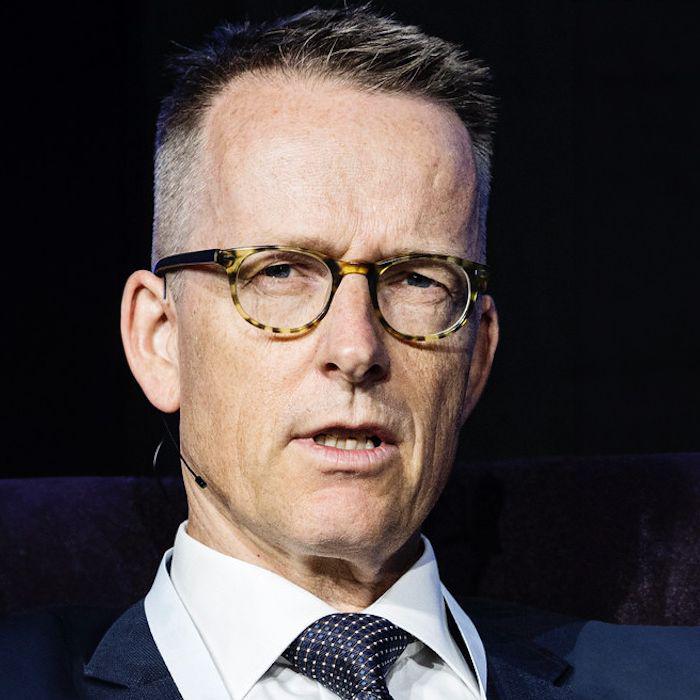
Sten Rynning
University of Southern Denmark
Sten Rynning is director of the Danish Institute for Advanced Study at the University of Southern Denmark.
Carnegie does not take institutional positions on public policy issues; the views represented herein are those of the author(s) and do not necessarily reflect the views of Carnegie, its staff, or its trustees.

Before the next wave of EU enlargement takes place, the union needs to grapple with thorny questions of how power is distributed among its members.


Emil Sondaj Hansen, Ditte Brasso Sørensen

A summer of escalation in the Black Sea has hurt Ukraine economically and is exacerbating world food security. A truce is needed—as is a broader reframing of Europe’s Ukraine strategy.

Thomas de Waal

Are Germany’s economic, industrial, and political struggles becoming a liability for the EU’s ability to rise to the geopolitical moment?

Rym Momtaz, ed.

European Commission President Ursula von der Leyen is about to give her annual address on the state of the EU. Here’s what she won’t—but should—say.
Rym Momtaz

The aftermath of the Ceuta crisis shows Europe has drawn the wrong lessons. Rather than doubling down on failed migration policies, the EU needs to address the underlying roots of such episodes.

Richard Youngs