

Commentary
- +1
Miloš Pavković, Fitim Gashi, Iliriana Gjoni, …
{
  "authors": [
    "Iliriana Gjoni"
  ],
  "type": "commentary",
  "blog": "Strategic Europe",
  "centerAffiliationAll": "",
  "centers": [
    "Carnegie Endowment for International Peace",
    "Carnegie Europe"
  ],
  "collections": [
    "EU Integration and Enlargement"
  ],
  "englishNewsletterAll": "",
  "nonEnglishNewsletterAll": "",
  "primaryCenter": "Carnegie Europe",
  "programAffiliation": "",
  "programs": [],
  "projects": [],
  "regions": [
    "United States",
    "Western Balkans",
    "Europe"
  ],
  "topics": [
    "Political Reform",
    "Democracy",
    "EU Enlargement",
    "EU Foreign Policy"
  ]
}
Source: Getty
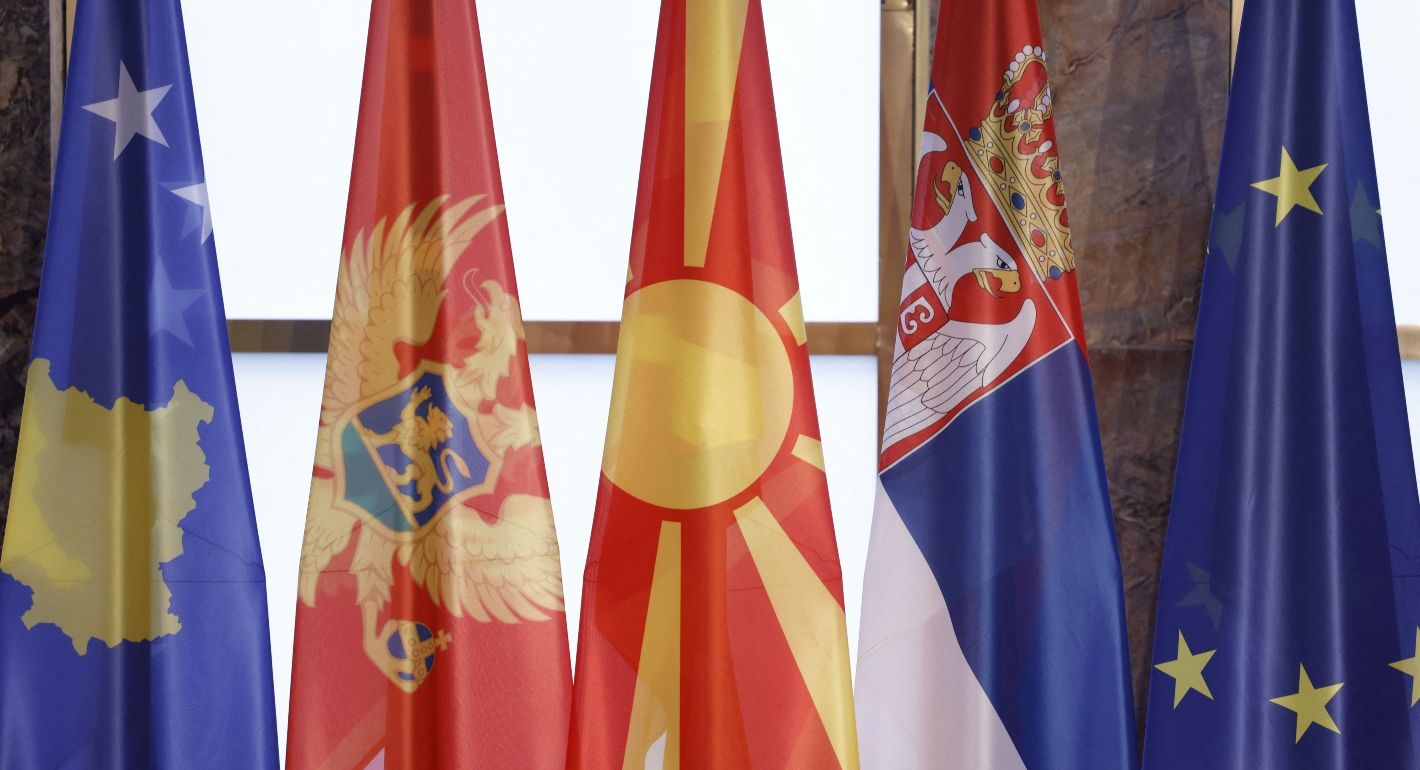
Richard Grenell’s return to U.S. diplomacy would present both risks and opportunities for the Western Balkans. Regardless of any flashy deals the new administration may offer, countries in the region must remain steadfast in their pursuit of democratization and European integration.
Despite expectations, Richard Grenell, who was special presidential envoy for Serbia and Kosovo peace negotiations during U.S. President-elect Donald Trump’s first mandate, was not nominated for secretary of state. And while in the Western Balkans sporadic celebrations broke out, it might be too soon to rejoice.
Grenell is still poised for a key diplomatic role in the upcoming Trump administration. His frequent visits to the Western Balkans suggest that a role focused on the wider region could be within reach.
He could also be appointed as envoy for the Russia-Ukraine conflict. There might be a more cunning plan behind such a nomination: Ending the war in Ukraine could burnish Grenell’s credentials enough to propel him into the secretary of state position down the line.
Grenell gained significant experience in the Western Balkans during the first Trump administration, and has been building on his ties there ever since. Back then, his signature move was quick peacemaking based on economic normalization, albeit often while overlooking deeper inter-ethnic grievances and rule-of-law spoilers.
The Balkans, for Grenell, is a hot zone to manage and profit from rather than a key frontier region to engage strategically, especially in light of Russia’s ambitions. While this approach does appeal to a part of the elites who have made business deals with him, Grenell’s disregard for reform and democratization could put the countries of the region on a collision course with the EU accession process.
But it doesn’t have to be an either/or proposition: Western Balkans countries could hedge, continuing their engagement with the incoming U.S. administration while staying on track with the EU. Although EU enlargement has often been touted as a strategic priority for Brussels, progress has been slow. While the EU’s technocratic accession process has been challenging for Western Balkan hopefuls, majorities in five of the six countries of the region continue to support joining the bloc.
For democratization to prevail, the Western Balkans must avoid being seduced by the band-aid solutions of the incoming U.S. administration. Flashy deals may provide temporary economic relief for a historically underserved region, but they risk undermining the systemic reforms needed to address governance issues. They also aren’t matches for the historic grievances that continue to course through the region, as Serbia’s inflammatory rhetoric during the UN’s adoption of the Resolution on Srebrenica and its lobbying against Kosovo’s bid to join the Council of Europe show.
Instead, leveraging Grenell’s economic focus while remaining committed to EU integration could offer a more balanced path forward. There are several possible scenarios at this stage.
First, Grenell could continue engaging with like-minded leaders in the region, reinforcing Serbia’s dominant position. During Joe Biden’s presidency, he brokered real estate deals between Trump’s son-in-law and regional leaders, creating lucrative hotspots in Belgrade and Albania’s Sazan Island. These moves outraged citizens but energized elites, illustrating Grenell’s preference for top-down economic agreements.
In the latter scenario, Kosovo would be pushed into further isolation, unable to set its terms for participation in international forums. Kosovo’s Prime Minister Albin Kurti, no stranger to Grenell’s influence after being ousted in 2020 under U.S. pressure, now enjoys broad domestic support for his sovereignty-first approach and incorruptibility. However, his principled stance has left him diplomatically marginalized, and with Grenell setting the tone, Kosovo’s politics may again face external interference.
In another scenario, Grenell could focus on the Russia-Ukraine conflict, with sporadic and inconsistent engagement in the Balkans. In this case, current dynamics could continue largely unchanged. Serbian President Aleksandar Vučić, as a master of balancing allegiances, avoids aligning with EU sanctions against Russia while mimicking progress on Serbia’s EU accession path. Meanwhile, Hungarian Prime Minister Viktor Orbán’s latest push for Serbia to open negotiations on Cluster 3 of the accession process showed that autocratic allegiances on European soil are strong. However, with Hungary’s EU Council presidency ending soon, this momentum may shift. Without strong U.S. involvement, Vučić and other leaders might continue deepening ties with China, creating friction with Grenell and Trump. This scenario risks greater fragmentation and eroding trust in Western values unless the EU accelerates concrete enlargement efforts.
Finally, in the more optimistic scenario, Grenell’s deal-making talent could break through the bureaucratic inertia holding back the region’s EU accession progress. If he were to balance his economic pragmatism with a recognition of the importance of governance and rule of law, his involvement could revitalize stalled regional ambitions. Mechanisms like the EU’s Growth Plan for the Western Balkans could provide a platform for aligning U.S. and EU interests, with Grenell’s style complementing the EU’s slower, steadier approach. However, this would require both the United States and EU navigating their differences and working toward shared goals—an ambitious but not impossible task.
Across the Balkans, autocrats would find it easy to align with Grenell’s transactional style, toning down nationalist rhetoric while capitalizing on economic opportunities. Smaller countries where the United States has less to gain may not be direct targets; they would still feel the destabilizing effects of regional shifts. The EU must step up by keeping the enlargement process vibrant, offering interim rewards for progress and maintaining consistent engagement with the region’s frontrunners. The value of regular visits to the region is not to be underestimated. The Western Balkans risk becoming a swing region between U.S. and EU influence: Managing this balance will be crucial.
Grenell’s potential return presents both risks and opportunities for the Western Balkans. His decisions—whether favoring strongmen, disengaging, or pursuing pragmatic reinvention—will shape not only his legacy but also the region’s trajectory at this pivotal moment. While the winds of change blow strongly, the Western Balkan nations must remain committed to their long-term goals of democratization and European integration—processes far more enduring than the autocrats or flashy deals of the moment.

Research Analyst, Carnegie Europe
Iliriana Gjoni is a research analyst at Carnegie Europe, where she focuses on EU enlargement and Western Balkan politics.
Recent Work
Miloš Pavković, Fitim Gashi, Iliriana Gjoni, …
Iliriana Gjoni
Carnegie does not take institutional positions on public policy issues; the views represented herein are those of the author(s) and do not necessarily reflect the views of Carnegie, its staff, or its trustees.

The European Commissioner for Trade is headed to China. But after President Xi’s bridge-building visit to Washington, can a more isolated EU overcome Beijing’s stranglehold on critical raw materials? Who will blink first?

Rym Momtaz, ed.

The domestic impacts of how long it is taking to end the war in Ukraine have pushed the French electorate to the political extremes and compromised the country’s diplomatic capacity.
Rym Momtaz

Before the next wave of EU enlargement takes place, the union needs to grapple with thorny questions of how power is distributed among its members.


Emil Sondaj Hansen, Ditte Brasso Sørensen

Are Germany’s economic, industrial, and political struggles becoming a liability for the EU’s ability to rise to the geopolitical moment?
Rym Momtaz, ed.

European Commission President Ursula von der Leyen is about to give her annual address on the state of the EU. Here’s what she won’t—but should—say.
Rym Momtaz