

{
  "authors": [
    "Thomas Carothers",
    "Zsuzsanna Végh",
    "Róbert László",
    "András Léderer",
    "Viktória Serdült",
    "Áron Tímár"
  ],
  "type": "event",
  "centerAffiliationAll": "dc",
  "centers": [
    "Carnegie Endowment for International Peace"
  ],
  "englishNewsletterAll": "democracy",
  "nonEnglishNewsletterAll": "",
  "primaryCenter": "Carnegie Endowment for International Peace",
  "programAffiliation": "DCG",
  "programs": [
    "Democracy, Conflict, and Governance"
  ],
  "regions": [
    "Central Europe"
  ],
  "topics": [
    "Democracy"
  ]
}
How Fidesz Lost: Cross-Sectoral Mobilization in Hungary’s 2026 Election
Mon, June 22nd, 2026
Live Online
Invalid video URL
After sixteen years in power, Viktor Orbán’s Fidesz was defeated in Hungary’s 2026 parliamentary election by the newcomer Tisza party, led by former Fidesz member Péter Magyar. The result marked a major turning point for Hungary and offers broader lessons about the vulnerabilities of electoral autocracies.
Fidesz’s defeat became possible through the convergence of multiple actors and factors. The 2024 clemency scandal shook the Orbán regime’s moral legitimacy while its economic legitimacy was already in decline, creating fertile ground for the mobilization of dissent. In the lead up to the 2026 parliamentary election, Tisza ran a disciplined campaign centered on direct engagement and nationwide mobilization, while other opposition parties stepped back to avoid fragmenting the anti-Fidesz vote. Civil society actors sustained dissent and organized election-day monitoring to deter manipulation. Independent media gained new momentum by amplifying credible reporting and providing a platform for defectors and whistleblowers.
Please join us for a conversation with Political Capital’s Róbert László, Hungarian Helsinki Committee’s András Léderer, HVG’s Viktória Serdült, De! Action Community’s Áron Tímár, and moderator Zsuzsanna Végh of the German Marshall Fund of the United States, as they discuss the factors that set 2026 apart from earlier challenges to Fidesz, the impact of cross-sectoral mobilization on election results, and lessons for democratic actors confronting entrenched electoral autocracies elsewhere. Introductory remarks will be offered by Tom Carothers, director of the Democracy, Conflict, and Governance program at the Carnegie Endowment for International Peace.
Lessons from Global Democratic Resistance is a public panel series that brings together frontline activists, civic leaders, institutional actors, and field-informed scholars to examine how democratic actors have resisted, responded to, and learned from democratic backsliding across countries. The series aims to identify practical lessons and comparative insights for those defending democracy today and is organized by the Carnegie Endowment for International Peace in collaboration with the Ash Center for Democratic Governance at the Harvard Kennedy School; the Cornell Center on Global Democracy; Perry World House at the University of Pennsylvania; the Kellogg Institute for International Studies at the University of Notre Dame; the Democratic Futures Project at the University of Virginia; Stanford’s Center on Democracy, Development and the Rule of Law.
Carnegie does not take institutional positions on public policy issues; the views represented herein are those of the author(s) and do not necessarily reflect the views of Carnegie, its staff, or its trustees.
Event Speakers
Harvey V. Fineberg Chair for Democracy Studies; Senior Fellow, Democracy, Conflict, and Governance Program

Thomas Carothers, a senior fellow in the Carnegie Endowment for International Peace’s Democracy, Conflict, and Governance Program, is a leading expert on comparative democratization and international support for democracy.
Zsuzsanna Végh
Program Officer, German Marshall Fund

Zsuzsanna Végh is a program officer in the European Resilience program of the German Marshall Fund of the United States and an affiliate researcher at the European Council on Foreign Relations. Her research focuses on challenges to liberal democracy in Europe, particularly the rise of the far right and its influence on EU politics, foreign policy, and democratic governance. She also analyzes processes of democratic backsliding and resilience, with expertise in Central Europe and a particular focus on Hungary. She worked at the European University Viadrina as a researcher and lecturer in 2017–2024, and at the Center for European Neighborhood Studies of Central European University in 2012–2017. She holds Master’s degrees in international relations and European studies from Central European University and in international studies from the Eötvös Loránd University in Budapest, Hungary.
Róbert László
Election Expert, Political Capital
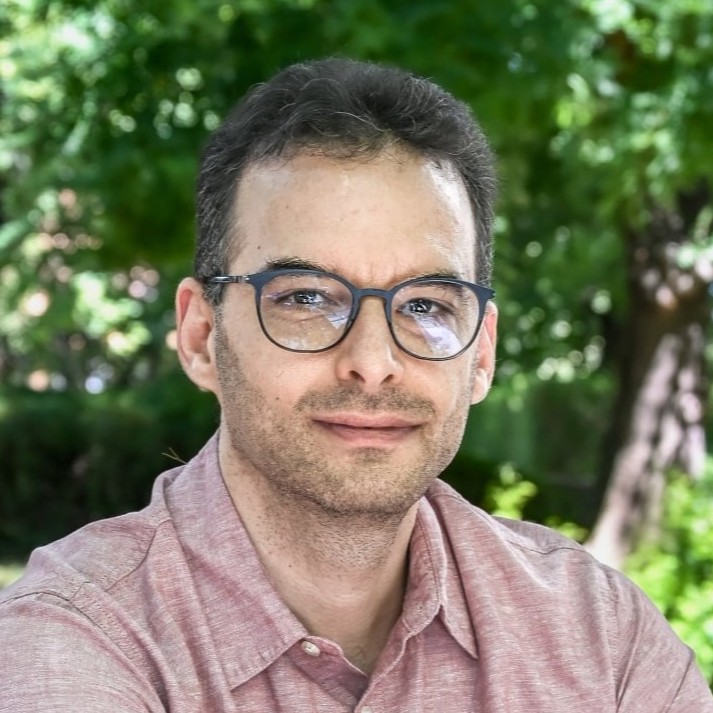
Róbert László is an election expert at Political Capital, a Hungarian think tank. Róbert earned his university degrees from the University of Economics and Public Administration of Budapest (2004) and Corvinus University (2009). He is a professor in the electoral programme at the National University of Public Service, Budapest. Robert’s research speciality is the Hungarian electoral system, and he is the leader of Political Capital’s initiatives in this area.
András Léderer
Head of Advocacy, Hungarian Helsinki Committee
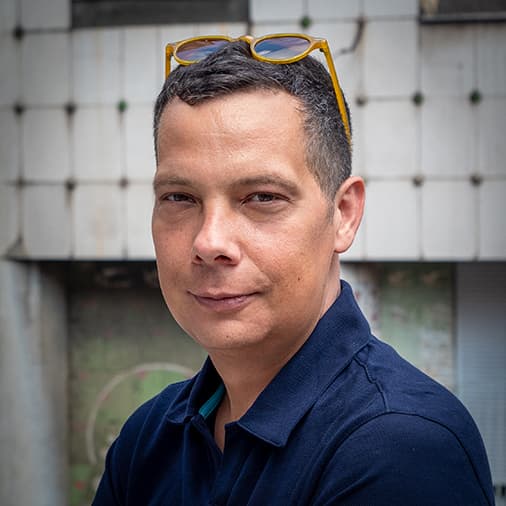
András Léderer leads the Hungarian Helsinki Committee's advocacy efforts with a specific focus on international protection and the rule of law and has gathered a decade of experience in using international fora and mechanisms as well as media communication for this purpose. András also has vast field experience, including documenting unlawful push-backs and law enforcement violence on the Serbian-Hungarian border. Through training, networking and advocacy, he also supports grassroots groups working on the issue of border violence. András earned his BSc (terrorism, conflict, and security) at Aberystwyth University and his MSc (violence, conflict, and development) at the School of Oriental and African Studies in London. He has co-developed and teaches a course on the sociology of terrorism at ELTE, Hungary’s largest university. He is a proud member of the first Obama Leaders: Europe alumni group.
Viktória Serdült
Senior Journalist, HVG

Viktória Serdült is a senior journalist at HVG, one of Hungary’s leading independent news outlets. She specializes in in-depth political reporting and analysis, with a focus on justice, the rule of law, foreign affairs, and social issues. Before joining HVG, she worked for several major Hungarian media organizations, including Origo and Magyar Hírlap, and served as editor-in-chief of Blikk’s online platform. Her journalism has received multiple awards. In 2021, she was awarded the Anna Földes Interview Prize, and in 2024 she received the Special Prize of the “About Poverty with Dignity” Journalism Award, which recognizes reporting that portrays social exclusion and poverty with accuracy, empathy, and respect. A frequent commentator for international media, she has also published extensively in the English-language press. She holds an MA in English Language and Literature from Eötvös Loránd University in Budapest and earned her journalism qualification from the Bálint György Journalism Academy of the Hungarian Association of Journalists (MÚOSZ).
Áron Tímár
Founder and President, De! Action Community

Áron Tímár is founder and president of the De! Action Community, a nationwide movement for election integrity, democratic governance, and civic engagement. He is the creator of ‘The Price of a Vote’ documentary that, released before the April 2026 parliamentary election, revealed mechanisms of election fraud in the Hungarian countryside and mobilized thousands of civil observers who deterred practices like vote buying and chain voting on election day. He hold a law degree from the Pázmány Péter Catholic University, studied economics at the Heidelberg University and Chinese language and literature at the Shanghai Jiao Tong University.