

Commentary
Dmitri Trenin
{
  "authors": [
    "Dmitri Trenin"
  ],
  "type": "legacyinthemedia",
  "centerAffiliationAll": "",
  "centers": [
    "Carnegie Endowment for International Peace",
    "Carnegie Russia Eurasia Center"
  ],
  "collections": [],
  "englishNewsletterAll": "",
  "nonEnglishNewsletterAll": "",
  "primaryCenter": "Carnegie Russia Eurasia Center",
  "programAffiliation": "",
  "programs": [],
  "projects": [],
  "regions": [
    "Caucasus",
    "Russia",
    "Georgia"
  ],
  "topics": [
    "Foreign Policy"
  ]
}
Source: Getty
Although in the short term the basis for a ceasefire has formed between Russia and Georgia, the conflict has entirely transformed the region. Russian peacekeepers can now no longer operate alone in the separatist regions. In addition, South Ossetia and Abkhazia cannot revert back to Georgia. Finally, the already deteriorating Russia-U.S. relationship will now face a new set of challenges.
Source: CFR.org

There lies a chance for Europe, and above all, the European Union, to move forward with facilitating conflict resolution. The hardest issue will be that of the final status of South Ossetia and Abkhazia. It is crystal clear that they will not revert to Georgia. It is also clear that no political leader in Georgia is ready to admit that. A long process of negotiations and agonizing reflection lies ahead, and it will only be completed when borders are finally recognized by all parties, and confirmed by the international community.
At present, European countries are divided in their assessment of the war and Russia’s reaction. Moscow will seek to reach out to those which, like France, Germany, Italy, and Spain, take a more moderate line, and hopes to work with them on a broad security agenda for the continent. Beyond conflict resolution in Georgia, it includes such issues as the Ukrainian leadership’s bid to join NATO [the North Atlantic Treaty Organization] and the U.S. plans to deploy elements of the ballistic missile defense system in Central Europe. With the Georgian conflict finally erupted, the two issues are looming even more prominently on the horizon.
Russia’s relations with the United States have been deteriorating. Moscow blames Washington for having trained and equipped the Georgian military that has been responsible for killing about two thousand Russian citizens in the nighttime shelling of the South Ossetian capital. That, they point out, amounts to half the casualties the United States suffered on 9/11.
Former Director, Carnegie Moscow Center
Trenin was director of the Carnegie Moscow Center from 2008 to early 2022.
Recent Work
Dmitri Trenin
Dmitri Trenin
Carnegie does not take institutional positions on public policy issues; the views represented herein are those of the author(s) and do not necessarily reflect the views of Carnegie, its staff, or its trustees.

By failing to address Palestinian representation, the current process is bound to lead to just another temporary arrangement.

Nathan J. Brown
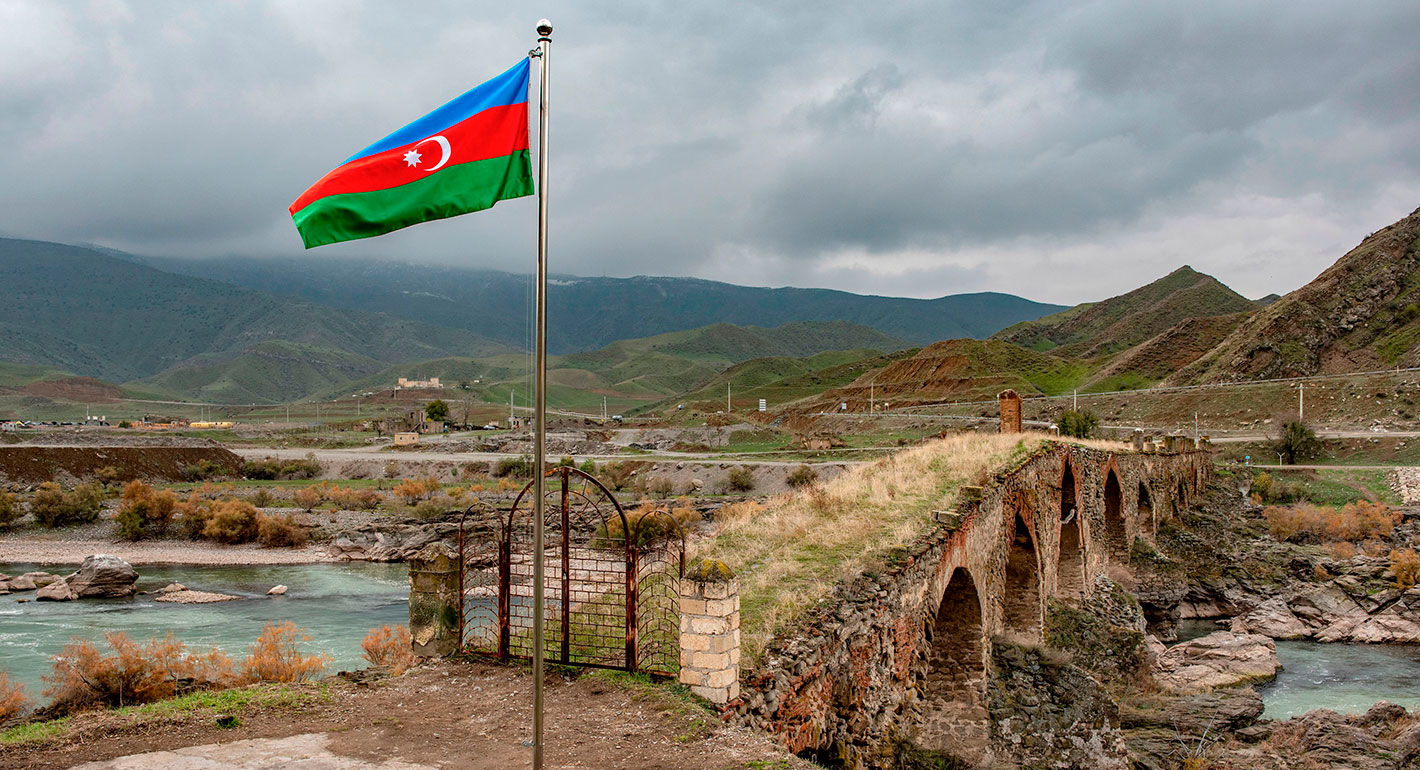
In an interview, Sergei Melkonian discusses Armenia’s and Azerbaijan’s careful balancing act among the United States, Israel, and Iran.

Armenak Tokmajyan

Just look at Iraq in 1991.

Marwan Muasher

A coalition of states is seeking to avert a U.S. attack, and Israel is in the forefront of their mind.

Michael Young

Baku may allow radical nationalists to publicly discuss “reunification” with Azeri Iranians, but the president and key officials prefer not to comment publicly on the protests in Iran.

Bashir Kitachaev