• Research
  • Diwan
  • About
  • Experts
Carnegie Middle East logoCarnegie lettermark logo
LebanonIran
{
  "authors": [
    "Dmitri Trenin"
  ],
  "type": "legacyinthemedia",
  "centerAffiliationAll": "",
  "centers": [
    "Carnegie Endowment for International Peace",
    "Carnegie Russia Eurasia Center"
  ],
  "collections": [],
  "englishNewsletterAll": "",
  "nonEnglishNewsletterAll": "",
  "primaryCenter": "Carnegie Russia Eurasia Center",
  "programAffiliation": "",
  "programs": [],
  "projects": [
    "Eurasia in Transition"
  ],
  "regions": [
    "Central Asia",
    "Caucasus",
    "Russia",
    "Eastern Europe",
    "Ukraine"
  ],
  "topics": [
    "Political Reform",
    "Security",
    "Foreign Policy"
  ]
}
REQUIRED IMAGE

REQUIRED IMAGE

In The Media
Carnegie Russia Eurasia Center

Russia's Spheres of Interest, not Influence

Russia retains interests throughout the post-Soviet regions, but Moscow’s considerable influence is no longer dominant.

Link Copied
By Dmitri Trenin
Published on Sep 22, 2009
Project hero Image

Project

Eurasia in Transition

Learn More

Source: The Washington Quarterly

In the aftermath of the 2008 Georgian war, President Dmitri Medvedev, setting out Russia’s foreign policy principles, spoke about the country’s spheres of “privileged interests” and the government’s obligation to defend Russian citizens abroad. Coming less than a month after Russia’s armed response to Georgia’s attack on its breakaway province of South Ossetia, where most residents had been provided with Russian passports, this statement produced a shock. It sounded as if Moscow was reclaiming the Soviet geopolitical legacy of Russia’s spheres of influence and was prepared to intervene with force in countries with significant ethnic Russian minorities. The talk of Russian assertiveness, making rounds since the mid-2000s, was substantially enhanced by accusations of Russia’s outright aggressive behavior. The year that followed has seen an unprecedented global financial and economic crisis, a new administration in Washington, and a decrease in tensions between Russia and the United States. The issues that had produced a near confrontation between the two—such as the United States’ single-minded support for President Mikheil Saakashvili of Georgia; Russia’s actions in Abkhazia and South Ossetia; NATO’s membership action plans (MAPs) to Georgia and Ukraine; and plans to install U.S. ballistic missile defenses in the Czech Republic and Poland—while not completely off the table, are now clearly on the backburner.
 
Toward the end of 2008, however, Foreign Minister Sergei Lavrov, in a wide-ranging statement, made a very strong case for the “unique relations” that bound Russia and the countries of the post-Soviet Commonwealth of Independent States (CIS). He spoke about “civilizational unity” of the lands that used to be the Union of Soviet Socialist Republics, and before that, the Russian empire. Thus, a question arose: what is the difference, if any, between the sphere of interests proclaimed by the current Russian leadership, and the more traditional sphere of influence condemned by international public opinion? What, after all, are Moscow’s motives and its aims?

About the Author

Dmitri Trenin

Former Director, Carnegie Moscow Center

Trenin was director of the Carnegie Moscow Center from 2008 to early 2022.

    Recent Work

  • Commentary
    Mapping Russia’s New Approach to the Post-Soviet Space

      Dmitri Trenin

  • Commentary
    What a Week of Talks Between Russia and the West Revealed

      Dmitri Trenin

Dmitri Trenin
Former Director, Carnegie Moscow Center
Political ReformSecurityForeign PolicyCentral AsiaCaucasusRussiaEastern EuropeUkraine

Carnegie does not take institutional positions on public policy issues; the views represented herein are those of the author(s) and do not necessarily reflect the views of Carnegie, its staff, or its trustees.

More Work from Malcolm H. Kerr Carnegie Middle East Center

  • Commentary
    Diwan
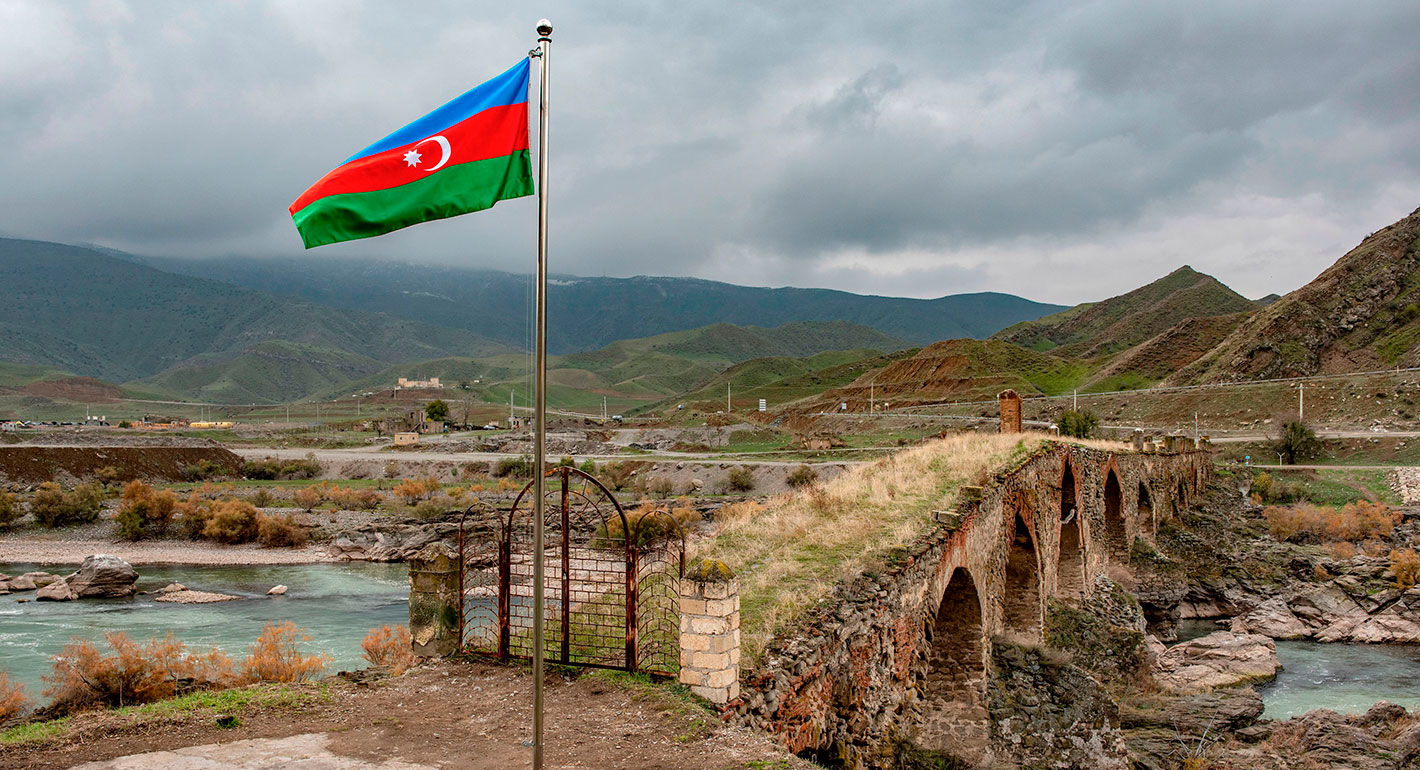
    The Gulf Conflict and the South Caucasus

    In an interview, Sergei Melkonian discusses Armenia’s and Azerbaijan’s careful balancing act among the United States, Israel, and Iran.

      Armenak Tokmajyan

  • people watching smoke rising at sunrise from rooftops
    Commentary
    Emissary
    Bombing Campaigns Do Not Bring About Democracy. Nor Does Regime Change Without a Plan.

    Just look at Iraq in 1991.

      Marwan Muasher

  • Commentary
    Diwan
    Iran and the New Geopolitical Moment

    A coalition of states is seeking to avert a U.S. attack, and Israel is in the forefront of their mind.

      Michael Young

  • Commentary
    Carnegie Politika
    Baku Proceeds With Caution as Ethnic Azeris Join Protests in Neighboring Iran

    Baku may allow radical nationalists to publicly discuss “reunification” with Azeri Iranians, but the president and key officials prefer not to comment publicly on the protests in Iran.

      Bashir Kitachaev

  • Commentary
    Diwan
    Iran’s Woes Aren’t Only Domestic

    The country’s leadership is increasingly uneasy about multiple challenges from the Levant to the South Caucasus.

      Armenak Tokmajyan

Get more news and analysis from
Malcolm H. Kerr Carnegie Middle East Center
Carnegie Middle East logo, white
  • Research
  • Diwan
  • About
  • Experts
  • Projects
  • Events
  • Contact
  • Careers
  • Privacy
  • For Media
Get more news and analysis from
Malcolm H. Kerr Carnegie Middle East Center
© 2026 Carnegie Endowment for International Peace. All rights reserved.